Inhibitory Effects of Chickpea (Cicer arietinum L.) Seed Extracts on Key Enzymes Involved in Blood Sugar Regulation
Published in Agricultural & Food Science
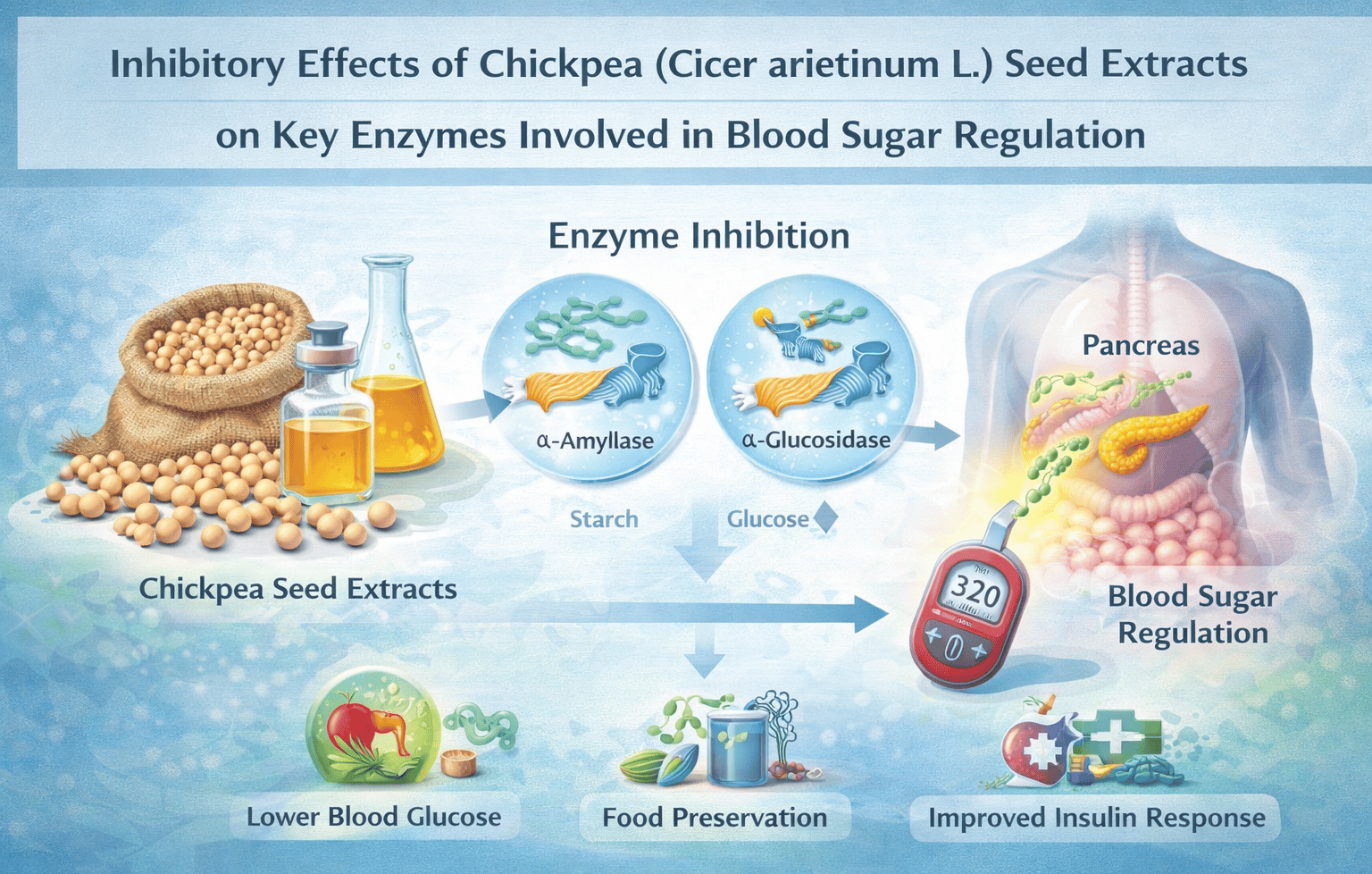

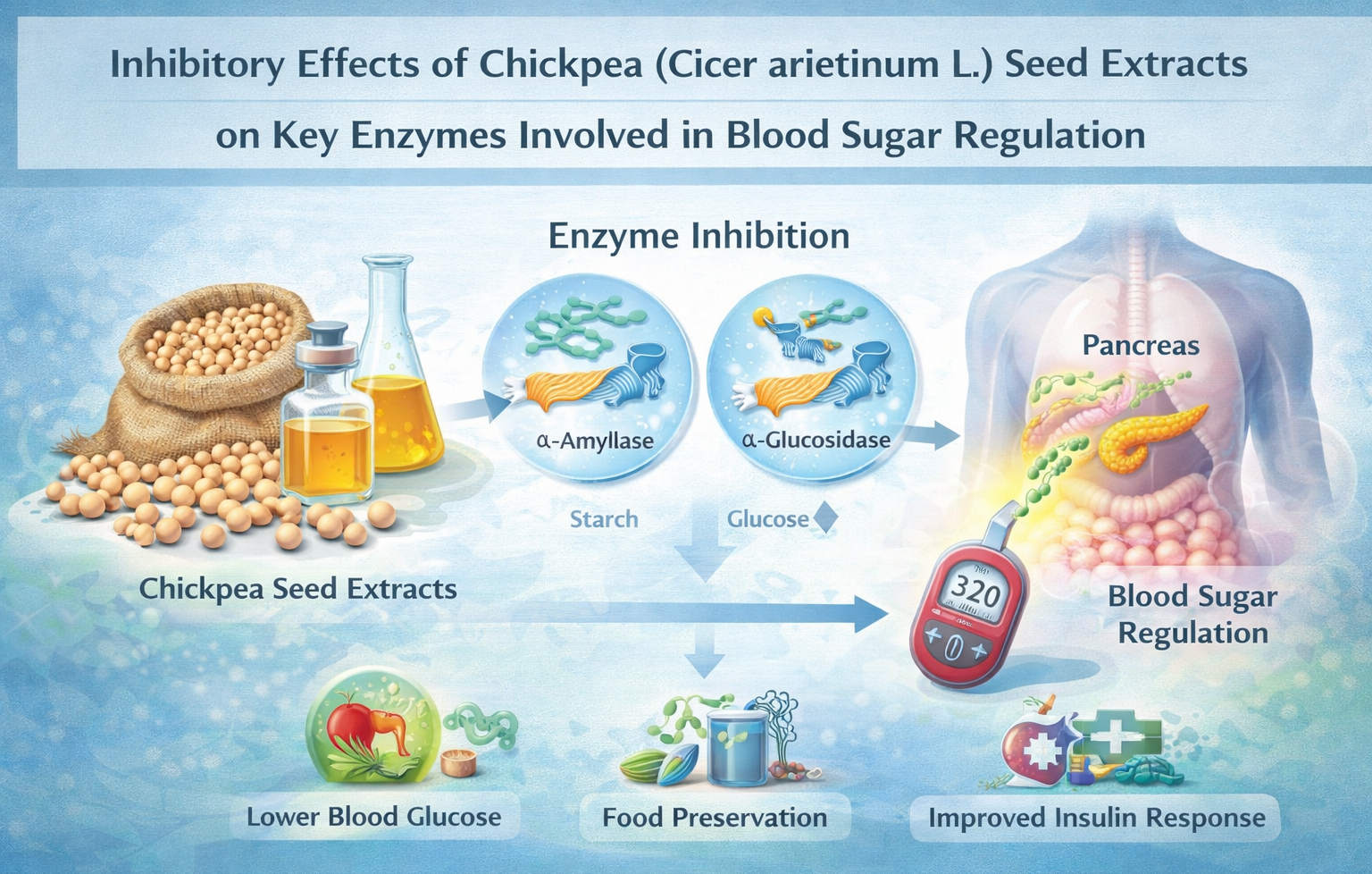
From the Lab Bench to the Dinner Plate: How Chickpeas Sparked My Curiosity About Blood Sugar Control
Some research projects begin with complex hypotheses or cutting-edge technologies. This one began much more simply—with a bowl of chickpeas.
As a pharmacognosy researcher, I spend most of my time studying medicinal plants, many of which are unfamiliar or rarely used outside traditional medicine. But one day, while discussing dietary interventions for diabetes with colleagues, I realized something surprising: some of the most promising bioactive sources might already be sitting on our plates.
That moment marked the beginning of my journey into understanding how chickpea seeds might influence blood sugar regulation—not as a food trend, but as a scientifically measurable intervention.
Why I Started Asking Questions about Chickpeas
Diabetes mellitus is one of the most pressing health challenges of our time. During my academic training, I repeatedly encountered studies showing how digestive enzymes play a key role in blood glucose spikes after meals. Drugs like acarbose target these enzymes, but they often come with uncomfortable side effects that limit long-term use.
I began to wonder: could commonly consumed plant foods offer a gentler alternative?
Chickpeas immediately stood out. They are affordable, culturally accepted across many regions, and already associated with improved glycemic control in dietary studies. Yet, surprisingly little attention had been given to how chickpeas act at the enzymatic level.
Stepping Into the Lab with a Simple Idea
With this question in mind, our team designed a study to examine how chickpea seed extracts interact with enzymes involved in carbohydrate digestion. These enzymes—α-amylase, glucoamylase, and glucoinvertase—are responsible for breaking down starch and sugars into glucose.
In the lab, I watched something deeply satisfying unfold. As we increased the concentration of chickpea seed extract, enzyme activity steadily declined. Extending the interaction time between the extract and enzymes further strengthened this effect.
What truly surprised me was how closely the inhibition patterns resembled those produced by acarbose, a standard antidiabetic drug. Seeing a natural seed extract perform so comparably was one of those rare moments when lab data genuinely excites you.
Moments That Made the Research Feel Real
Research is often portrayed as a smooth, logical process, but in reality, it is full of small moments—waiting for incubations, repeating assays, recalibrating equipment, and double-checking results late into the evening.
I remember re-running one assay because the inhibition curve looked “too good to be true.” When the results repeated themselves, it felt like the data was quietly telling us, this matters.
That was when the project shifted from being an academic exercise to something more personal. I wasn’t just studying enzymes anymore—I was exploring the hidden therapeutic potential of a food people eat every day.
What These Findings Could Mean Beyond the Lab
Our results suggest that chickpea seeds contain phytochemicals capable of slowing carbohydrate digestion. This does not mean chickpeas are a cure for diabetes—but it does highlight their potential role as part of a broader management strategy.
From a research perspective, this opens several exciting pathways:
- Identifying the specific compounds responsible for enzyme inhibition
- Understanding how they behave in the human gut
- Exploring whether chickpea-derived formulations could complement existing therapies
From a personal perspective, it reinforced my belief in food-based pharmacology—the idea that nutrition and medicine are far more interconnected than we often acknowledge.
Learning to Balance Enthusiasm with Scientific Caution
One of the most important lessons this project taught me was restraint. As exciting as the findings were, they are still preclinical. Enzyme inhibition in vitro does not automatically translate to clinical efficacy.
Science demands patience. Before any real-world application, we need animal studies, clinical trials, and long-term safety evaluations. Still, every meaningful journey starts with a single step—and this study felt like one of those steps.
Why This Research Matters to Me as a Scientist
Working on this project reminded me why I chose research in the first place. It wasn’t to chase novelty, but to uncover value in overlooked places.
Chickpeas may seem ordinary, but through a scientific lens, they tell a much richer story—one that connects traditional diets, modern biochemistry, and future therapeutic innovation.
For young researchers especially, I hope this story offers reassurance: impactful research doesn’t always require exotic materials or expensive tools. Sometimes, it starts with curiosity, persistence, and the courage to ask simple questions differently.
Looking Ahead
The next phase of this work will focus on isolating the active phytochemicals and exploring their mechanisms in greater detail. Clinical relevance remains the ultimate goal, but the journey itself—filled with questions, failed experiments, and small discoveries—is just as valuable.
If nothing else, this project changed how I look at food. Chickpeas are no longer just a dietary staple to me—they are a reminder that science can be found in the most familiar places.
Final Thoughts
Research is often described as a pursuit of the unknown. But sometimes, it’s about rediscovering what we already know—and seeing it in a new light.
For me, chickpeas became that lens.

Salman Ahmed (ORCID: 0000-0003-2033-0181) holds a B.Pharm. degree from the University of Karachi, Pakistan, and a PhD and M.Phil. in Pharmacognosy from the same institution. He has gained valuable experience in the pharmaceutical industry, having worked at Helix Pharma, Pharm Evo (Pvt.) Ltd., and Searle Pakistan Ltd. Currently, he holds the position of Assistant Professor in the Department of Pharmacognosy at the Faculty of Pharmacy, University of Karachi, Pakistan.
Salman Ahmed has made significant contributions to the field with a decade-long career dedicated to teaching Pharmacognosy, also known as Natural Products Sciences. He has authored 125 research papers with an impact factor of 100 with 2297 citations, a h-index of 24, and an i10-index of 59. He has secured multiple research grants in Pharmacognosy (2021, 2018, 2016, and 2014) to study plants traditionally used for analgesic, anti-inflammatory, diuretic, and antidiarrheal purposes and their effects on digestive enzymes. Additionally, he has authored seven books and presented 16 posters at national and international conferences. Salman Ahmed's expertise is acknowledged by various esteemed journals published by Elsevier, Springer Nature, Wiley, MDPI, Hindawi, and Dove Medical Press Limited, as he serves as an invited reviewer for these publishers.
Scientific Achievements (2011–2015): He pioneered a cost-effective copper sulfate-induced chick emesis model for evaluating natural antiemetics. His research explores antiemetic, analgesic, and anti-inflammatory properties in Pakistani plants, herbs, and spices, reporting fixed oil's analgesic effects and discovering Bergenin as an antiemetic. He authored two state-of-the-art reviews on natural antiemetics, "Antiemetic effects of bioactive natural products" and "Natural antiemetics- an overview". He was awarded Nishan-e-Zafar by the University of Karachi in 2014.
Scientific Achievements (2016–2024): Dr Salman Ahmed pioneered glass slide models to grow Whewellite, Brushite, and Urate crystals for the evaluation of antiurolithiatic and anti-gout drugs, presenting key findings at international conferences such as MMDR-7, STEP-5, ISNPC-14, and ISNPF-2. His book “How to Grow Urinary Stone and Gouty Crystals on Glass Slide” provides detailed methodologies for replicating crystal growth in vitro and discusses the implications for understanding crystal morphologies, disease mechanisms and developing herbal treatment strategies.
Dr Ahmed's research highlights the antiurolithiatic potential of pentacyclic triterpenes and polyphenols. These compounds inhibit calcium oxalate crystallization, reduce oxidative stress, and modulate inflammation. They also promote nephroprotection, diuresis, and ACE inhibition, advancing natural therapeutics for kidney stone prevention.
His contributions include “Glossary of Globally Used Herbs and Animals for Urolithiasis” (2024), a comprehensive book exploring medicinal plants covering botanical families from A to Z and animal-based remedies covering their historical use, mechanism of action, and therapeutic spectrum against Whewellite, Brushite, and Urate crystals separately. His research on antiurolithiatic formulations compiles mono- and polyherbal remedies from diverse regions, including Appalachia, Canada, India, and the Middle East. His work provides critical data for future phytochemical, pharmacological, and toxicological studies, aiding in the discovery of safer, more effective treatments for kidney stones.
Additionally, he explores the anticancer potential of marine peptides against breast, ovarian, cervical, malignant melanoma, prostate, neuroblastoma, glioblastoma, leukemia and lymphoma, advancing natural therapeutics for cancer treatment.