Biopharmaceutical and Physiological Barriers Affecting Renal Access of Orally Administered Active Pharmaceutical Ingredients
Published in Materials and General & Internal Medicine
Inorganic Nanoparticles Containing Plant-Derived Compounds for Kidney Treatment
By: Michel Stéphane Heya et al., 2025
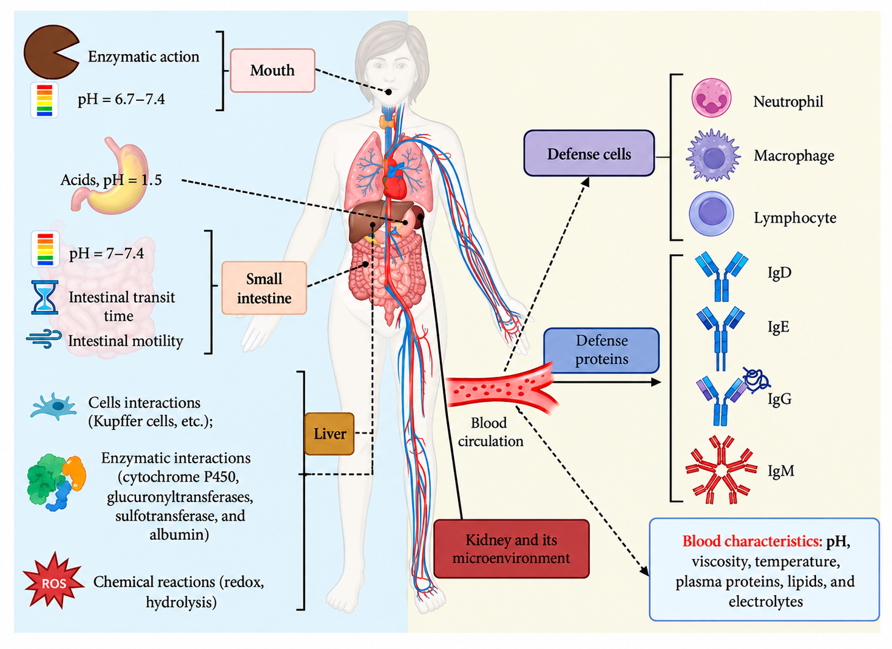
Figure 3. Physiological barriers for drugs administered orally or systemically targeting the kidneys. Orally administered drugs must cross both exogenous and endogenous barriers to reach the kidneys, whereas intravenously administered drugs only need to cross systemic barriers. These barriers can significantly impact the pharmacokinetics and pharmacodynamics of drugs, particularly when they are synthesized without a specific drug-target strategy.
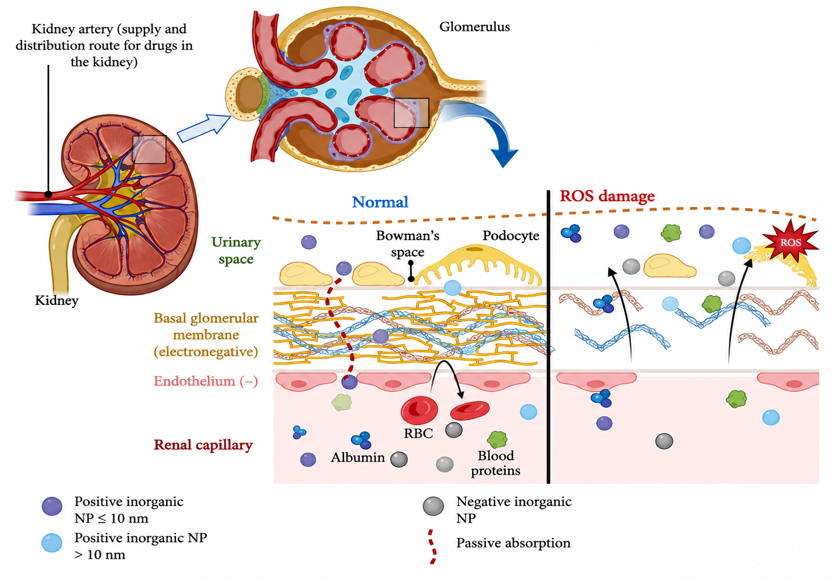
Figure 4 Glomerular structure of a healthy kidney and a kidney damaged by oxidative stress. In a damaged kidney, the glomerular fenestrations are affected by ROS, altering their physiological function. On the other hand, in a healthy kidney, the natural filtration system prevents the passage of blood components and particles larger than 10 nm. Therefore, when designing nanoparticles for overcoming the barriers of the renal microenvironment, the size and electrostatic charge need to be considered.

PhD in Sciences with a specialization in Biotechnology from the Institute of Biotechnology at the Autonomous University of Nuevo León (UANL), Mexico. His work focuses on the bioprospecting of green alternatives for the treatment of human diseases, as well as on the development of nanomedicines for the pharmacological delivery of various active compounds.
He is currently a member of the National System of Researchers (SNII) and the author of several scientific articles published in indexed journals. He has also served as a reviewer for journals such as International Journal of Food Properties and Chemistry & Biodiversity (Web of Sciences Group: ID 3298-2022). Additionally, Dr. Heya is a professor and researcher at the Faculty of Public Health and Nutrition, where he has contributed to scientific training through the supervision of undergraduate and master’s theses.