The SSCR conference
Published in Healthcare & Nursing, Social Sciences, and Neuroscience


The NIHR School for Social Care Research (SSCR) Annual Conference took place at We The Curious, Bristol, on 16 and 17 September 2026, with this year's event hosted by the University of Bristol, one of the school's six member institutions. The conference provides an annual opportunity to showcase SSCR-commissioned studies and highlight social care research taking place across the wider NIHR portfolio. Researchers, partners, collaborators, and people with lived experience come together to share insights from ongoing research and discuss the challenges and opportunities facing social care practices.
During the first day of the conference Lisa Hodgkinson attended sessions covering neuromuscular conditions, dementia care, co-production, lived experience, and research capacity development.
Keynote on neuromuscular conditions
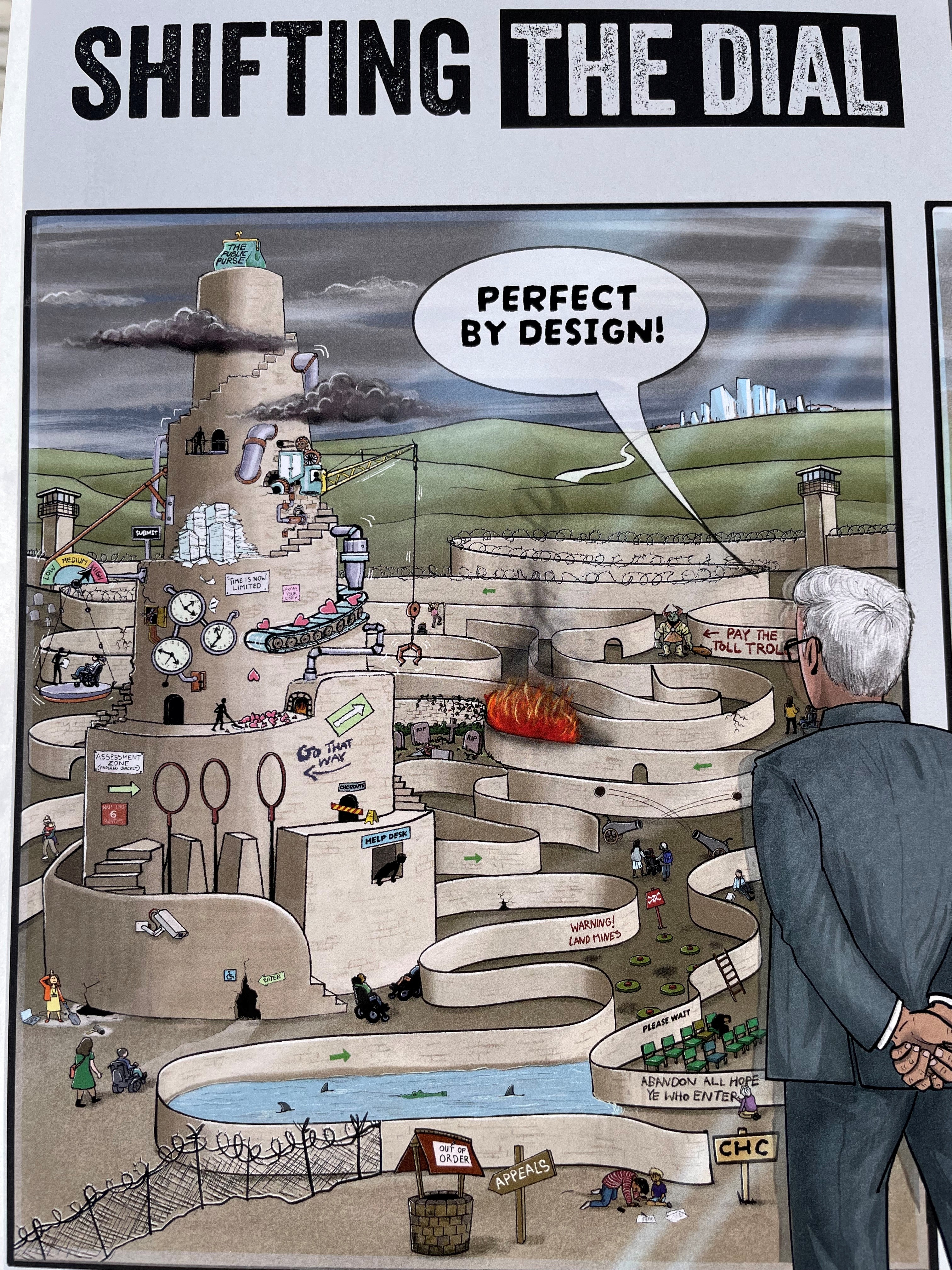
The opening keynote from co-researchers George Peat and Sam Cornelius-Light, who lives with muscular dystrophy, explored the challenges and opportunities in adult social care research for people with neuromuscular conditions. Their presentation highlighted the value of person-centred care, independence and co-production, as well as the importance of mentorship, particularly the support provided by senior NIHR investigators. Through the Pathfinders Research Advisory Group project, adults with lived experience, carers and professionals worked together to shape research and identify priorities for change. The speakers reflected on barriers to participation, including accessibility and bureaucracy, and showcased project outputs including a catalyst film capturing experiences of social care and an illustrated thematic framework by Zoe Cox, which portrayed the social care system as a Tower of Babel. The session reinforced the need for accessible research that delivers meaningful, practical improvements in social care.

Supporting people living with dementia across care homes, homecare services and family caregiving
Martha Ward (University of York) presented HOPES for Homecare, a co-produced learning intervention to help homecare workers support people with dementia who may be reluctant to accept care, highlighting the importance of communication, relationship-building and organisational support. Louis Stokes (University of Sheffield) shared findings from the ENACT project exploring implementation of the Mental Capacity Act in care homes, emphasising the need for interactive training, practical examples and ongoing supervision, and showcasing an innovative comic book resource developed by the team. Myles Godfrey (University of Kent) discussed research with people caring for relatives with dementia while living separately from them, revealing how support needs increase as dementia progresses and how carers often feel their contributions go unrecognised. Together, the presentations underscored the need for better training, stronger support for both paid and unpaid carers, and more person-centred approaches to dementia care.
How co-production, lived experience and research capacity can strengthen social care research and practice
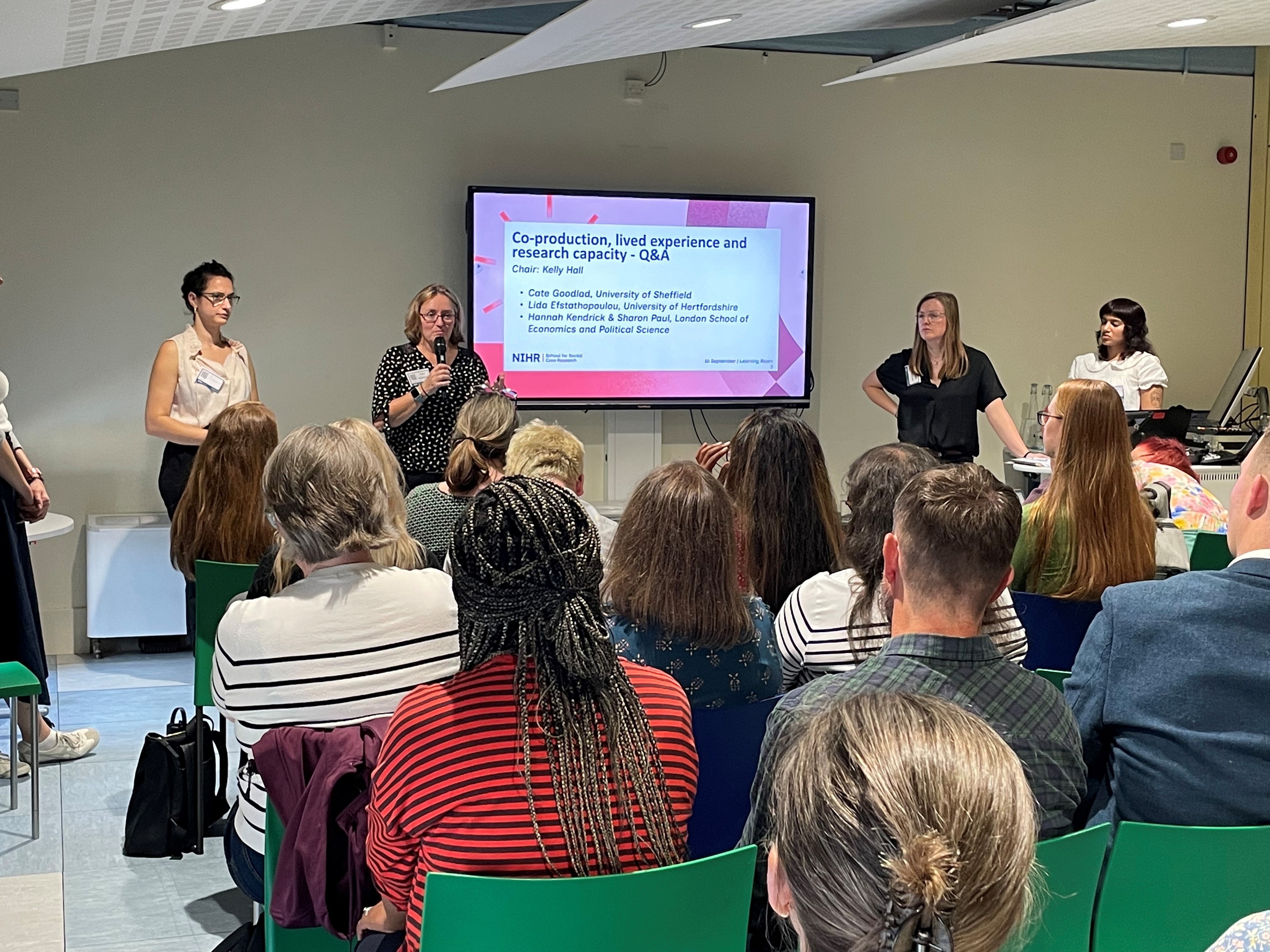
Cate Goodlad outlined the IMPACT Networks programme, which brings together researchers, practitioners and people with lived experience to tackle shared challenges, highlighting the need for better connected and more meaningful use of data to improve services. Lida Efstathopoulou presented findings from a Delphi study exploring research capacity development in social care, identifying research culture, staff expertise and protected time for research as essential ingredients for building sustainable research activity. Finally, Hannah Kendrick and Sharon Paul discussed the growing role of practitioner-researchers in translating evidence into practice, showcasing work to map research development opportunities and a new tool to help social care professionals access training, support and research networks. Together, the presentations emphasised collaboration, capacity building and the practical steps needed to embed research more effectively across the social care sector.
Giving social care research a voice
A recurring theme was the importance of ensuring social care research is visible, accessible and informed by lived experience. Attending events such as the SSCR Annual Conference allows ISRCTN to engage directly with researchers, practitioners and communities, highlighting how study registration can support transparency, reduce unnecessary duplication and encourage knowledge exchange. If you’d like to discuss how registering your study can support patient engagement and research transparency, contact Lisa or email the ISRCTN team at info@isrctn.com.


I joined the UK's Clinical Study Registry, ISRCTN, as a Senior Registry Editor in 2022, where I facilitate the registration of clinical studies of any design from any location.
Follow the Topic
-
ISRCTN: The UK’s Clinical Study Registry
A primary clinical trial registry recognised by WHO and ICMJE that accepts studies involving human subjects or populations with outcome measures assessing effects on human health and well-being, including studies in healthcare, social care, education, workplace safety and economic development.