Light exposure impairs hematological characteristics and oxidative stress markers in male African giant pouched rat (Cricetomys gambianus) reared in captivity
Published in Agricultural & Food Science
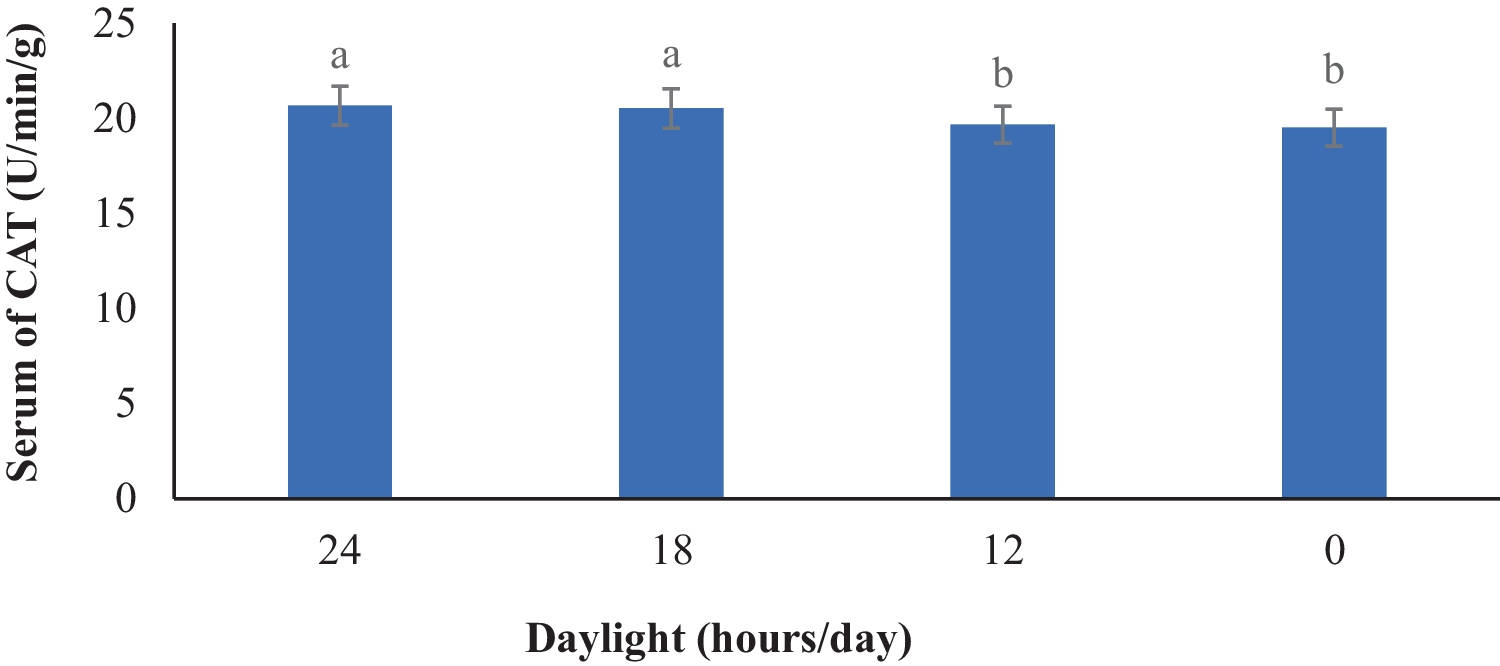

African giant pouched rat (AGPR) is widely used both to conduct research projects and for meat consumption. However,being a nocturnal animal, light exposure requires a specific attention in order to improve their rearing environment. The study aimed to appreciate the effects of light exposure on hematological and oxidative stress parameters in AGPR bred in captivity. Twenty adult males AGPR weighing 945±171 g were randomly allocated into four photoperiod regimes: 0L/24D,12L/12D, 18L/06D, and 24L/0D. Housed singly during 56 days, animals received food and water ad libitum. At the end of the trial, blood and serum were collected for studied parameters analysis. The study revealed a significant (p<0.05) increase of the number of red blood cell (RBC), white blood cell (WBC), hemoglobin (HGB), and hematocrit (HCT) in animals kept in the darkness condition compared to those reared under extended photoperiods. Except for malondialdehyde (MDA) level which was not affected by photoperiod, catalase (CAT), and superoxide dismutase (SOD) activity increased significantly (p<0.05) for any light exposure up to 12 h per day. In conclusion, photoperiod affects the most hematological characteristics measured and has stressful effects in AGPR. This new knowledge provides a relevant information for the rearing environment of African giant pouched rat.
Keywords African giant pouched rat · Hematological parameters · Oxidative stress markers · Photoperiod

Dr. Lavoisier Fonou is a Lecturer and Researcher at the University of Buea, Cameroon, with expertise in Animal Science, Reproductive Biology, and Reproductive Biotechnology. My research focuses on improving livestock reproductive performance through semen quality assessment, cryopreservation, artificial insemination, and the development of innovative approaches to male and female fertility management.
My work also explores the effects of abiotic environmental factors on animal reproductive function and fertility.
Dr. Fonou is open to national and international collaborations and strongly supports interdisciplinary research at the interface of animal science, biotechnology, environmental sciences, climate change, and biodiversity conservation.
My research interests include sustainable livestock production, conservation of animal genetic resources, reproductive biotechnology, and the preservation of biodiversity.
Follow the Topic
-
Comparative Clinical Pathology
This journal provides a source for the publication of reviews, research reports, technical notes and case histories covering all aspects of haematology and clinical chemistry in mammalian species.

Related Collections
With Collections, you can get published faster and increase your visibility.
Methods
Publishing Model: Hybrid
Deadline: Ongoing
Reviews
Publishing Model: Hybrid
Deadline: Ongoing