Neuro Fuzzy intelligence turns sugarcane bagasse into clean energy
Published in Mathematics and Statistics


Plain summary
We developed an intelligent way to predict and optimize fermentable sugar production from sugarcane bagasse. These sugars feed the creation of biofuels such as ethanol, biogas, and biohydrogen. We compared Response Surface Methodology (RSM) with the Adaptive Neuro‑Fuzzy Inference System (ANFIS). ANFIS delivered superior predictive performance, showing how AI can speed up sustainable energy solutions.
Why it matters
Sugarcane bagasse is a plentiful residue from the alcohol industry. Instead of being discarded, it can become a valuable feedstock for biofuels, cutting environmental impacts and improving resource use in agribusiness. Enzymatic hydrolysis breaks biomass into sugars like glucose. Accurate models reduce the need for costly, time‑consuming trial‑and‑error in labs and plants.
What we did
- Bagasse preparation: We washed, dried, milled, and pretreated the bagasse using an alkaline‑oxidative method to expose cellulose and hemicellulose to enzymes.
- Enzymatic hydrolysis: We used a commercial cellulase (from Aspergillus niger) at pH 5, 50 °C, and controlled agitation, then measured released glucose.
- RSM modeling: With a Box‑Behnken design, we studied three variables—hydrolysis time (t), enzyme concentration (E), and substrate concentration (S). The second‑order model showed an excellent fit (R² ≈ 0.986), revealing combinations that boost glucose yield.
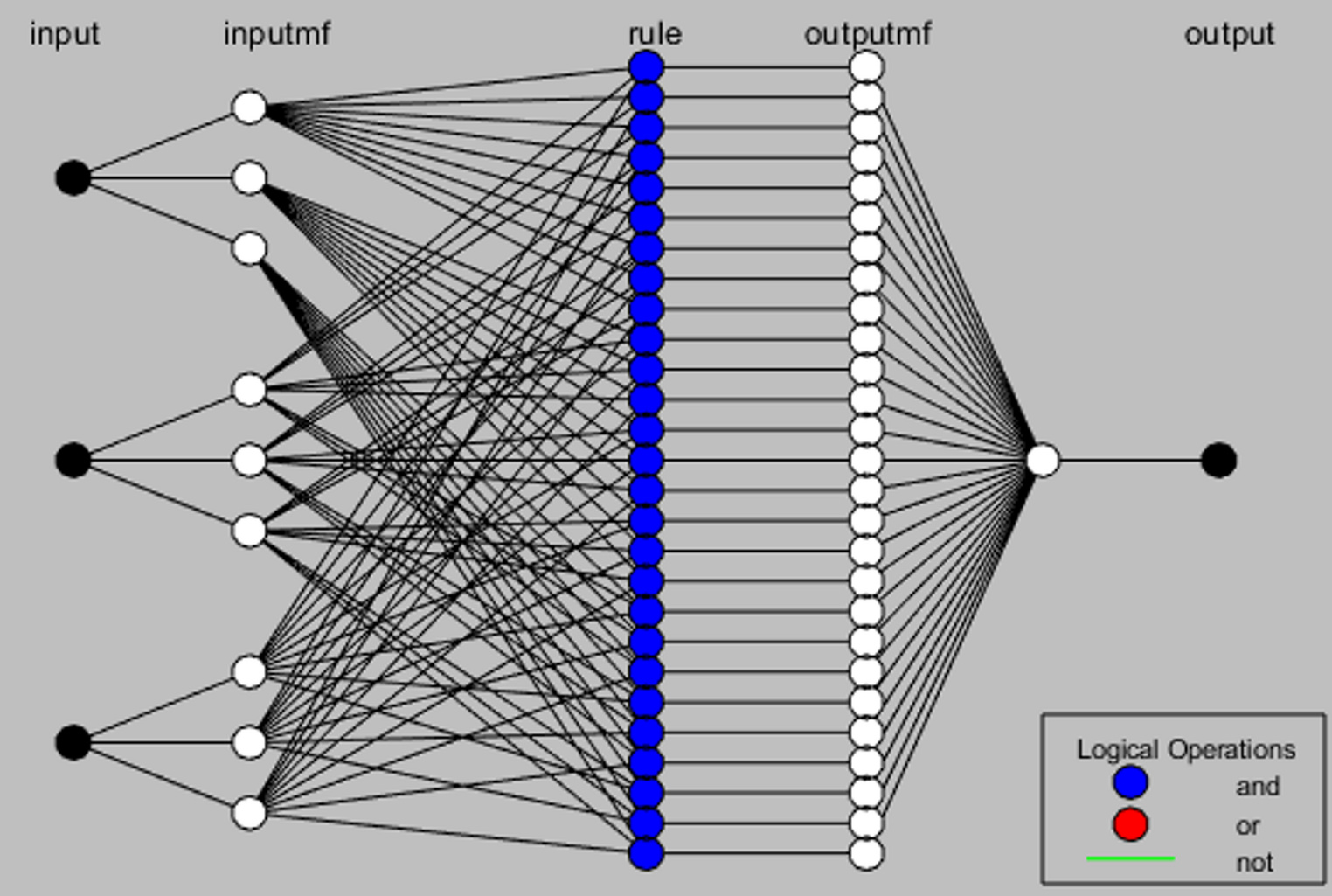
- ANFIS modeling: We trained a Sugeno‑type Neuro‑Fuzzy system with Gaussian membership functions and hybrid training (least squares + backpropagation). ANFIS predicted results with R² ≈ 0.999 and low RMSE, indicating very high accuracy.
Key results in plain language
- Optimal operating point: about 60 hours of hydrolysis, 3.3% enzyme concentration, and 23.3 g/L pretreated bagasse. Under these conditions, glucose reached roughly 25 g/L.
- Method comparison: RSM is excellent for planning experiments and understanding variable effects. ANFIS learns complex, nonlinear patterns from data and provides even more reliable predictions. Together, they form a powerful toolkit.
Societal applications
- More affordable biofuels: Predicting best‑fit conditions helps ethanol plants cut costs, reduce enzyme and energy use, and increase output sustainably.
- Circular economy in agriculture: Bagasse gains value instead of being waste, generating income and reducing environmental burdens.
- Smart industrial control: ANFIS‑like tools can be embedded in process control systems to adjust settings in real time, reducing failures and losses.
- Evidence for public policy: Reliable models support governments and cooperatives in designing incentives for bioenergy with realistic, measurable goals.
Take‑home message for non‑specialists
- AI does not replace experiments; it enhances them.
- For complex biomass conversion, Neuro‑Fuzzy complements statistical methods, offering robust predictions for faster, better decisions.
Closing note
By combining biotechnology with artificial intelligence, we accelerate the shift toward clean energy. ANFIS stands out as a practical and precise tool for companies and researchers aiming to unlock the full value of sugarcane bagasse, with direct benefits for the economy and the environment.

Graduated in Agronomic Engineering from the Higher School of Agronomy of Paraguaçu Paulista (ESAPP). Holds a Master’s degree in Bioenergy from the State University of Western Paraná (UNIOESTE) and a Ph.D. in Agronomy from São Paulo State University (UNESP). Earned a Ph.D. in Biosystems Engineering from the University of São Paulo (USP) and a Ph.D. in Forest Science from UNESP. Completed postgraduate studies at Fundação Getúlio Vargas (FGV-RJ) with an MBA in International Agribusiness Management. Also holds postgraduate degrees in Higher Education Teaching and Special and Inclusive Education from Faculdade Venda Nova do Imigrante (FAVENI). Graduated with a degree in Mathematics from the Federal Technological University of Paraná (UTFPR) and in Pedagogy from Faculdade Intervale. Postgraduate in Chemistry Teaching at Universidade do ABC and currently pursuing a degree in Chemistry at Faculdade Única.
University lecturer at UNISAGRADO and coordinator of the ESG postgraduate program. Chief researcher of the AgroBiotechnology Research Group at UNISAGRADO/CNPq and member of the Agroenerbio research group (USP/UNESP/CNPq). Skilled in statistical and mathematical modeling tools, including Fuzzy Logic, Statistica, Action, and Matlab. Research focus: Renewable Energy and Fuzzy Logic. Experienced as an educator at elementary, secondary, undergraduate, and postgraduate levels.
Current funded research project: Modeling and Prediction of Renewable Energy Generation Using Artificial Intelligence: A Path to Brazil’s Energy Transition – CNPq/MCTI (2023–2026).
Follow the Topic
-
BioEnergy Research
BioEnergy Research is a comprehensive journal that focuses on feedstock biology research related to biomass, and its conversion into biofuels, bioenergy, biochemicals, and biomaterials.

Related Collections
With Collections, you can get published faster and increase your visibility.
Advances in Algal Biofuels and Bioproducts
This collection focuses on the latest developments and research in the field of algal (micro and macroalgae) biofuels and bioproducts. The articles within this collection provide insights into the current state-of-the-art in algal biofuel and conversion research and offer perspectives on the future direction of this rapidly evolving field in the development of 3rd generation biorefineries.
Publishing Model: Hybrid
Deadline: Ongoing
Advancing the United Nations Sustainable Development Goals (SDG) through biomass and bioenergy research
There are 17 SDGs designed as “a shared blueprint for peace and prosperity for people and the planet, now and into the future” (https://sdgs.un.org/goals). Many of the goals such as Affordable and Clean Energy, Sustainable Cities and Communities, Climate Action, or Life on Land are aligned with articles published in BioEnergy Research. The collection of articles below contains recent research, which contribute to a better understanding of how to achieve the SDGs.
Publishing Model: Hybrid
Deadline: Ongoing