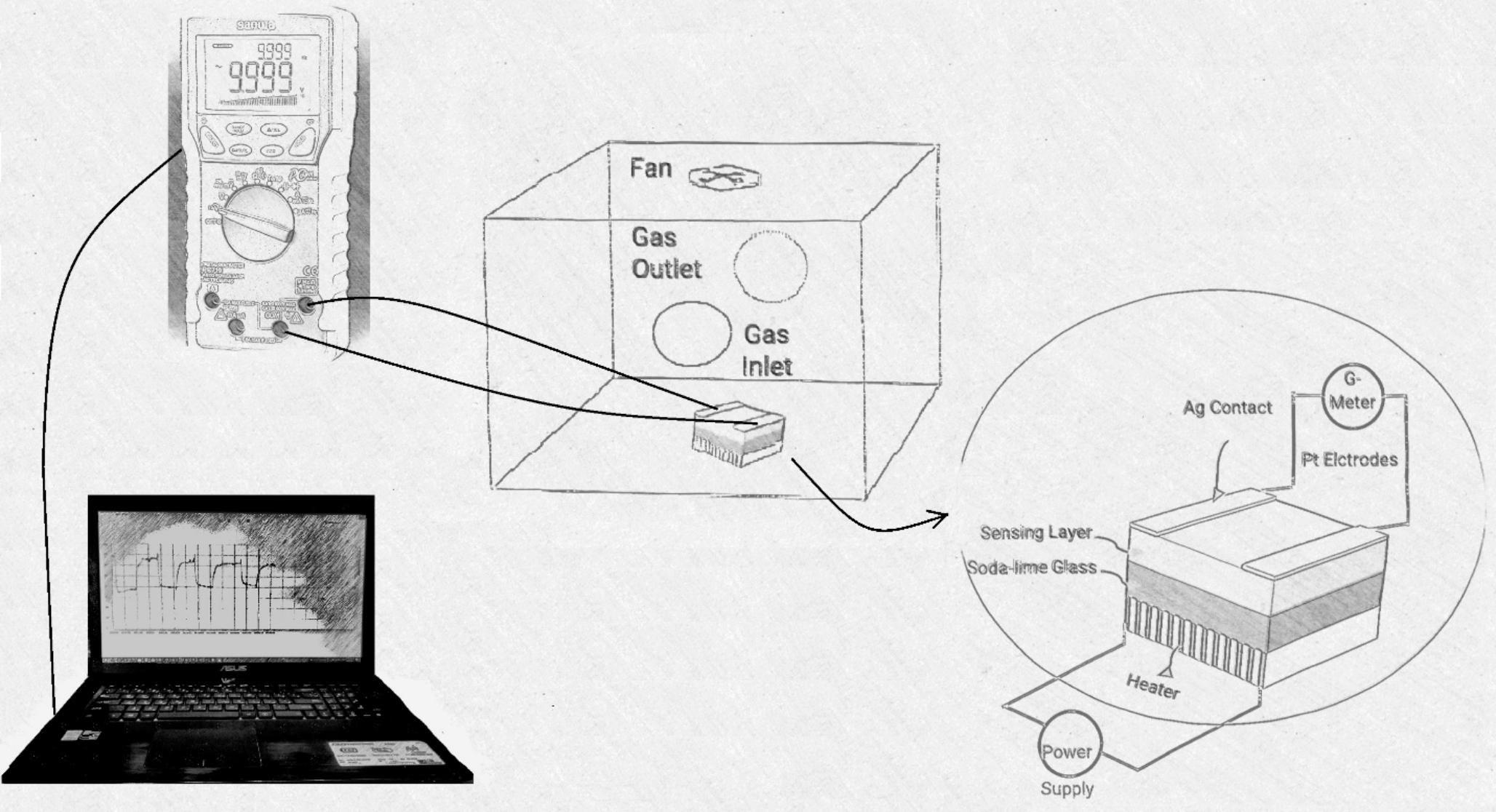

It is a pleasure to share our new paper published in Applied Physics A: Materials Science & Processing.
https://link.springer.com/article/10.1007/s00339-025-08238-y

Follow the Topic
-
Applied Physics A
This journal was founded in 1973 and is one of the leading international, peer-reviewed journals featuring original experimental and theoretical results in applied physics and material science.

Related Collections
With Collections, you can get published faster and increase your visibility.
COLA 2026 - 18th International Conference on Laser Ablation
This special issue represents the proceedings of the International Conference on Laser Ablation (COLA 2026), held in Vilnius, Lithuania, from September 14 to 18, 2026. Since the very beginning in 1991, COLA has played a pivotal role in advancing laser ablation technologies and fostering collaborations among researchers and industry experts. COLA 2026 is an interdisciplinary conference, and the topics cover a wide range of scientific research that bridges the gap between basic science, applications and technologies.
Publishing Model: Hybrid
Deadline: Dec 31, 2026
Material-based Hydrogen Storage and Isotope Separation: Recent Advances in Porous Materials, Hydrides, Membranes, and In Situ Characterization — A Tribute to Dr. Michael Hirscher (70th Birthday, June 2027)
Scope and Motivation
Hydrogen storage and hydrogen isotope separation (H₂/D₂/T₂) are increasingly converging into a single materials-physics challenge: controlling adsorption thermodynamics/kinetics, quantum effects (quantum sieving), framework/solid-state dynamics, and transport under practically relevant operating conditions. Recent progress in porous materials, metal hydrides and related solids, membranes, and in situ characterization now enables unprecedented mechanistic insight and performance optimization. This Special Issue will provide a focused forum for cutting-edge experimental, theoretical, and computational work at the intersection of functional materials, advanced characterization, and application-relevant performance—core themes of Applied Physics A.
Topics of interest include (but are not limited to)
- Porous materials for hydrogen storage and isotope separation
- MOFs/COFs/zeolites/carbons; ultramicroporosity; open metal sites; functional groups
- Quantum Sieving (KQS/CAQS), zero-point energy effects, isotope-selective binding
- Framework and lattice dynamics
- breathing/gating phenomena; isotopologue-induced structural changes; thermo-structural coupling
- Metal hydrides and related solid-state storage materials
- kinetics/thermodynamics; thermal management; cycling stability; system-level integration
- Membranes and electrochemical/solid-state separation concepts
- isotope-selective transport; mixed conductors; graphene/2D pathways
- Advanced characterization and measurement science
- in situ/operando diffraction (X-ray/neutron), spectroscopy, calorimetry, adsorption kinetics
- reproducibility, standardized reporting, uncertainty quantification
- Theory, computation, and data-driven design
- DFT, GCMC/MD, quantum nuclear effects, multiscale transport modeling, screening
Publishing Model: Hybrid
Deadline: Nov 30, 2026