Polyhydroxy Hydrogel Electrolyte with In Situ Tuned Interface Chemistry for Ultra‑Stable Biosensing‑Compatible Zinc Batteries
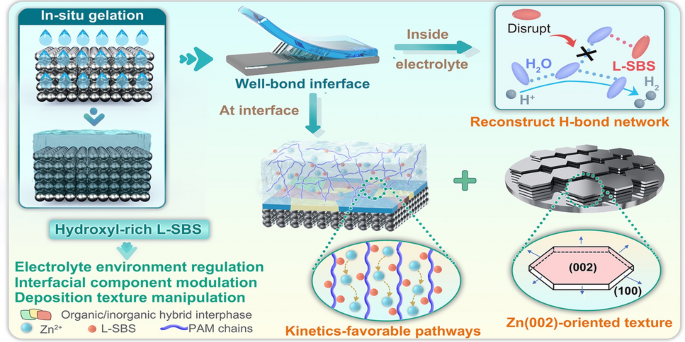
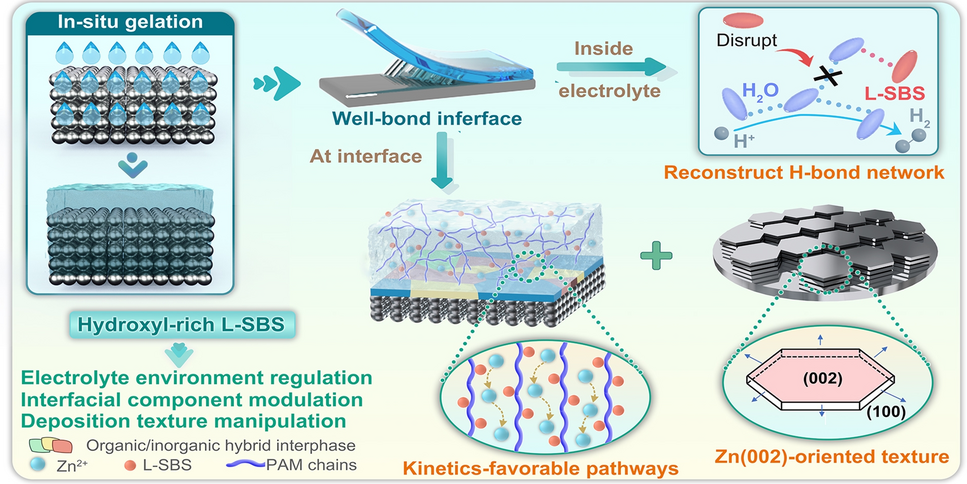

As the demand for sustainable and safe energy storage technologies continues to grow, the limitations of conventional aqueous zinc batteries in terms of interfacial stability, dendrite growth, and side reactions become more pronounced. Now, researchers from the School of Chemical Engineering and Technology at Xinjiang University, Central South University, and Beijing University of Chemical Technology, led by Professor Hongyu Mi, Professor Guozhao Fang, and Professor Jieshan Qiu, have presented a breakthrough polyhydroxy hydrogel electrolyte with in situ regulated interface chemistry suitable for biosensing-compatible zinc batteries. This work offers valuable insights into the development of next-generation wearable and implantable bioelectronics that can overcome these limitations.
Why Polyhydroxy Hydrogel Electrolyte Matters
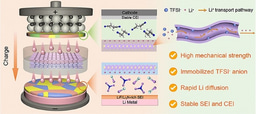
- In Situ Interface Engineering: The in situ gelation process creates a conformal and continuous electrolyte-electrode interface, effectively eliminating interfacial voids while promoting uniform ion transport and deposition.
- Dual Regulation Strategy: The hydroxyl-rich L-sorbose enables simultaneous regulation of Zn-electrolyte interfacial chemistry and bulk electrolyte properties, establishing kinetically favorable Zn2+transport pathways and regulating interfacial ion-adsorption hierarchies.
- Exceptional Cycling Stability: The Zn//Zn symmetric cell achieves unprecedented cycling stability exceeding 3300 hours, while the Zn//Cu asymmetric cell exhibits near-perfect reversibility with average coulombic efficiency of 99.6% over 1200 cycles.
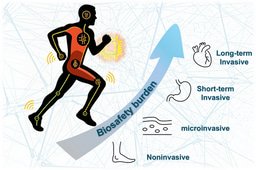
- Biosensing Integration: A self-powered biosensing platform integrating PASHE-based biosensor with cascaded Zn//I2 batteries successfully enables real-time monitoring of physiological signals and biomechanical motions.
Innovative Design and Features
- Polyhydroxy Additive Engineering: The hydroxyl-rich L-sorbose (L-SBS) additive establishes strong electrostatic interactions with the Zn surface, reconstructs the electric double layer, and participates in forming an oxygen-rich solid electrolyte interphase.
- Zn(002)-Oriented Deposition: The L-SBS-modified electrolyte induces preferential Zn(002) crystallographic orientation through selective adsorption energy regulation, enabling dendrite-free Zn plating/stripping with dense hexagonal platelet morphology.
- Low Water-Activity Microenvironment: The polyhydroxy compound disrupts the inherent hydrogen-bond network of aqueous solvent, reduces water coordination number in Zn2+ solvation sheath, and suppresses hydrogen evolution reaction and corrosion.
- Optimized Solvation Structure: Molecular dynamics simulations confirm that L-SBS partially displaces solvent molecules in the Zn2+ solvation shell, reducing hydration number and alleviating surrounding repulsion to reorganize a kinetically favorable solvation structure.
Applications and Future Outlook
- Ultra-Stable Full Cells: The strategy delivers unprecedented cyclability in flexible Zn//I2 batteries (94.9% retention after 9000 cycles) and Zn-ion hybrid capacitors (98.0% after 43,000 cycles), significantly outperforming conventional hydrogel electrolyte systems.
- Flexible and Biocompatible Devices: The PASHE-based quasi-solid-state pouch cells exhibit remarkable mechanical flexibility with negligible capacity variations under bending angles of 0°, 45°, 90°, and 135°, suitable for wearable applications.
- High-Performance Biosensing: The integrated strain sensor demonstrates high sensitivity (gauge factor of 1.1), rapid response time (~130 ms), and excellent signal linearity (R2= 0.996) for real-time human motion and physiological signal monitoring.
- Self-Powered Healthcare Systems: The self-powered wireless sign language recognition platform successfully translates finger gestures into digital communication signals via Morse code encoding, while EEG and EOG monitoring confirms accurate bio-signal acquisition comparable to commercial-grade electrodes.
This comprehensive study establishes a new paradigm for designing hydrogel electrolytes through in situ engineering and functional additive strategies, bridging high-performance zinc batteries with next-generation biosensing healthcare systems. It highlights the importance of interdisciplinary research in materials science, electrochemistry, and bioelectronics to drive innovation in this field. Stay tuned for more groundbreaking work from Professor Hongyu Mi, Professor Guozhao Fang, and Professor Jieshan Qiu at Xinjiang University, Central South University, and Beijing University of Chemical Technology!

Editor of Nano-Micro Letters, which is an Open-Access, peer-reviewed journal reported papers that have at least one dimension ranging from a few sub-nanometers to a few hundreds of micrometers. The journal is published by Springer Nature and indexed by SCI, EI, SCOPUS, Pubmed, etc. The 2024 JCR Impact Factor is 36.3. The 2024 CiteScore is 53.1.
Follow the Topic
-
Nano-Micro Letters

Nano-Micro Letters is a peer-reviewed, international, interdisciplinary and open-access journal that focus on science, experiments, engineering, technologies and applications of nano- or microscale structure and system in physics, chemistry, biology, material science, and pharmacy.
Please sign in or register for FREE
If you are a registered user on Research Communities by Springer Nature, please sign in