Promoting adult health: the neurophysiological benefits of watering plants and engaging in mental tasks within designed environments
Published in Agricultural & Food Science, Behavioural Sciences & Psychology, and Arts & Humanities

Abstract
Background
Indoor, sedentary lifestyles have disconnected individuals from nature, necessitating interventions to reestablish this bond. Performing horticultural activities, such as watering houseplants, offers a potential solution. This study sought to determine how participating in horticulture activities affected adults’ cognitive and emotional moods.
Methods
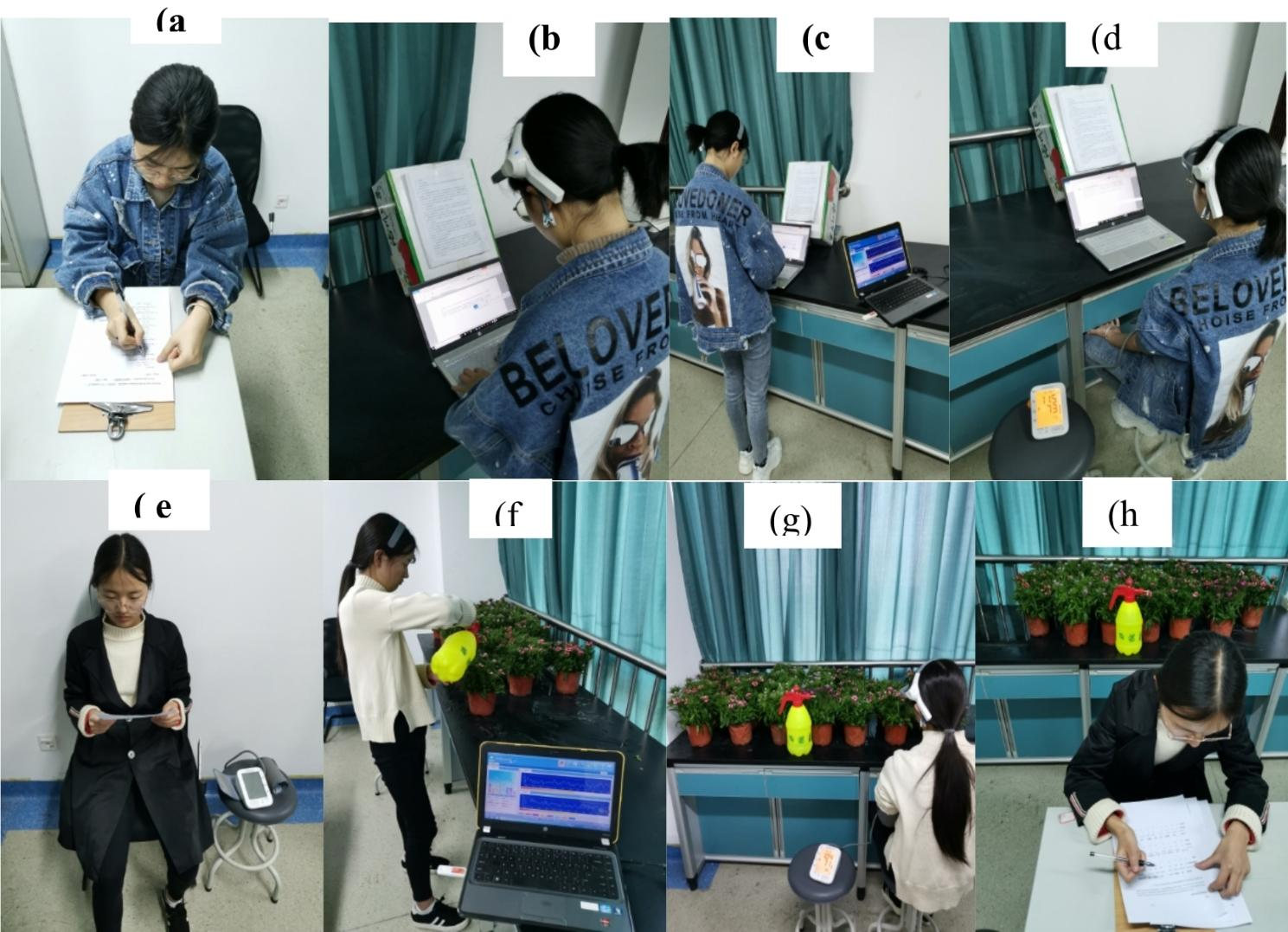
We compared the benefits of watering houseplants (a gardening task) to those of standing while performing a computer task (a mental task). Chinese participants, aged 20 to 21 years, were recruited; their physiological and psychological reactions were measured using electroencephalograms, blood pressure assessments, and psychological assessments.
Results
Fifty participants were included. Watering indoor plants significantly reduced blood pressure, without affecting pulse rate. During the plant watering task as opposed to the mental activity, more dramatic different patterns of very high alpha and beta brainwave activity were identified. Participants reported increased happiness following gardening activities.
Conclusions
The findings of this study highlight the substantial relaxation benefits, both mental and physical, associated with the simple act of watering indoor plants.https://link.springer.com/article/10.1186/s40359-023-01362-5
"I aspire to conduct groundbreaking research, expand our
understanding of Landscape Architecture, and develop innovative solutions through
rigorous experimentation and collaboration. My goal is to contribute positively to
society and mentor the next generation of scientists, advancing scientific knowledge.
Research Interests:
1.Environmental Horticulture
2.Public health
3.Landscape and Urban planning
4.Brain sciences (EEG)
5.Environmental Behaviour and Human Health Science
6.Agricultural sciences & Forest bathing
7.Psychology& Neuroscience
Follow the Topic
-
BMC Psychology
BMC Psychology is a peer-reviewed, open access journal that welcomes articles on a broad range of topics related to psychology, human behavior, and the mind.

Related Collections
With Collections, you can get published faster and increase your visibility.
Early maladaptive schemas: theory, research, and practice
BMC Psychology is calling for submissions to our Early maladaptive schemas: theory, research, and practice Collection. Deeply rooted cognitive and emotional patterns, often formed in childhood and adolescence, can persist into adulthood and influence vulnerability to a wide range of mental health difficulties. This Collection aims to bring together contemporary theory, empirical research, and applied perspectives to advance understanding of early maladaptive schemas and their relevance for assessment and intervention.
Early maladaptive schemas are associated with persistent symptoms such as chronic low mood, anxiety, emotional dysregulation, interpersonal sensitivity, and maladaptive coping behaviors. They have been extensively linked to diagnoses including major depressive disorder, generalized anxiety disorder, post-traumatic stress disorder, eating disorders, and personality disorders. Schema-focused interventions, including schema therapy and integrative cognitive-behavioral approaches, have demonstrated effectiveness in addressing long-standing patterns that are often resistant to standard treatments. By examining mechanisms of change, developmental pathways, and contextual influences, this Collection seeks to clarify how schemas contribute to both the onset and maintenance of mental disorders.
Potential subtopics of interest include but are not limited to:
- Theoretical developments and refinements in schema models across the lifespan
- Empirical studies examining the relationship between early maladaptive schemas and psychiatric symptoms
- Assessment tools and measurement advances for identifying schema domains and coping styles
- Schema-focused treatments and outcomes across clinical populations
- The role of trauma, attachment disruptions, and adverse childhood experiences in schema development
- Cultural, social, and contextual factors influencing schema expression and severity
- Longitudinal and developmental studies tracking schema stability and change over time
By bringing together diverse perspectives, this Collection aims to form a deeper understanding of enduring cognitive-emotional patterns and their implications for mental health and well-being.
All manuscripts submitted to this journal, including those submitted to collections and special issues, are assessed in line with our editorial policies and the journal’s peer-review process. Reviewers and editors are required to declare competing interests and can be excluded from the peer review process if a competing interest exists.
This Collection supports and amplifies research related to SDG 3: Good Health and Well-being.
Publishing Model: Open Access
Deadline: Jan 14, 2027
Athlete mental health in organizational culture and sport systems: eastern perspectives and global lessons
BMC Psychology is calling for submissions to our Collection on the social, cultural, and systemic influences shaping wellbeing in sport environments across diverse global contexts. Athlete mental health has emerged as a critical area of research and practice, yet much of the existing literature has been grounded in Western, individual-centered frameworks that emphasize internal experiences and one-to-one interventions. Increasingly, there is recognition that wellbeing in sport is deeply embedded within relationships, organizational cultures, and broader social systems, particularly in contexts shaped by collectivist values, shared identity, and moral responsibility.
This Collection seeks to foreground Eastern and collectivist perspectives while fostering dialogue across global knowledge traditions. Rather than positioning any single framework as universal, we aim to explore how athlete mental health is constructed, experienced, and supported across different cultural, organizational, and institutional settings. Particular attention is given to how sport systems, coaching environments, and social relationships influence wellbeing, distress, help-seeking, and recovery. We also encourage work that reflects a strong scientist–practitioner orientation, bridging research, applied practice, and policy, and emphasizing collaboration among scholars, practitioners, athletes, coaches, and organizations.
A defining feature of this Collection is its recognition of diversity within Eastern cultural contexts. We encourage contributions that move beyond treating Eastern perspectives as a single category and instead examine how different traditions, values, and social expectations shape athlete experiences in distinct ways. Variations in moral frameworks, relational obligations, discipline norms, and culturally specific meanings of endurance, sacrifice, and achievement may influence how athletes understand distress, cope with challenges, and navigate recovery. By exploring both cross-cultural and intra-cultural differences, this Collection aims to deepen and nuance current global conversations.
Topics of interest include, but are not limited to:
- Athlete mental health in collectivist, relational, family-centered, or community-based sport cultures
- Organizational culture and mental health in elite sport systems
- Coaching climates, leadership, team structures, and institutional influences on wellbeing
- Athlete career development, transitions, dual careers, retirement, deselection, and post-sport adjustment
- Cultural identity, belonging, stigma, and help-seeking in sport
- Eastern philosophical perspectives relevant to mental health, wellbeing, and human flourishing in sport
- Comparative analyses of different Eastern cultural contexts and their implications for athlete mental health
- Intra-Eastern cultural differences in values such as discipline, shame, relational obligation, achievement pressure, and social comparison in sport
- Indigenized, culturally responsive, or decolonizing approaches to athlete mental health
We invite contributions that expand conceptual, methodological, and applied perspectives in this field. By bringing together diverse voices and approaches, this Collection seeks to challenge assumptions, broaden understanding, and support more inclusive and context-sensitive models of care for athletes worldwide.
All manuscripts submitted to this journal, including those submitted to collections and special issues, are assessed in line with our editorial policies and the journal’s peer-review process. Reviewers and editors are required to declare competing interests and can be excluded from the peer review process if a competing interest exists.
This Collection supports and amplifies research related to SDG 3: Good Health and Well-being and SDG 10: Reduced Inequalities.
Publishing Model: Open Access
Deadline: Jan 08, 2027