Redefining batteries as multifunctional materials
Published in Physics


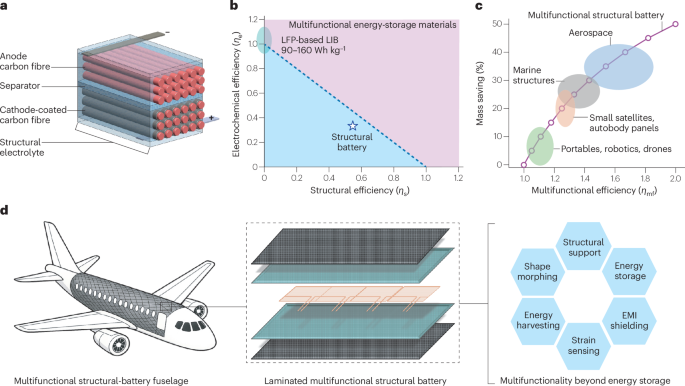

The idea is simple, batteries should not just store energy. They can also be part of the structure, reducing weight, material use, and system-level inefficiencies. The traditional design of electrically powered systems separating structure and energy storage creates inefficiencies and extensive materials usage. Utilising multifunctional composite materials in the form of structural batteries can revolutionize electric systems from drones, hand-held electronics, to aerospace interior systems and in the long-term electric road vehicles. Thus, multifunctional materials, including structural batteries offer a better path to electrical transport systems than does conventional monofunctional batteries and structures. An illustration of the use of structural batteries in transportation systems, drones and satellites is presented in Figure 1.
The structural battery composite is made from carbon fibres in the electrodes. The negative electrode is made intermediate modulus carbon fibres that act as active material (anode), current collector, and reinforcement. The positive electrode consists of lithium iron phosphate (LFP) coated carbon fibres acting as scaffold for the LFP, current collector, and reinforcement. The electrodes are separated by a thin cellulose fibre fabric and the laminated cell is impregnated with a bi-phasic polymeric electrolyte providing lithium ion transport as well as mechanical load transfer.
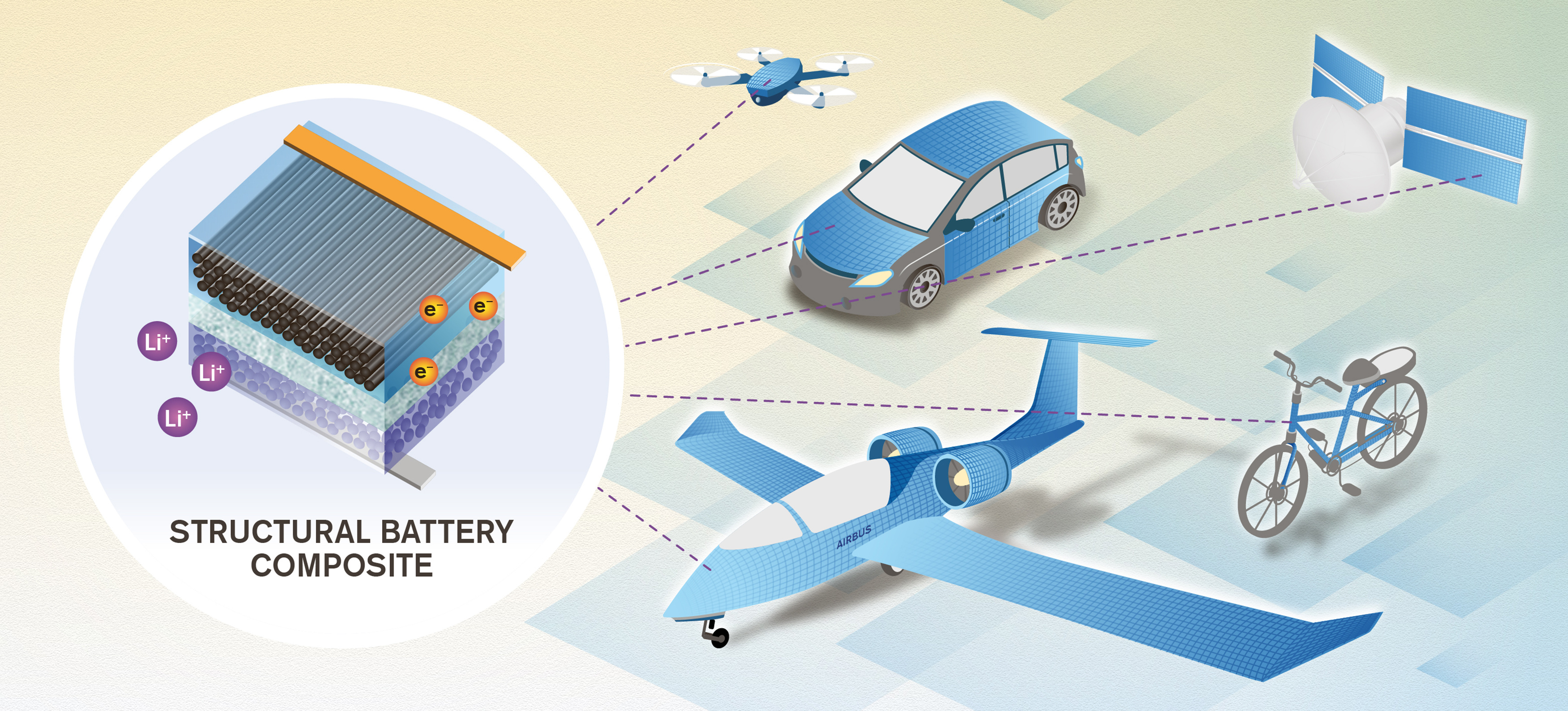
Figure 1. Structural battery composites made from carbon fibre composites providing lightweight solutions for electrically powered vehicles and devices.
Grateful to work on this with Varun Chaudhary (Dr) and Leif Asp.
Chalmers University of Technology, Chalmers Department of Mechanical Engineering
Follow the Topic
-
Nature Reviews Materials
This journal aims to cover the making, measuring, modelling and manufacturing of materials - thus, looking at materials science throughout the pipeline of laboratory discovery to functional device.