Rethinking IPF: From Static Severity to Dynamic Disease Modeling
Published in Protocols & Methods, General & Internal Medicine, and Pharmacy & Pharmacology
Idiopathic pulmonary fibrosis (IPF) has traditionally been approached through static descriptors—baseline lung function, radiological extent, and survival estimates. While these parameters remain clinically useful, they do not fully capture the dynamic nature of disease progression observed in real-world practice.
Patients with apparently similar baseline profiles often follow markedly different trajectories. Some remain relatively stable for extended periods, while others experience rapid decline or acute exacerbations that significantly alter outcomes. This heterogeneity highlights a critical limitation in conventional assessment: static measures alone are insufficient to describe a fundamentally dynamic disease.
Current efforts in IPF research are increasingly moving toward integrated clinical modeling approaches that combine multiple dimensions of disease behavior. These include disease severity, biological phenotype, and markers of inflammatory activity. The goal is not merely classification, but capturing disease behavior over time in a way that supports more precise patient stratification and clinical decision-making.
In this context, longitudinal assessment becomes essential. Repeated measurements—rather than isolated time points—provide insight into disease kinetics, progression patterns, and early signals of instability. Such approaches allow clinicians to move beyond “where the patient is” toward understanding “where the patient is going.”
This shift has practical implications. A dynamic framework may improve:
- Early identification of high-risk patients
- Timing of therapeutic interventions
- Interpretation of treatment response
- Design of clinical trials
Importantly, this does not replace traditional clinical evaluation—it extends it. The challenge is to integrate these dimensions into structured, clinically usable models without increasing complexity at the bedside.
IPF is not a static disease, and our assessment strategies should reflect that reality.
The next phase in respiratory research will likely depend on how effectively we translate dynamic disease behavior into actionable clinical frameworks.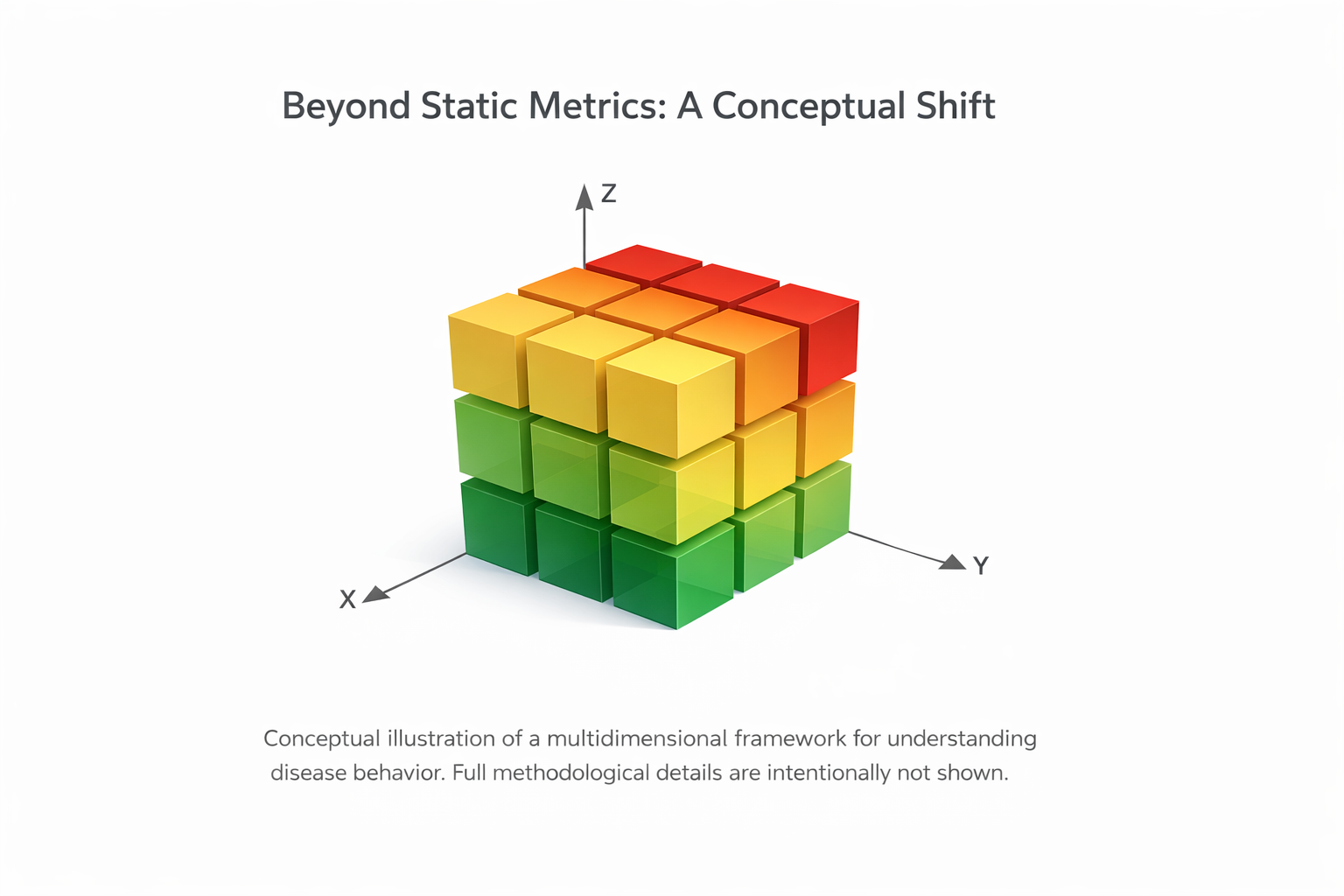

Dr. Ahmad M. Shaddad, MSc, MD (Chest Diseases) is an Associate Professor of Pulmonary Medicine at Assiut University, Egypt, with over 16 years of clinical, academic, and research leadership in respiratory and critical care medicine. He holds both Master’s and Doctorate-level training in Chest Diseases, reflecting a dual foundation in clinical practice and research methodology.
His academic trajectory is anchored in a distinctive, underexplored domain at the interface of pulmonary medicine and neuroscience. His doctoral (MD) thesis on neurological comorbidities in chronic obstructive pulmonary disease (COPD) established a comprehensive neurophysiological framework for understanding extra-pulmonary manifestations of respiratory disease. This work integrated advanced methodologies, including transcranial magnetic stimulation (TMS) to assess the corticodiaphragmatic pathway and diaphragmatic excitability, electrophysiological evaluation using P300 event-related potentials, and multimodal assessment of cognitive function, anxiety, and depression in COPD patients.
This thesis generated multiple peer-reviewed publications, including studies using magnetic resonance spectroscopy to examine cerebral metabolic alterations in COPD, demonstrating a measurable metabolic imbalance in the brain associated with chronic respiratory disease. Collectively, this body of work contributed to reframing COPD as a systemic disorder with significant neurophysiological involvement. Key elements of this work were presented at the CHEST Annual Meeting (Toronto, 2017), highlighting neurophysiological assessment in COPD, including P300 event-related potentials and cognitive dysfunction profiling.
Building on this foundation, Dr. Shaddad’s research expanded to encompass neurophysiological and cognitive dimensions across a broader spectrum of respiratory and systemic diseases, including post-COVID conditions, lung cancer, and inflammatory disorders such as Behçet’s disease and rheumatoid arthritis, with additional contributions in sleep-related respiratory disturbances.
He currently leads the Assiut University Interstitial Lung Disease (IPF) Research Program, a structured clinical research initiative focused on disease progression, acute exacerbations, and longitudinal outcome modeling in idiopathic pulmonary fibrosis.
His current research focuses on developing integrated clinical modeling approaches linking disease severity, biological phenotype, and inflammatory burden to improve patient stratification and disease monitoring in interstitial lung disease.
Dr. Shaddad has authored 17+ peer-reviewed publications and maintains an active citation profile. He is a high-volume peer reviewer, with over 50 verified reviews recorded in Web of Science and total reviewing activity exceeding 100 manuscripts across international journals (including 73 documented in ORCID).
He is an Editor of Monaldi Archives for Chest Disease and Tuberculosis and Respiratory Diseases (TRD).
In parallel with his research, he plays a central role in postgraduate medical education and academic governance, contributing to ethics committees, curriculum development, and the supervision of postgraduate research. He is a member of the European Respiratory Society (ERS) and the American Thoracic Society (ATS).
His current academic vision centers on advancing structured clinical modeling, neuro–respiratory integration, and standardized peer-review frameworks to improve the quality, reproducibility, and clinical relevance of biomedical research in respiratory medicine.
Follow the Topic
🔍 Ask the Editor – Clinical medicine, Respiratory physiology, and Cardiology
I’m excited to connect with a global network of specialists through the Research Communities – how will you get involved?
Continue reading announcement



Please sign in or register for FREE
If you are a registered user on Research Communities by Springer Nature, please sign in