Rethinking Learning Analytics: Can We Use Data Without Compromising Privacy?
Published in Research Data, Mathematical & Computational Engineering Applications, and Statistics
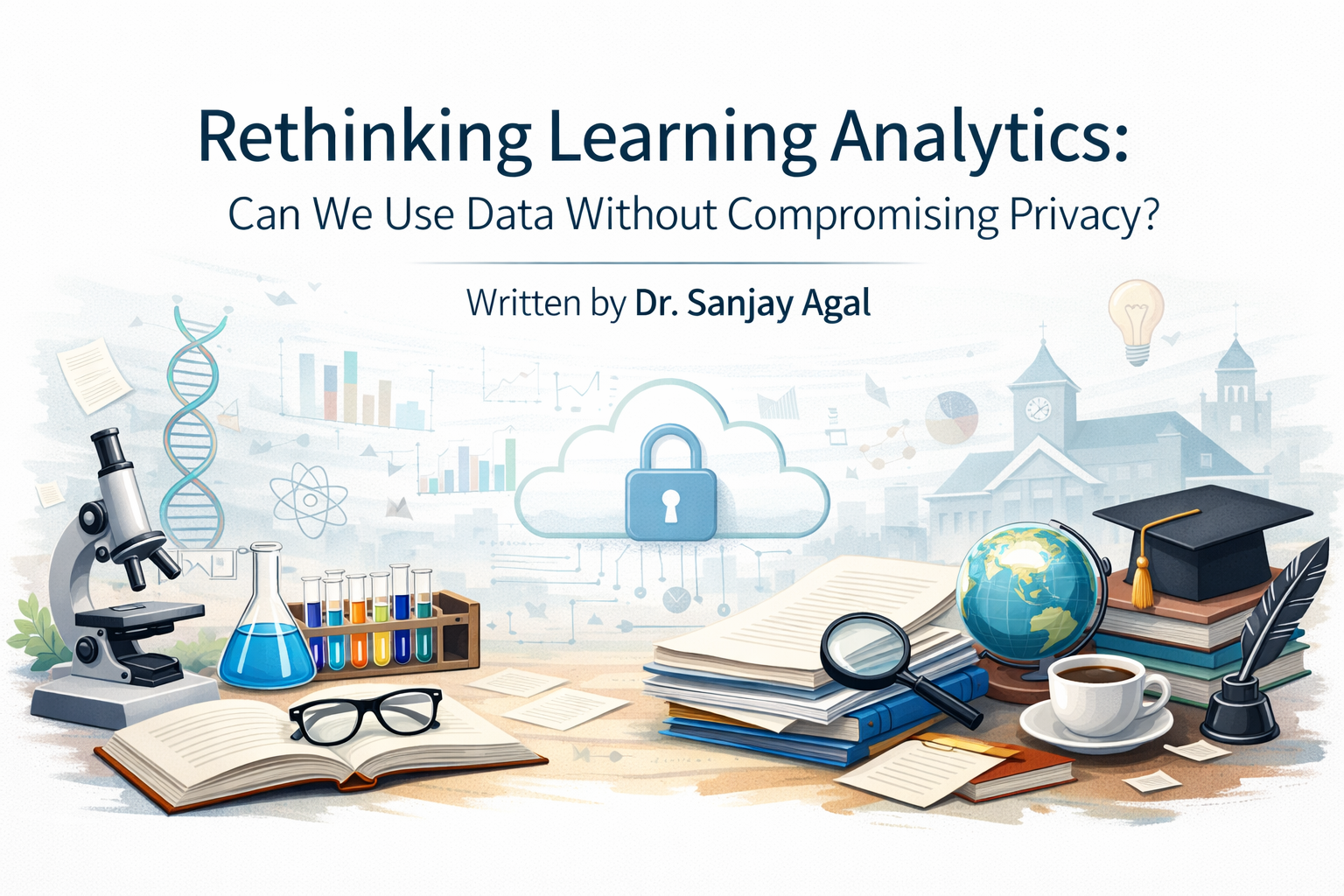



There are moments in a researcher's life that quietly change the direction of their work. For me, that moment did not happen inside a laboratory or while reading a breakthrough paper. It happened while observing students interact with our university's digital learning platform. Every login, every assignment submission, every quiz attempt, every discussion forum post, and every click generated data. Individually, these actions seemed ordinary, but together they told a remarkable story about how students learn, where they struggle, and how educators could help them succeed.
As both an educator and a researcher, I found myself fascinated by the possibilities hidden inside these digital footprints. I imagined intelligent systems capable of identifying students who needed timely support, personalizing learning experiences, and helping teachers make better academic decisions.
But another thought kept interrupting my excitement.
"Every data point represents a student, and every student has trusted us with something deeply personal."
That realization became impossible to ignore.
The more I explored learning analytics, the more I encountered an uncomfortable truth. Universities possess enormous amounts of educational data, yet very little of it can be shared. Researchers across the world are eager to build better predictive models, validate findings, and collaborate across institutions, but privacy regulations rightly prevent access to real student records. Institutions are caught between two responsibilities: protecting student privacy and advancing educational research.
I began asking myself a simple question.
"Why should innovation demand a compromise with privacy?"
Initially, I looked at traditional anonymization methods. On paper, they seemed promising. Remove names, identification numbers, and other obvious identifiers, and the problem should be solved. But the deeper I investigated, the clearer it became that anonymization was far from perfect. Advanced re-identification techniques could still reveal sensitive information, while aggressive anonymization often destroyed the very patterns that made the data valuable for research.
It felt as though we were trying to preserve knowledge by slowly erasing it.
For weeks, I searched for a better answer. Then one evening, while reading about recent advances in generative artificial intelligence, a different idea emerged.
"Perhaps the safest student record is the one that never belonged to a real student."
That single thought transformed my research direction.
Instead of asking how to hide real student data, I began asking how to create entirely new student data that behaved exactly like the original without representing any actual individual. If artificial intelligence could generate realistic images, music, and language, why couldn't it generate realistic educational data?
That question led to the creation of SynEdu-HEDL, a privacy-preserving synthetic dataset for higher education learning analytics.
Developing the dataset became much more than a technical exercise. I wanted it to capture the complexity of a real academic semester. Students do not learn in isolated moments; they evolve week after week. Their attendance changes, engagement fluctuates, assignments influence confidence, and assessments shape future performance. To reflect this reality, I combined Generative Adversarial Networks to learn complex behavioral patterns, temporal modeling to represent learning throughout a sixteen-week semester, and differential privacy to ensure that no synthetic record could reveal information about a real student.
The result was a dataset containing 20,000 synthetic student records with 85 educational features, each carefully generated to preserve meaningful relationships while protecting privacy.
Still, I knew that building the dataset was only the beginning.
The real challenge was determining whether it actually worked.
I remember the anticipation while evaluating the models. Would the synthetic data preserve enough information for meaningful research? Would privacy attacks uncover hidden risks? Could artificial data truly replace real educational records?
The results exceeded my expectations.
Privacy attacks performed no better than random guessing. Statistical analyses showed that the synthetic dataset closely mirrored the characteristics of real educational data. Machine learning models trained on synthetic data achieved predictive performance remarkably close to those trained on authentic student records.
Then came the result that made me pause.
When a small amount of real data was combined with the synthetic dataset, predictive performance improved even further.
At that moment, I realized synthetic data was not simply an alternative to real data—it could become a catalyst for more collaborative, ethical, and reproducible educational research.
"Sometimes the most powerful innovation is not creating something new, but protecting what already matters."
As I reflected on this journey, I realized that SynEdu-HEDL represented something much larger than a dataset. It represented a different philosophy for artificial intelligence in education. One where researchers do not have to choose between scientific progress and ethical responsibility. One where universities can collaborate openly without exposing confidential student information. One where students can trust that their digital footprints are contributing to better education without sacrificing their privacy.
Today, as artificial intelligence becomes increasingly integrated into classrooms and campuses, I believe our greatest responsibility is not merely to build smarter algorithms but to build systems worthy of trust.
"Artificial intelligence should never replace human values; it should reinforce them."
Looking back, this research changed me as much as it changed my understanding of data. It reminded me that behind every dataset lies a community of learners whose aspirations deserve both innovation and protection. Technology alone cannot transform education. Trust can.
As researchers, we often celebrate higher accuracy, faster algorithms, and larger datasets. Yet I believe the true measure of progress is different. It is whether our innovations improve lives while respecting the people they are designed to serve.
That is the future I envision for learning analytics—a future where privacy and progress walk together, where collaboration is built on trust, and where artificial intelligence empowers education without ever compromising the dignity of the students at its heart.
"The future of education will not be defined by how much data we collect, but by how responsibly we choose to use it."
— Dr. Sanjay Agal
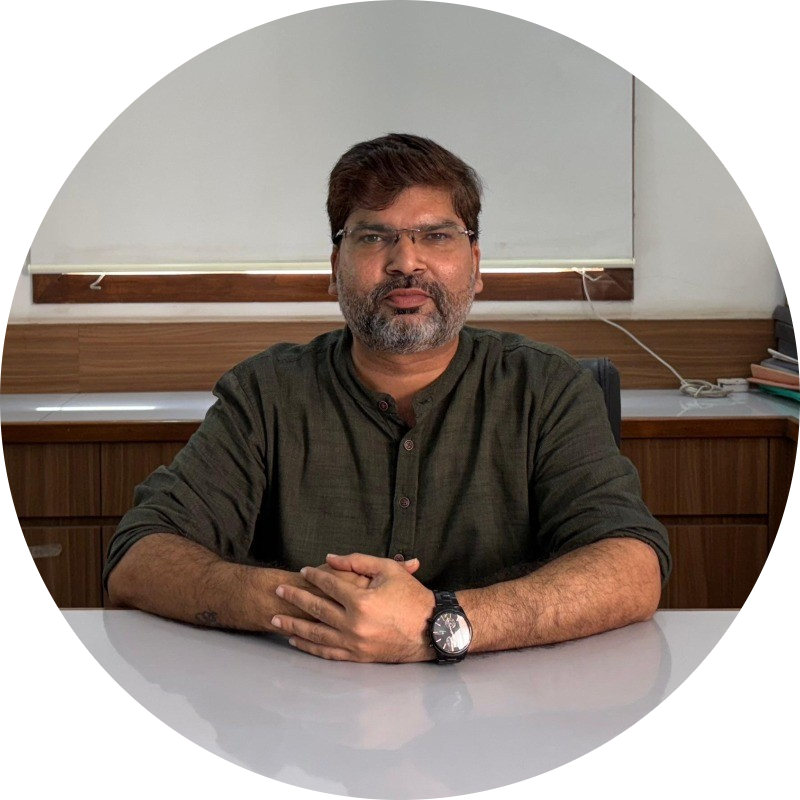
I am Dr. Sanjay Agal, an educator, researcher, and academic leader dedicated to advancing the frontiers of knowledge and shaping the future of engineering education. Currently, I serve as Professor and Head of the Department of Artificial Intelligence and Data Science at Parul University, Vadodara, India. My professional journey also includes serving as the Principal of Dr. V. R. Godhania College of Engineering & Technology, Porbandar an opportunity I was formally endorsed for by Gujarat Technological University (GTU) in 2023.
My career has been guided by a deep commitment to innovation-driven learning and impactful research. Over the years, I have authored sixteen books and published numerous research papers in reputed international journals. I have also secured several patents, reflecting my sustained efforts to bridge theoretical understanding with meaningful real world applications.
With a vision to inspire and empower the next generation of thinkers, innovators, and problem solvers, I strive to foster an environment where curiosity, creativity, and academic excellence thrive. Whether through teaching, research, or academic leadership, my mission remains the same: to contribute to a transformative educational ecosystem that benefits students, faculty, and society at large.
Follow the Topic
-
Scientific Reports
An open access journal publishing original research from across all areas of the natural sciences, psychology, medicine and engineering.

Related Collections
With Collections, you can get published faster and increase your visibility.
Infectious disease diagnostics
Publishing Model: Open Access
Deadline: Sep 23, 2026
AI in Education
Publishing Model: Open Access
Deadline: Oct 09, 2026


Please sign in or register for FREE
If you are a registered user on Research Communities by Springer Nature, please sign in