
This article draws on one of my recent interviews with a renowned Indian singer (watch the interview here) to illustrate the kind of analysis I hope to undertake through my ongoing research on mental health from the perspective of various professions.
One moment in the interview particularly stayed with me because of a difference in how we interpreted the same analogy. I introduced the image of grass blades bending with the wind and returning to their original form as a way of illustrating how sensitivity can be viewed as a strength. The interviewee, however, interpreted the image as a metaphor for flexibility rather than rigidity.
Ironically, this difference in interpretation made me question my own rather rigid reading of the analogy and, more broadly, what we might miss when we become too attached to a certain perception.
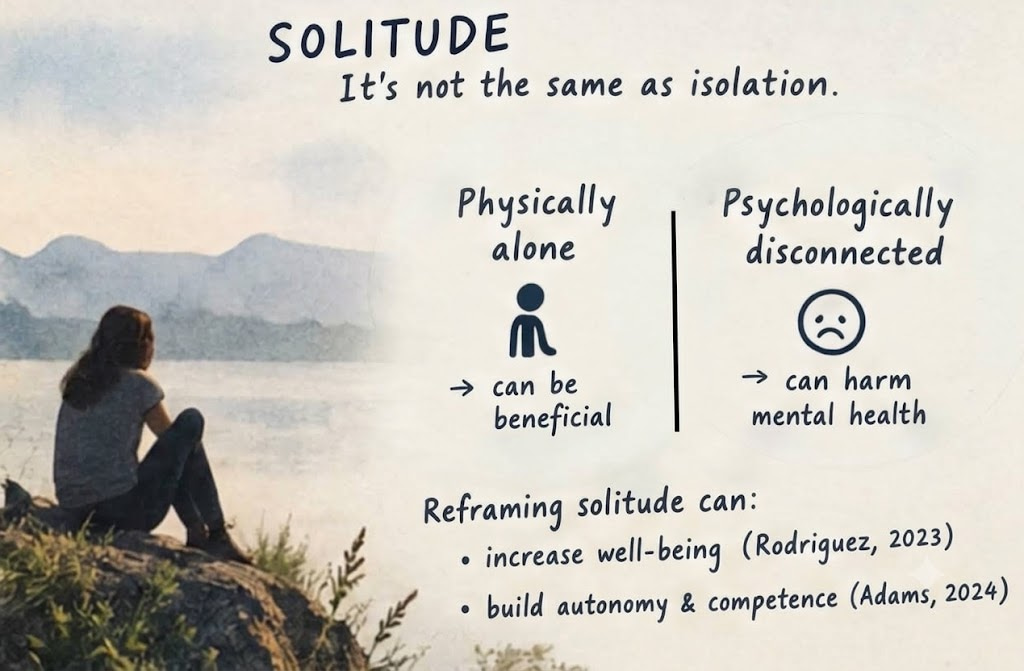
Another example of how a shift in perception can change the way we understand an experience is solitude. One of the most striking distinctions in the interview is between being physically alone and feeling psychologically disconnected. Recent work has found that reframing solitude as potentially beneficial can help people experience time alone more positively (Rodriguez, 2023). Other research suggests that autonomy and competence experienced during solitude can also contribute to greater daily well-being (Adams, 2024).
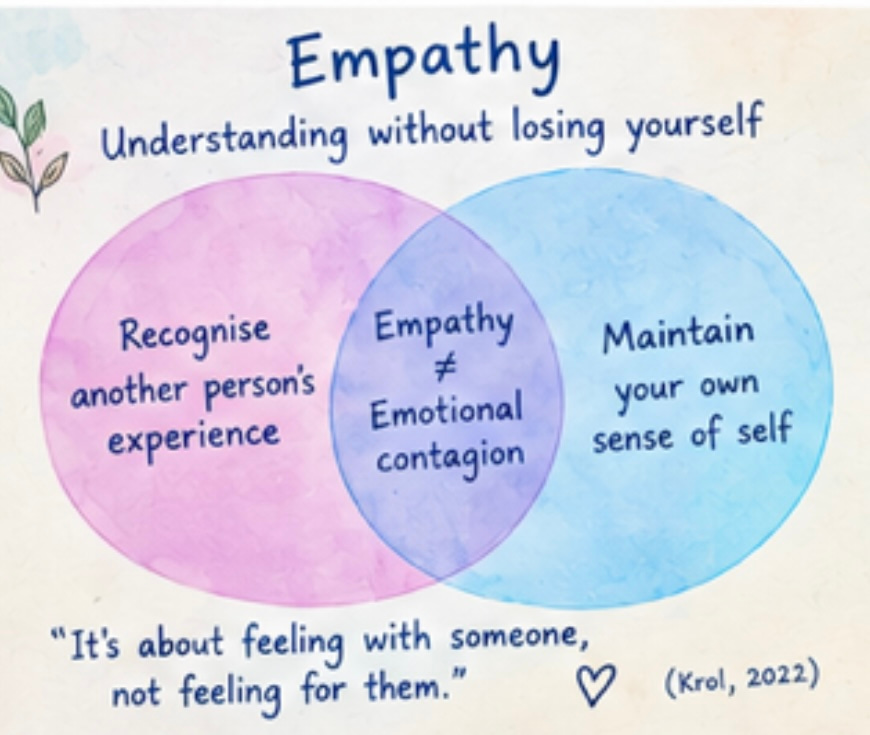
This is not the same as reclusion, as mental wellbeing is also connected to our sense of social connection, which closely ties in with empathy. The interview’s discussion of empathy raises another important mental-health theme: the desire to be understood can sometimes overshadow the effort to understand others. Psychological research distinguishes this from emotional contagion by emphasising the ability to recognise another person’s experience while retaining a sense of where their emotions end and our own begin (Krol, 2022).
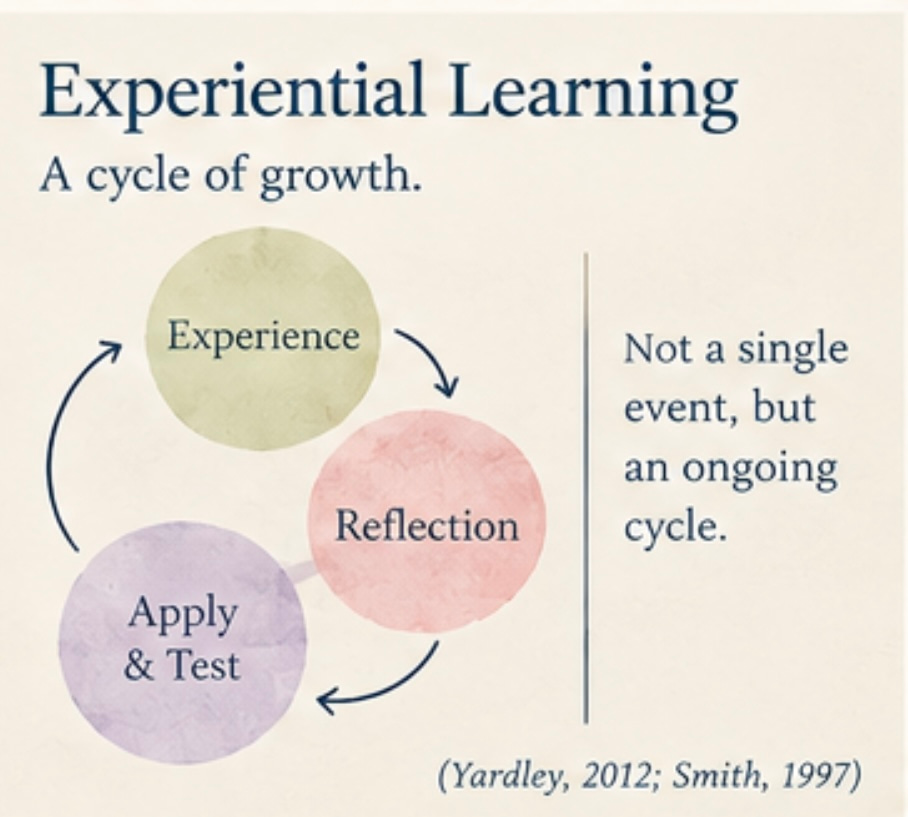
This sense of self (and of others) often forms the basis of experiential learning, another theme that emerged in the interview in contrast to self-help and other forms of guidance. Existing frameworks emphasise the dynamic (rather than static) role of experience followed by reflection and the testing of new understandings in subsequent situations as a constant iterative process (Yardley, 2012; Smith, 1997).
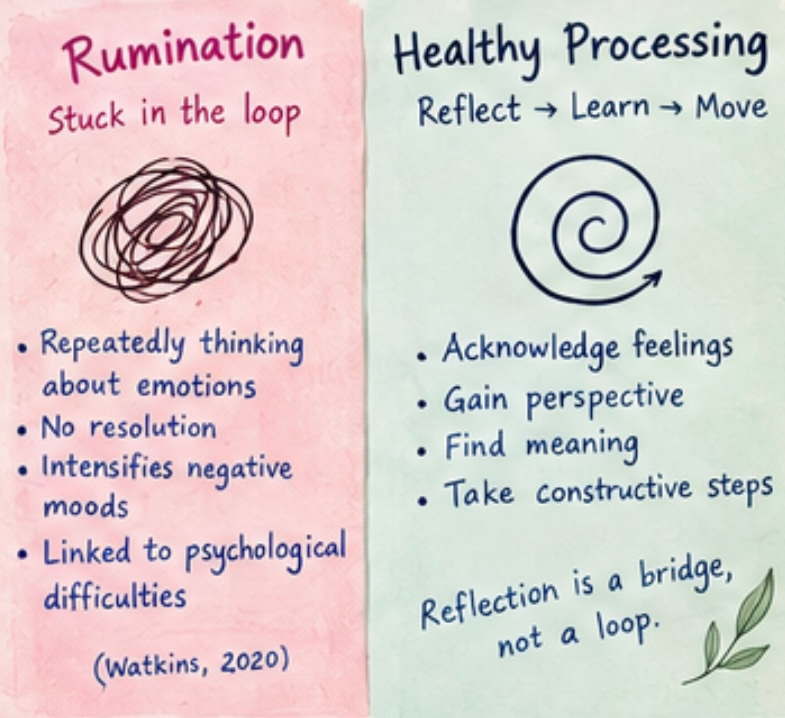
Iterations, however, are often confused with endless loops. The interview touches on repeatedly thinking about emotions like sadness without moving toward resolution, which can become rumination. Research has linked rumination with the intensification of negative moods and a range of psychological difficulties (Watkins, 2020).
In an effort not to make this one an “endless loop,” I shall wrap up here! The interview touched on several deeper themes that I hope to explore in future articles. The analysis will also continue drawing on insights from conversations with people from different professions, each bringing a unique lens.
Follow the Topic
📢 Introducing: # Mental Health
Mental Health is a Topic created to increase visibility and impact of research in this area and facilitate exchange amongst researchers.
Continue reading announcement