Robust and Biodegradable Heterogeneous Electronics with Customizable Cylindrical Architecture for Interference‑Free Respiratory Rate Monitoring
Published in Healthcare & Nursing, Bioengineering & Biotechnology, and Materials
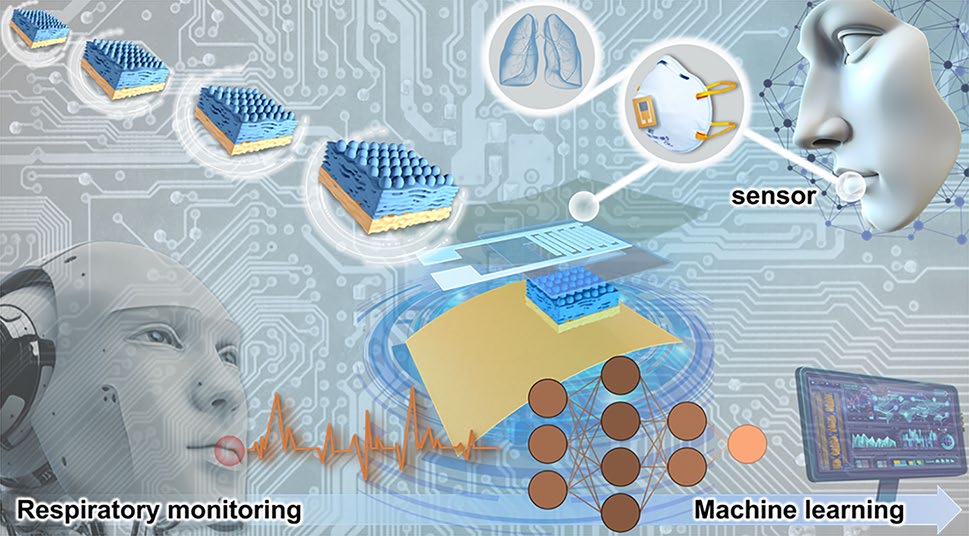
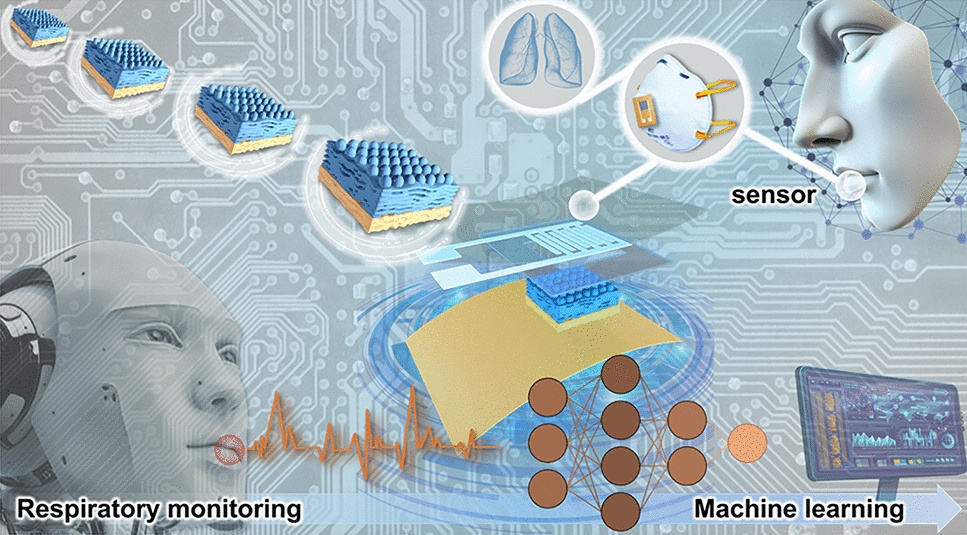

As respiratory diseases surge worldwide, the limitations of conventional spirometry and bulky pneumography—low patient compliance, signal distortion from motion, humidity or temperature swings—become ever more pronounced. Now, a cross-campus team led by Prof. Hailin Cong (Shandong University of Technology), Prof. Jun Yang (Beijing Forestry University) and Prof. Changyou Shao (Dalian Polytechnic University) has unveiled a high-fidelity, eco-responsible solution in Nano-Micro Letters: a cellulose-based piezoresistive sensor (CPS) that pairs MXene nanosheets with TEMPO-oxidised cellulose nanofibrils inside a customizable cylindrical micro-dome architecture, delivering interference-free, real-time respiration-rate tracking even under bending, high humidity (50–100 % RH) or 30–80 °C thermal fluctuations.
Why the New Sensor Matters
- Sustainable Core: All building blocks—TOCNF, gelatin, bacterial-cellulose encapsulation and screen-printed Ag interdigitated electrodes—are biodegradable, biocompatible and fabricated via low-cost mask-assisted vacuum filtration, cutting electronic-waste concerns.
- Motion & Artifact Immunity: A laminated “contact–separate” mechanism and shear-force-steered MXene/cellulose alignment (revealed by 5-ns molecular-dynamics simulations) dissipate off-axis stress, maintaining < ±2 % baseline drift over 25 000 breath cycles or 10 000 bending cycles (0–120°).
- Clinical-Grade Accuracy: Cylindrical domes (100–500 µm tunable) optimise strain distribution, giving 24 ms response/recovery, 90 % ML-classification accuracy (normal/fast/deep/cough) across volunteers of different ages, and stable output (≈ 2 × 10⁻² A) in 95 % RH fog or 79 °C airstream.
Innovative Design and Features
- Heterogeneous Laminate: A 1-mm gelatin “suppression layer” hydrogen-bonded to an MXene/TOCNF conductive film boosts puncture force to 4 N and toughness > 65 MJ m-3 while remaining ultra-thin (120 µm) and highly vapour-permeable (WVTR up to 4 424 g m-2 d-1).
- Scalable Soft Lithography: Laser-cut stencils define dome arrays on 25 × 30 cm2 sheets; roll-to-roll pressing (2 MPa, 5 min) laminates electrode, spacer and BC encapsulation for seamless facial conformity.
- Wireless Integration: A Bluetooth module on a standard mask streams data to a smartphone; deep-learning segmentation of peak/valley patterns achieves ROC-AUC ≥ 0.96 for every breathing state—enabling at-home sleep-apnoea screening or post-surgery surveillance.
Applications and Future Outlook
- Point-of-Care & Home Health: Real-time differentiation of respiration patterns during daily activities or sports (badminton trial validated) offers early warning for asthma, COPD or COVID-19 relapse.
- Eco-Electronics Pipeline: Complete oxidative disintegration within 72 h in 4 % H2O2 and soil-burial breakdown by 150 days point to disposable, guilt-free deployment in mass fever clinics or disaster zones.
- Challenges & Roadmap: Long-term enzymatic stability, large-area MXene supply chains and regulatory biocompatibility tests are next milestones; upcoming work will integrate on-chip signal processing and energy-harvesting films for battery-free, continuous respiratory surveillance.
This work pioneers a customizable, green-materials route to high-precision wearable sensors, promising sustainable, interference-free respiratory monitoring for vulnerable populations and tele-health platforms.

Editor of Nano-Micro Letters, which is an Open-Access, peer-reviewed journal reported papers that have at least one dimension ranging from a few sub-nanometers to a few hundreds of micrometers. The journal is published by Springer Nature and indexed by SCI, EI, SCOPUS, Pubmed, etc. The 2024 JCR Impact Factor is 36.3. The 2024 CiteScore is 53.1.
Follow the Topic
-
Nano-Micro Letters
Nano-Micro Letters is a peer-reviewed, international, interdisciplinary and open-access journal that focus on science, experiments, engineering, technologies and applications of nano- or microscale structure and system in physics, chemistry, biology, material science, and pharmacy.




Please sign in or register for FREE
If you are a registered user on Research Communities by Springer Nature, please sign in