Searching for spiritual renewal: Award-winning research explores a new path to lasting faith formation
Published in Philosophy & Religion


While widely discussed in adult education, heutagogy has not until now been empirically examined in relation to spiritual formation; this study provides the first multi-year action research evidence in this area.
Drawing on decades of pastoral ministry and professional experience in coaching and mentoring, Dr Hukkinen observed that people often experience deep transformation when they are given space to reflect, take responsibility, and respond thoughtfully to life’s challenges. This insight prompted him to examine whether similar approaches could strengthen spiritual formation in church contexts, where spiritual growth can sometimes become passive or overly instruction-focused.
Working with his supervisors and co-authors, Professor Johannes M. Luetz and Associate Professor Tony Dowden, Dr Hukkinen developed and evaluated a mentoring model that places strong emphasis on participant ownership. Rather than primarily directing people what to do, the approach centres on attentive listening, reflective conversation, journalling, and personal goal-setting. Participants were encouraged to engage actively with their faith in the context of everyday life and to pursue spiritual growth in ways that were meaningful and sustainable for them.
Over the course of this multi-year action research project, 143 qualitative data sets were analysed, comprising more than 5,500 minutes of recorded engagement and over 700,000 words of transcribed material, highlighting the depth and scale of the study.
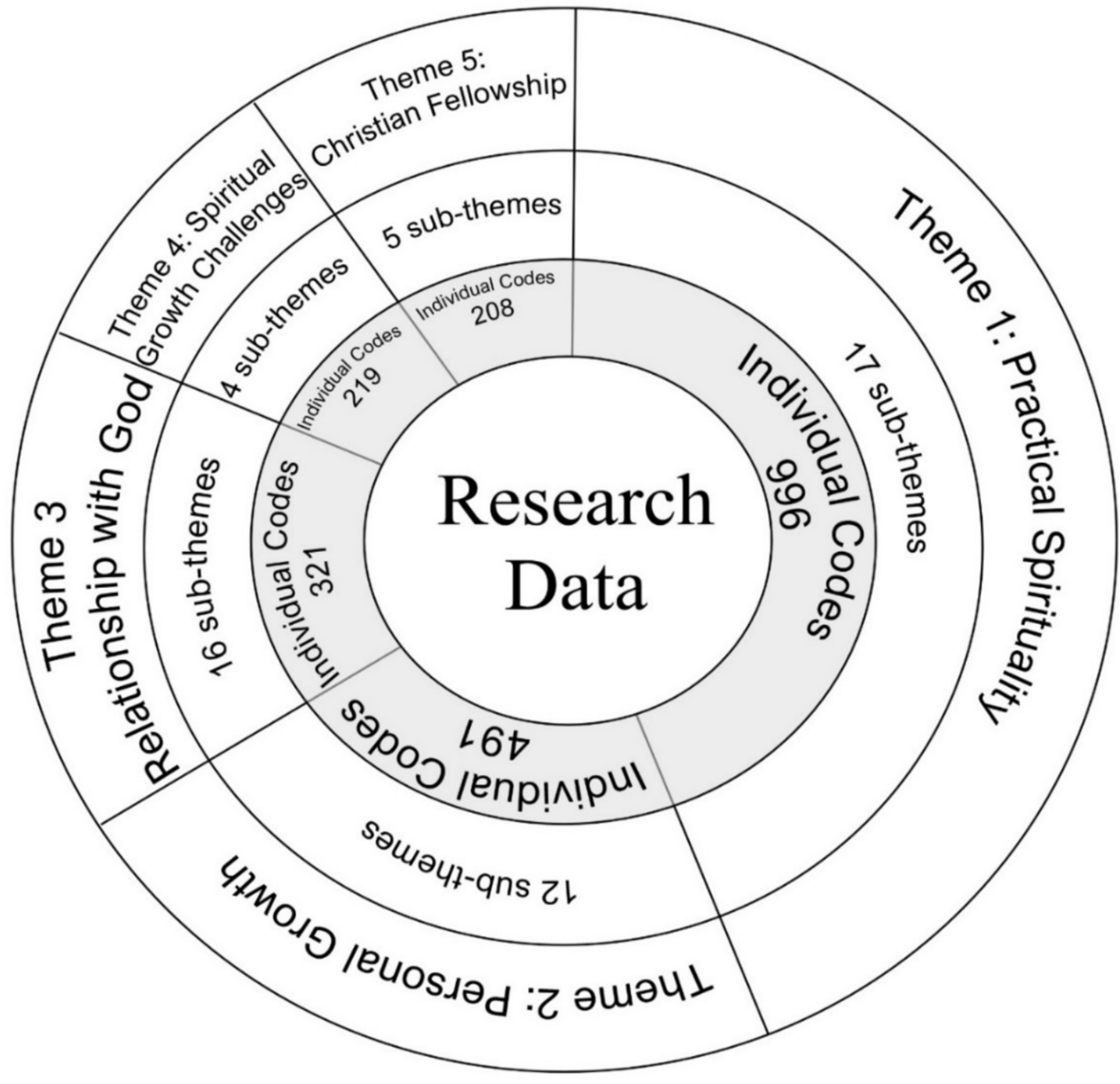
The findings were encouraging. Participants described significant change in areas such as everyday faith practice, personal development, resilience through challenges, a deepening relationship with God, and the importance of Christian community. The research suggests that spiritual growth is strengthened when individuals are supported to take responsibility for their own formation within a structured and caring mentoring relationship.
For churches and Christian leaders, the implications are substantial. The study highlights the value of faith formation approaches that are relational, reflective, and responsive to individual context. By fostering active participation rather than passive reception, this model offers a practical pathway for nurturing deeper and more sustained spiritual growth across diverse Christian settings.
In recognition of the significance of this contribution to educational research and practice, Dr Hukkinen was awarded the 2025 Alphacrucis President’s Doctoral Research Medal, underscoring the wider relevance of his work for church leadership development and faith-based learning.
The article contributes to the body of adult-education literature by demonstrating how heutagogy can support durable, context-sensitive spiritual growth in faith-based community settings, with transferability beyond Australia and Christian traditions.
Hukkinen, E., Luetz, J.M., & Dowden, T. (2026). Heutagogy and spiritual growth: evidence from multi-year action research. Journal of Religious Education. 1–22. https://doi.org/10.1007/s40839-026-00291-w

Johannes M. Luetz is Professor of Sustainability and Religion and Director of Graduate Research and Research Development at Alphacrucis University College, based in Brisbane, Australia.
He is an interdisciplinary social scientist whose work examines ecological and climate adaptation challenges through spiritual, humanitarian, and policy lenses, with a particular focus on worldview-inclusive learning.
Raised across Sierra Leone, Switzerland, Germany, and Australia, he has conducted research at the science–faith, interfaith, and science–policy interfaces.
He is Adjunct Associate Professor at the University of New South Wales and Adjunct Professor at the University of the Sunshine Coast, and serves on the editorial boards of international journals.
Follow the Topic
-
Journal of Religious Education
This is a refereed publication for the academic exploration of the task of religious education in contemporary society and in particular faith-based schools.