Seeing the Invisible: 3D-Printed MOF Models Make Complex Chemistry Tangible
Published in Chemistry
Explore the Research
acs.jchemed.6c00224?utm_campaign=related_content&utm_source=HEALTH&utm_medium=communities
For centuries, crystal models have been essential tools for understanding the invisible architecture of matter. From clay minerals in 1783 to today's digital renderings, scientists have always sought ways to make the microscopic world visible. But when it comes to metal-organic frameworks (MOFs) — the porous, cage-like materials that earned the 2025 Nobel Prize in Chemistry — even the best textbooks fall short.
MOFs are notoriously difficult to visualize. Their intricate networks of metal nodes connected by organic linkers don't follow the neat, standardized geometries of simple molecules. Traditional ball-and-stick models can't capture their complexity. Papercraft and plastic disk models are better, but they're fragile, time-consuming to assemble, and still can't accurately reproduce the delicate pore structures and interpenetrated frameworks that make MOFs so extraordinary.
Now, a research team led by Professor Chong-Chen Wang at Beijing University of Civil Engineering and Architecture has found a solution that is both elegant and accessible: high-fidelity 3D printing.
Published in the Journal of Chemical Education — the world's premier journal for chemistry teaching — their work introduces two complementary strategies that turn MOF crystal structures from abstract concepts into objects you can hold, turn, and explore.
Two Strategies, One Goal: Making MOFs "Seeable, Touchable, and Teachable"
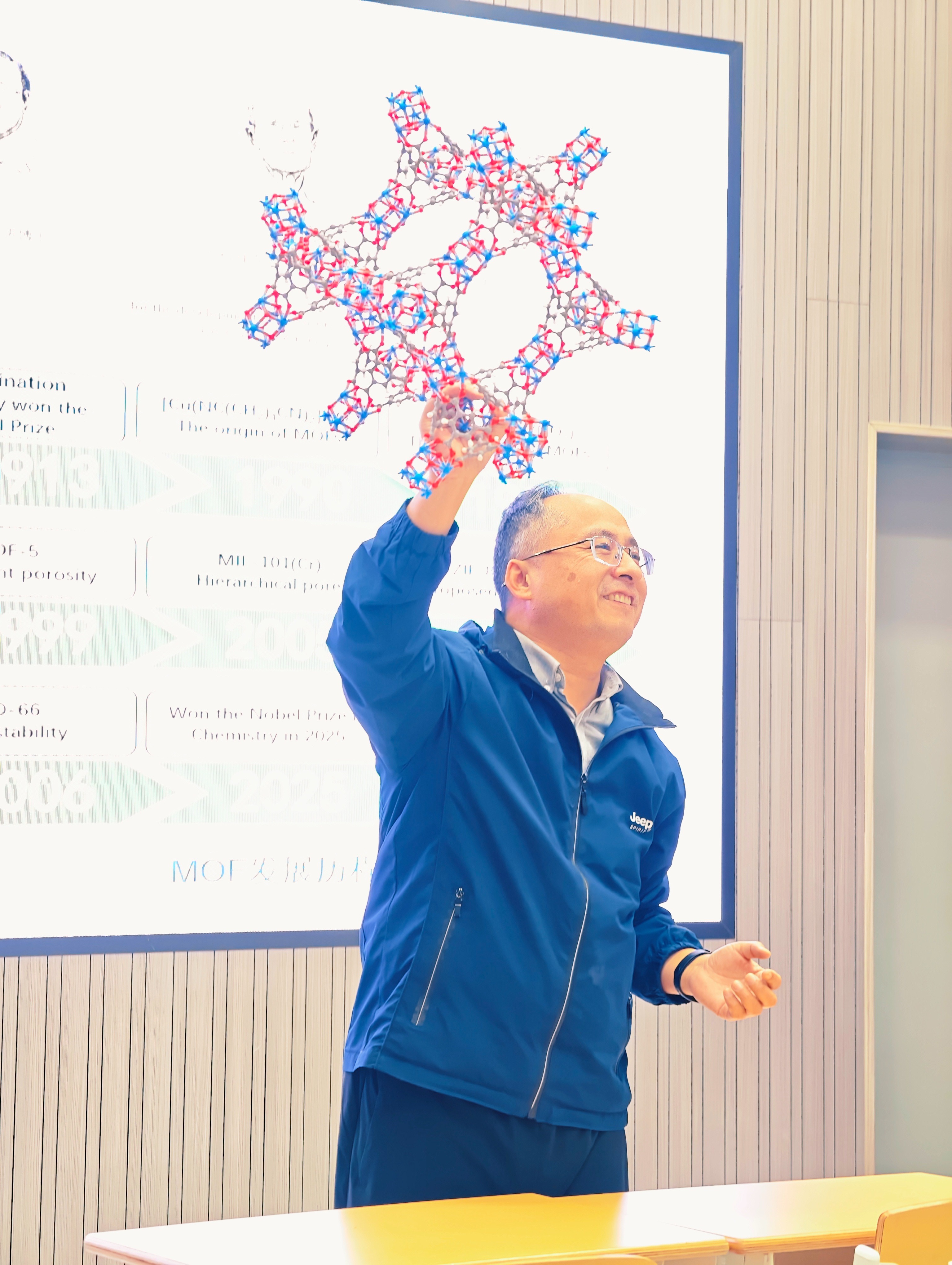
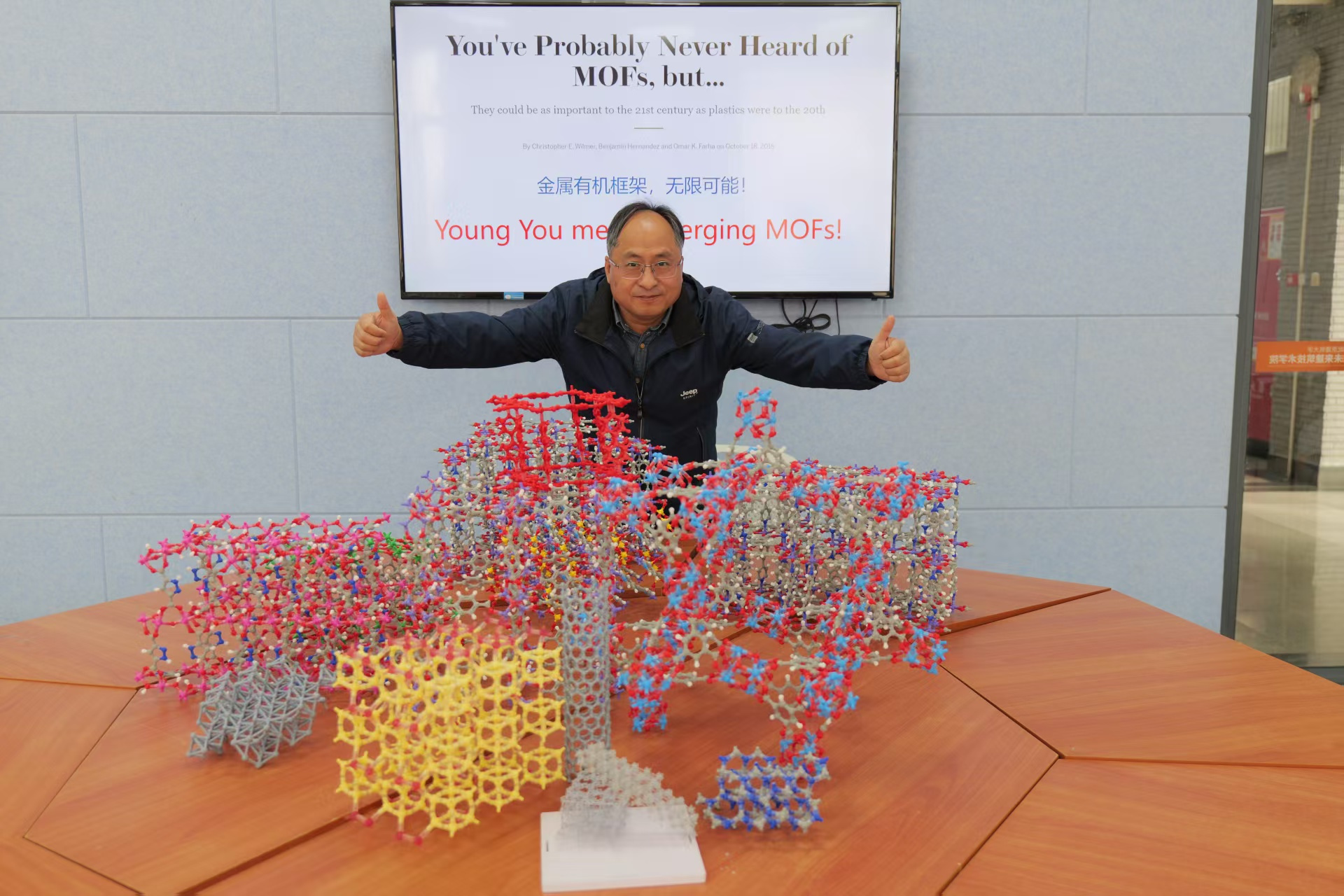
The first approach uses stereolithography (SLA) — a high-precision printing technique that cures photosensitive resin layer by layer with micrometer accuracy. The result? Monolithic, single-piece models of classic MOFs like UiO-66 and MOF-303 that replicate metal-node arrangements, linker connection angles, and pore morphologies with stunning fidelity. These are perfect for static displays and detailed structural reference.
But the real innovation lies in the second strategy: modular, multicolor fused deposition modeling (FDM) . Instead of printing the entire crystal as one piece, the team deconstructs it into secondary building units (SBUs) — the fundamental repeating modules of the MOF structure. Each SBU is printed separately in vibrant colors using standard PLA filament, then reassembled with flexible PVC tubing as connectors.
This "disassemble-then-assemble" approach does what traditional models cannot. It allows students to take the model apart and put it back together, understanding how each component fits into the whole. The flexible joints even enable simulation of dynamic behaviors — like framework stretching or ligand rotation — that occur in real MOF crystals. And because the design is modular, damaged parts can be easily replaced, ensuring durability for years of classroom use.
Perhaps most importantly, the workflow is built entirely on open-source software (Mercury, CHITUBOX, Bambu Studio) and affordable desktop printers. No industrial-grade equipment required. No expensive commercial kits. After the initial investment, each model costs remarkably little to produce — making this approach scalable for schools, universities, and science museums worldwide.
From Research Lab to Classroom: Students Learn by Touching
The team didn't stop at building models — they put them to the test. In a small science outreach session for students with limited MOF experience, instructors combined projected slides with hands-on manipulation of the 3D-printed models. Students examined node-linker connectivity, explored pore channels, and discussed how specific structural features influence adsorption, stability, and catalytic performance.
The results were striking. Before the activity, nearly 60% of students rated their understanding of MOF structure-property relationships at the lowest levels. Afterward, 82% moved to the highest comprehension levels. Sixteen out of seventeen students improved by at least one level, and none moved backward.
These numbers tell a simple but powerful story: When students can see and touch a structure, they understand it.
Beyond Teaching: A Tool for Scientific Discovery
The models have also proven their value in research. When the team built models of two novel MOFs — BUC-95 and BUC-96 — they discovered something unexpected. By physically manipulating the interpenetrated frameworks, they observed that BUC-95 could undergo dynamic stretching, while BUC-96 (which contains DMF guest molecules) could not. This hands-on observation inspired them to verify the behavior using advanced characterization techniques — a finding that later contributed to a publication in Nature Communications.
In other words, the models aren't just teaching aids. They're tools for thinking — tangible platforms that help researchers visualize structural differences, generate hypotheses, and communicate complex ideas more clearly.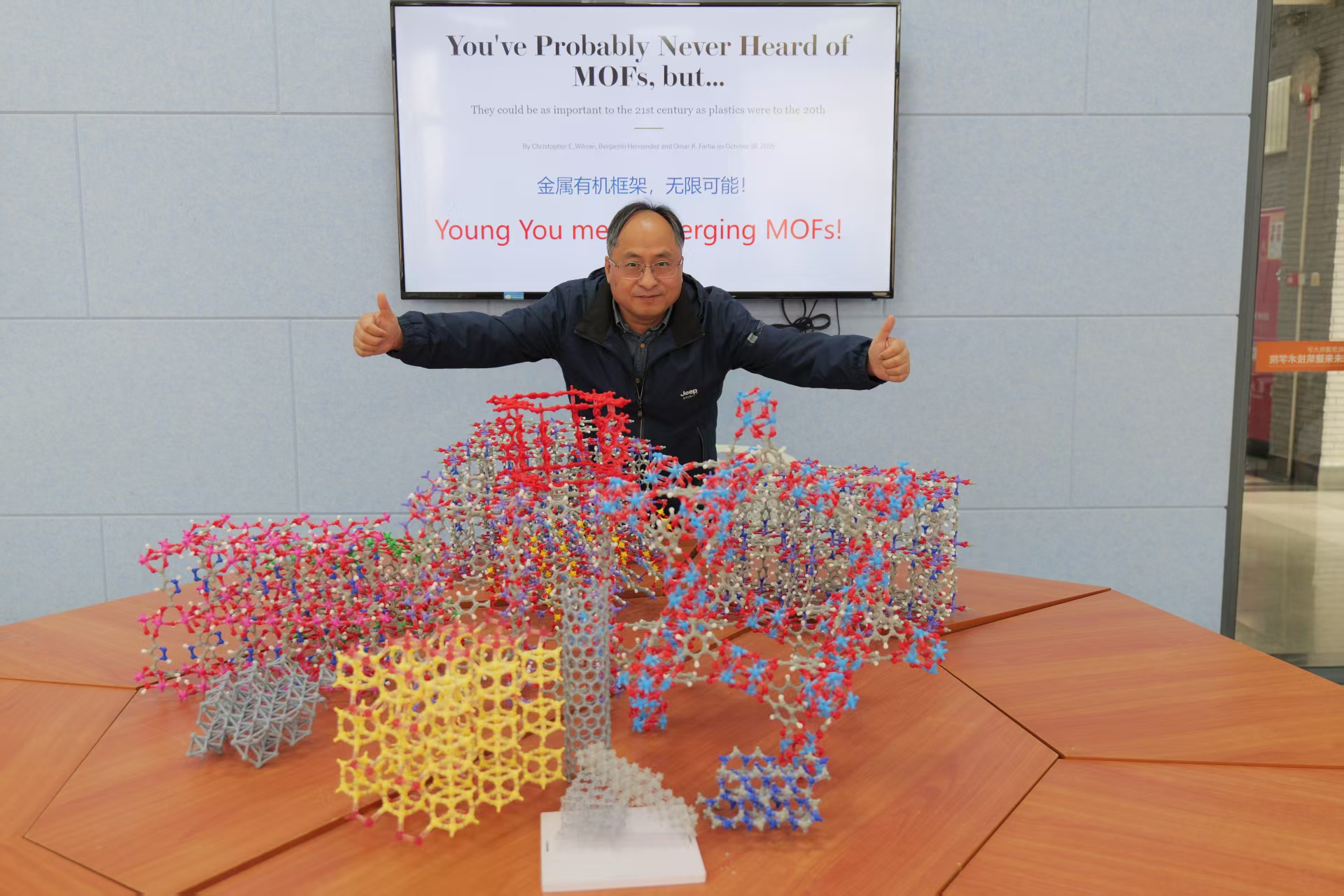
A New Standard for Chemistry Education
The significance of this work extends far beyond MOFs. The dual-strategy approach is theoretically applicable to any crystal structure that can be visualized in three dimensions. Whether you're teaching coordination chemistry, materials science, crystallography, or simply introducing MOFs to a curious public, these models make the invisible visible.
As one peer reviewer noted: "I especially like the idea of using physical models to help students understand MOF structures that are otherwise hard to read from flat figures."
Professor Wang's team has shown that with creativity, open-source tools, and affordable technology, we can transform the way chemistry is taught — bridging the gap between abstract data and physical intuition, one printed model at a time.
The future of chemistry education is not just digital. It's tangible.
Reference: Yu, W.-J., Qiu, F., Han, T.-J., et al. (2026). Three-Dimensional Printing of Metal-Organic Framework Crystal Structure Models for Chemical Education: Methods and Applications. Journal of Chemical Education. DOI: 10.1021/acs.jchemed.6c00224