Sharing our research: Track Impact, Tell Your Story, Reach the World
Published in General & Internal Medicine and Public Health

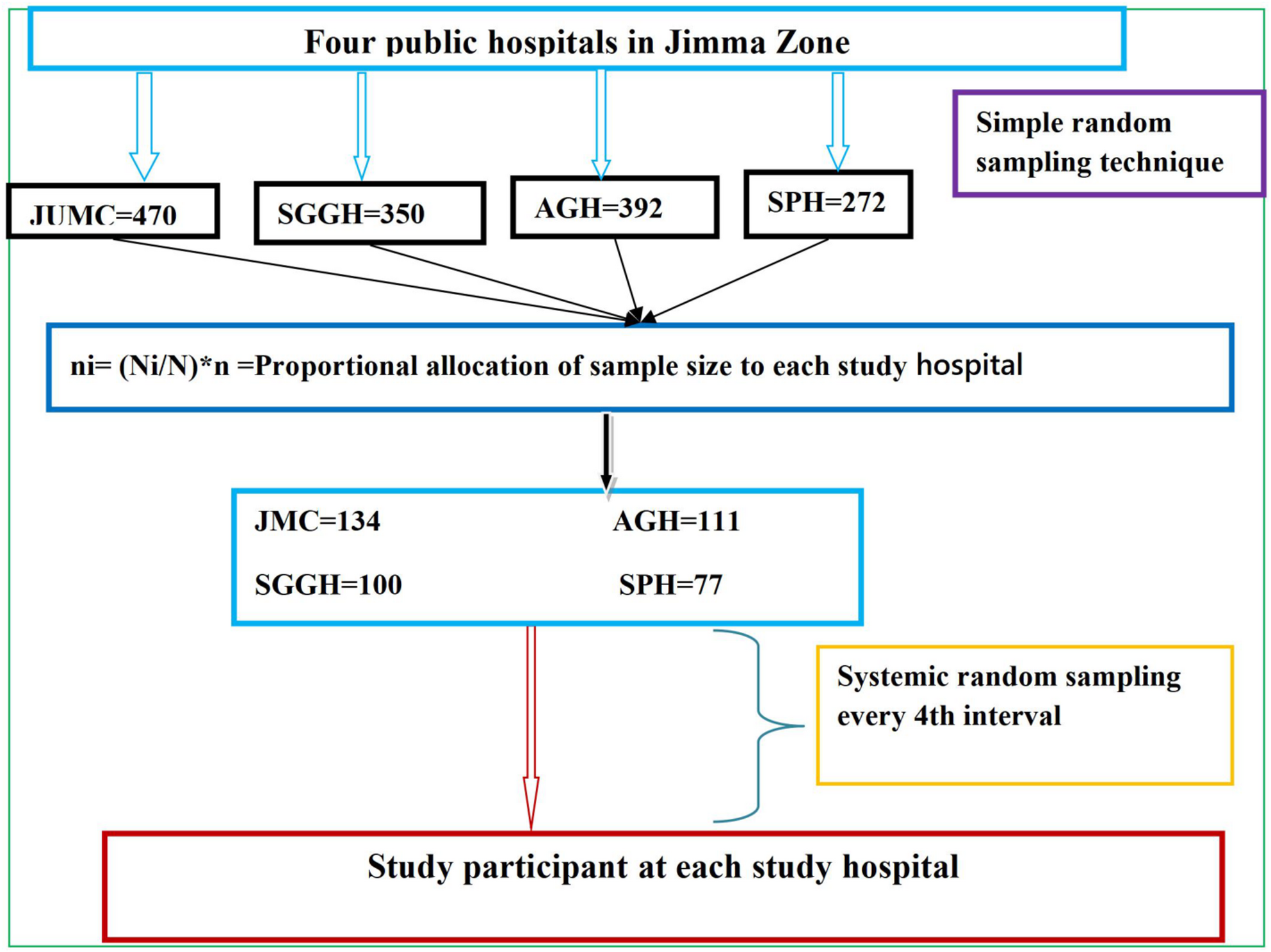

Getting to this point was not a straightforward journey. The idea began as a simple research question, but transforming it into a publishable paper required long nights spent refining the protocol, revising tools, collecting data under real-world constraints, and constantly questioning whether the design was robust enough. There were moments of doubt during the analysis, especially when the results did not align neatly. The writing phase followed, demanding clarity, structure, and patience. Submitting the manuscript felt risky, as peer review would expose every weakness.
The review process itself tested my resilience. Critical comments necessitated careful revisions, reanalysis, and stronger justifications of methods and findings. Each round of feedback elevated the work to a higher standard. There were delays, formatting corrections, supplementary file adjustments, and small technical issues that loomed larger at the time. But persistence carried me through. Receiving the message that the article is now published makes every revision, correction, and moment of uncertainty worthwhile. It is not just a publication; it is proof of discipline, growth, and a commitment to advancing knowledge.
https://links.springernature.com/f/a/tjenmrrsHX1kUle8RrPEJQ~~/AABE5hA~/dhYku-mh33WQ0QS73qZ3fhvWWcmOCEWTQjVfh8-tczuuTgNW884qC-eONyQik3EVpRkDbz56rGLtvkvkiu7JeTCn7_DYf-_p80SSNxUiXmdjP8FIhBt38GZ9OZqLrqRdA4xu6s6w-RkWT1vl0-tfddcmQkXrnCUvkdfAbmxaoc5RZbdIPYXLaPuA3OV3-fMdiWmdLjPvmM2aTG4OGHKgq78WebTMCVE7EB1p3KL-G15H4TqJ7iFfxRJBC-nPtePObWazuWs7a3Pnlx_GIxfvjjz35zEHQB0V2asYP5rLW_c~
I am a public health researcher and lecturer at Arsi University with a background in clinical midwifery and a strong focus on maternal and child health. My work centers on maternal health literacy, respectful maternity care, and improving the use of women-held pregnancy records to strengthen continuity of care. I am particularly interested in translating community-based evidence into practical interventions that improve service quality and health outcomes in low-resource settings. Through mixed-methods research and active academic engagement, I aim to contribute meaningful evidence that informs policy, supports frontline providers, and advances maternal health research in Ethiopia and beyond.
Follow the Topic
-
BMC Pregnancy and Childbirth
This is an open access, peer-reviewed journal that considers articles on all aspects of pregnancy and childbirth. It welcomes submissions on the biomedical aspects of pregnancy, breastfeeding, labor, maternal health, maternity care, trends and sociological aspects of pregnancy and childbirth.

Related Collections
With Collections, you can get published faster and increase your visibility.
Fetal and placental surgery
BMC Pregnancy and Childbirth is calling for submissions to our Collection on Fetal and placental surgery.
Fetal and placental surgery represents a rapidly evolving field that aims to address congenital anomalies and complications during pregnancy through in-utero interventions. These surgical techniques, which can include procedures such as fetoscopy and placental surgery, enable clinicians to treat conditions that may adversely affect fetal development, health, and survival. Placental surgery encompasses a variety of interventions, including but not limited to, the treatment of placental insufficiency, the management of placenta previa, and the correction of placental vascular anomalies. As technology and surgical techniques advance, this area of medicine continues to expand, offering promising new avenues for intervention that can significantly enhance neonatal outcomes.
The Collection invites researchers and clinicians in fields including maternal-fetal medicine, obstetrics and obstetrical surgery, and neonatology, to contribute research that explores topics including, but not limited to, in-utero surgical techniques, emergency obstetric practices, recent advancements in minimally invasive techniques, and outcomes associated with these interventions.
All manuscripts submitted to this journal, including those submitted to collections and special issues, are assessed in line with our editorial policies and the journal’s peer review process. Reviewers and editors are required to declare competing interests and can be excluded from the peer review process if a competing interest exists.
Publishing Model: Open Access
Deadline: Jun 10, 2026
Respectful maternity care - Part II
BMC Pregnancy and Childbirth is calling for submissions to our Collection on Respectful maternity care - Part II.
The World Health Organization defines respectful maternity care (RMC) as care that maintains dignity, privacy, and confidentiality of pregnant and birthing women, ensures freedom from harm and mistreatment, and enables informed choice and continuous support during labor and birth. RMC is considered a fundamental human right. Despite the acknowledged importance of providing RMC to all women, many women still experience disrespect and abuse during labor and birth across global contexts.
BMC Pregnancy and Childbirth is calling for submissions on ‘Respectful maternity care’ to bring together research on the benefits of respectful maternity care and the challenges in its implementation, both at the provider level and the system level. Both qualitative and quantitative research are welcome. Topics of interest include, but are not limited to, prevalence of disrespect and abuse in maternity care, implementation of respectful maternity care, RMC and maternal and neonatal outcomes, interventions to enhance and promote RMC, RMC in postnatal care, and effective communication and informed choice.
All manuscripts submitted to this journal, including those submitted to collections and special issues, are assessed in line with our editorial policies and the journal’s peer review process. Reviewers and editors are required to declare competing interests and can be excluded from the peer review process if a competing interest exists.
All manuscripts submitted to this journal, including those submitted to collections and special issues, are assessed in line with our editorial policies and the journal’s peer review process. Reviewers and editors are required to declare competing interests and can be excluded from the peer review process if a competing interest exists.
Publishing Model: Open Access
Deadline: Aug 12, 2026


Please sign in or register for FREE
If you are a registered user on Research Communities by Springer Nature, please sign in