SN BEN, SDG 3 & SDG 10: Ebola
Published in Microbiology, Sustainability, and Immunology







Ebola: What It Is, Where It Came From, and Why It Affects Africa Disproportionately
Abiola Lawal, Senior Publisher
Ebola virus disease is a severe and often fatal illness. It was first identified in 1976 during simultaneous outbreaks in Sudan and Zaire (now the Democratic Republic of the Congo). After these early outbreaks, Ebola seemed to fade from view until 1994, when new cases began appearing across Central Africa, particularly in the Democratic Republic of Congo, Gabon, Sudan and Uganda.
The most widely recognised outbreak occurred between 2014 and 2016 in West Africa. This outbreak hit Liberia, Sierra Leone and Guinea, spreading rapidly through urban areas becoming the largest Ebola epidemic ever recorded, with more than 28,000 reported cases and over 11,000 reported deaths.
Transmission and Symptoms
Ebola is a zoonotic virus, meaning it spreads from animals to humans and the first human transmission is suspected to have resulted from contact with an infected bat. Once introduced into human populations, the virus spreads through direct contact with the bodily fluids of an infected person or infected wild animals. This includes blood, vomit, faeces, saliva, sweat and breast milk, putting pregnant women and breast-feeding babies at high risk. Traditional burial practices in some African regions — which involve washing, touching or close contact with the deceased — have also been a notable cause of transmission. Ebola can also be transmitted via infected semen so sexual health education is offered alongside testing.
Symptoms typically include sudden fever, severe headache, muscle pain and weakness, followed by vomiting, diarrhoea and, in more serious cases, internal and external bleeding. Although early symptoms resemble Malaria, Ebola is not spread by mosquitoes.
Africa is disproportionately affected by Ebola for several interconnected reasons (SDG 10):
- Access to Healthcare: Many affected regions have limited healthcare infrastructure, which delays diagnosis, treatment and isolation. Rural clinics often lack trained staff, adequate supplies or proper protective equipment.
- Surveillance Challenges: Weak disease monitoring systems make it harder to detect outbreaks early. By the time health officials identify the virus, transmission chains are often well established and are spreading at high speed.
- Cultural and Social Practices: Close-knit communities, caregiving customs and certain funeral traditions increase the risk of exposure to infectious bodily fluids.
- Geography and Mobility: Some outbreaks begin in remote forested regions where people frequently interact with wildlife, increasing the likelihood of zoonotic spill-over.
- Resource Limitations during Crises: When outbreaks escalate, affected countries can struggle to mobilise sufficient resources quickly enough to contain spread.
Care, Prevention and Control
To prevent person-to-person transmission, strict precautions are essential when caring for patients. This includes isolating individuals with suspected or confirmed infections and using protective measures such as gloves, gowns, face shields and other personal protective equipment (PPE). Invasive procedures like inserting intravenous lines or handling blood and secretions require even greater care, as they present high-risk exposure points.
The bodies of people who have died from Ebola remain highly infectious. Safe and dignified burial or cremation practices are crucial, ensuring minimal contact and proper handling by trained teams.
The international response to the Ebola virus contributes to the UN SDG 3 – Good Health and Well-being. Programmes in across West and Central Africa continue to be in place to ensure outbreak surveillance and emergency resources are available. Vaccine development is ongoing and currently there are only two licensed vaccines, but they are highly effective. It is still a challenge to provide adequate vaccines to rural areas and other communities.
Community engagement and awareness is key to successfully controlling any outbreak of a serious disease such as Ebola.
Case study: Sierra Leone
Binta Bah, Masterclasses Training Sales Executive
The Ebola outbreak in 2014-2016 overwhelmed Sierra Leone’s already fragile health system. According to the World Health Organization, the outbreak resulted in 3,589 deaths and 8,704 confirmed infections. Other estimates (e.g. CDC) suggest the true numbers were higher. A significant proportion of health care workers were affected with 304 health care workers infected resulting in 221 deaths, including Dr Sheikh Umar Khan, Sierra Leone’s leading haemorrhagic fever expert.
At the start of the outbreak, there was widespread confusion about how to manage Ebola cases. The rules and clinical guidelines were developed in real time.
International Aid and Resource Inflows
Large amounts of international aid were committed to combat the outbreak (over $900 million in total). The UK committed over £400 million, the United States committed over $100 million, and the World Bank Group committed $34 million .
Resources included funding, PPE, medical personnel, and infrastructure. While these resources were abundant, mismanagement and poor allocation limited their effectiveness. PPE was frequently overpriced, increasing costs but not improving outcomes. Availability of resources was not the core problem—coordination and governance were.
Government Capacity and Systemic Weaknesses
Government hospitals were designated to fight Ebola but lacked the capacity, staffing, and logistics to manage both Ebola and non-Ebola care. As Ebola cases surged routine and emergency care for non-Ebola patients collapsed.
The pre-existing, chronic lack of trust within the Sierra Leone health system meant that patients also afraid of infection to access routine health services during the outbreak. Many people died from otherwise treatable conditions because hospitals could not admit them.
Estimates suggest that there were around 2,819 non‑Ebola deaths in Sierra Leone from malaria, HIV/AIDS and Tuberculosis due to reduced access to care and around 3,600 additional maternal, neonatal and stillbirth deaths.
Emergency measures were introduced under a State of Public Emergency, including forced quarantines, restrictions on movements and bans on public gatherings. These measures helped slow transmission but further strained public trust and health access.
The UK government, working with NGOs and local contractors, funded and built six major Ebola Treatment Centres, providing over 880 beds (e.g. Kerry Town: Run by Save the Children and British Army medics (Dedicated facility for health care workers); Port Loko: Run by GOAL (NGO); Hastings, Freetown: Run by Aspen Medical (on behalf of the Australian Government) among others).
Private hospitals had existing bed capacity, better equipment and stronger infection-control potential. Despite this, the government failed to meaningfully engage private hospitals in the Ebola response. PPE access was a major challenge for private hospitals. Initially, PPE had to be purchased privately at very high cost. Eventually, PPE was obtained through informal networks, but private hospitals were not really included in the response. The government could have temporarily taken over or formally partnered with private hospitals and used them as triage and non-Ebola treatment centres.
Charities, Campaigns, Awareness and Destigmatising Ebola
India Sapsed-Foster, Publisher
As previously discussed, Ebola outbreaks disproportionately affect low‑income African communities (SDG 10) due to limited healthcare access, rural isolation, weak infrastructure and global inequities in vaccine production and distribution. Efforts to localise vaccine production and strengthen African health systems are beginning to address these inequalities and advance progress towards SDG 10 and SDG 3 respectively.
Charities, organisations and volunteer support workers collaborate to assist Ebola sufferers by providing healthcare, creating disease surveillance systems, developing vaccines and planning effective emergency medical responses (SDG 3). The Baylor College of Medicine Children’s Foundation Uganda developed the first National Guidelines for the Care of Ebola Survivors and established the National Ebola Survivors’ Program. The program provides mental and psychological support, medical care and testing to Ebola survivors. By offering the testing of breastmilk and sperm, the initiatives of this program help to prevent further transmission of Ebola.
The effects of Ebola extend beyond the initial infection, and survivors often face emotional and social challenges alongside long‑term physical health issues. The mental health of survivors is particularly important, as many experience stigma and discrimination and may be ostracised from their communities and families. The Baylor College of Medicine provides counselling services and has developed a peer‑support programme in which survivors support others. The institution has trained 452 community mental health workers and 54 members of a survivor corps who volunteer to assist other survivors.
Social Income and International Mutual Aid provide similar support, primarily focusing on survivors in Sierra Leone, one of the poorest African countries. Following a ten‑year civil war and the world’s worst Ebola crisis, Sierra Leone continues to suffer from extremely high maternal and child mortality rates. International Mutual Aid provides free healthcare access for Ebola and malaria sufferers in Sierra Leone. Save the Children’s Child Resiliency Programme also offers mental health and emotional support to schoolchildren in therapeutic environments, supporting children who have lost family members to Ebola. Similarly, the Ebola Crisis Fund helped provide care for orphans, strengthen women’s healthcare services and prepare communities to respond to future outbreaks. In 2014 alone, the fund reached over 5.7 million people across Sierra Leone, Guinea and Liberia, where the virus was most prevalent.
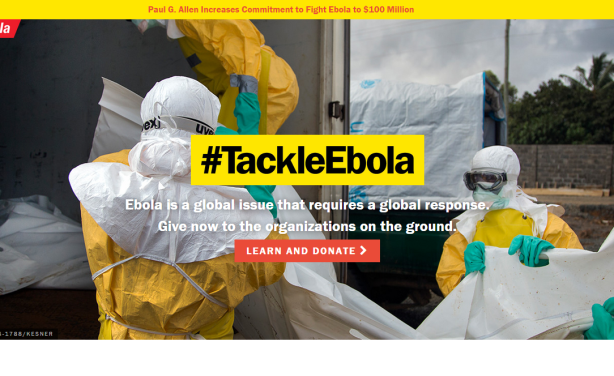
Tackle Ebola was a coalition created by Paul Allen to drive action to reduce Ebola cases in West Africa. The coalition achieved global reach through the involvement of celebrities, NBA players, health and advocacy organisations, governments and corporations. The campaign empowered communities by providing tools, sharing knowledge about the virus and focusing on destigmatisation through storytelling. Its #ISurvivedEbola campaign enabled survivors to share their experiences without fear of discrimination (see examples here and here). By sharing videos of survivors’ stories, #ISurvivedEbola helped close the gap between viewers and sufferers. Personal narratives allowed global audiences to develop empathy and gain a deeper understanding of the lived experiences of Africans affected by Ebola.
Waves for Water’s Ebola Survivors Initiative, launched in 2015, funded clean water systems in West Africa, providing safe drinking water for 10,000 people. The organisation also installed hand‑washing stations and distributed non‑contact infrared thermometers to reduce virus transmission.
The work of these charities contributes to strengthening African health systems and addressing inequality. By supporting disease surveillance systems, improving equitable access to healthcare and delivering effective emergency medical responses, these initiatives bring communities together and advance progress towards SDG 3.
Further reading:
Transmission dynamics and control of Ebola virus disease (EVD): a review
Biosocial Approaches to the 2013-2016 Ebola Pandemic
Inequitable access to Ebola vaccines and the resurgence of Ebola in Africa: A state of arts review
A Retrospective Review of Ebola Outbreak in West Africa: Social Determinants and Control Measures
Follow the Topic
-
BMC Public Health
An open access, peer-reviewed journal that considers articles on the epidemiology of disease and the understanding of all aspects of public health.

Ask the Editor - Immunology, Pathogenesis, Inflammation and Innate Immunity
Got a question for the editor about the complement system in health and disease? Ask it here!
Continue reading announcementRelated Collections
With Collections, you can get published faster and increase your visibility.
Monitoring, preventing, and managing type 2 diabetes
BMC Public Health is calling for submissions to our Collection on Monitoring, preventing, and managing diabetes at the population level. With rates of type 2 diabetes rising globally, especially in low- and middle-income countries and underserved communities, prevention strategies are critical. As the disease progresses people with diabetes are at increased risk of complications such as cardiovascular and kidney diseases, neuropathy and visual loss.
This Collection seeks submissions that explore population-level approaches to monitoring rates of diabetes, preventing or delaying the development of type 2 diabetes, and system-wide efforts to improve the management of the disease and reduce rates of complications, with a focus on improving health outcomes and reducing healthcare burdens.
Submissions are encouraged on primary prevention initiatives and culturally adapted, community-level interventions to reduce the risk of diabetes. Research aimed at improving systems for monitoring rates of diabetes and its complications through routinely-collected health data, or for improving management by enhancing patient engagement with healthcare systems or better identifying those in need, are encouraged. Research on diabetes education and support systems is also welcomed, with a focus on empowering individuals to adopt and sustain healthier lifestyles and avoid known causes of diabetes.
Additional topics of interest include (but are not limited to):
Access to healthcare and diabetes management
The impact of food insecurity on diabetes outcomes
Community-based interventions for low-income populations
Interventions to reduce exposure to environmental causes of diabetes
Financial barriers to diabetes medication and treatment
Housing instability, employment status and type 2 diabetes
Health literacy, poverty, and diabetes management
Policies to reduce poverty-related health disparities in diabetes
This Collection supports and amplifies research related to SDG 3: Good Health & Well-Being.
All manuscripts submitted to this journal, including those submitted to collections and special issues, are assessed in line with our editorial policies and the journal’s peer review process. Reviewers and editors are required to declare competing interests and can be excluded from the peer review process if a competing interest exists.
Publishing Model: Open Access
Deadline: Jul 16, 2026
Endocrine disruption as a public health issue
BMC Public Health invites submissions to our new Collection, Endocrine disruption as a public health issue. Endocrine disruption has emerged as a growing public health challenge, characterized by the interference of certain chemicals with the normal functioning of the endocrine system. Endocrine disrupting chemicals (EDCs) can mimic, block, or alter hormone signaling, leading to a range of adverse health outcomes. Common sources of EDC exposure include everyday products such as plastics, pesticides, and personal care items, all of which can release substances like bisphenols and phthalates into the environment and human body. Understanding the links between exposure to EDCs and eventual health outcomes is vital for assessing their implications for population health.
We welcome submissions that delve into various aspects of endocrine disruption. Key topics of interest include, but are not limited to:
Role of EDCs in metabolic, endocrine and immune-related disorders
Effect of EDCs in consumer products including personal care products
The links between EDC exposure and male and female reproductive health problems
The links between EDC exposure and certain cancers
Insights into the long-term consequences of early-life EDC exposure and transgenerational effects
Methodological advances in assessing the health impacts of EDC mixtures and cumulative exposures
Development and application of statistical approaches to better estimate the health effects of chronic and/or concurrent exposure
Validating models of cumulative exposure with measurement of combinations of EDCs in human tissues
Individual- and policy-level interventions to address health impacts of EDC exposures
The search for substitutes lacking endocrine disrupting properties
All manuscripts submitted to this journal, including those submitted to collections and special issues, are assessed in line with our editorial policies and the journal’s peer review process. Reviewers and editors are required to declare competing interests and can be excluded from the peer review process if a competing interest exists.
Publishing Model: Open Access
Deadline: Aug 26, 2026



Please sign in or register for FREE
If you are a registered user on Research Communities by Springer Nature, please sign in