The Decisions Nobody Teaches
Published in Education and Law, Politics & International Studies

We are trained to master the explicit requirements of science: methodology, grant writing, and data analysis. Yet, the real trajectory of a researcher is determined by a sequence of invisible decisions, moments of critical choice where there is no manual, no standardized criteria, and no supervisor to tell you what to do.
Ultimately, building a career in research is not just about mastering a scientific discipline. It is about developing professional judgement: the capacity to make high-stakes, highly personal decisions in an environment of total uncertainty.
Looking back, these are the invisible decisions that I believe truly define a researcher's journey.
1. Choosing a laboratory: Not all excellent labs are excellent places to grow.
We are trained to look at university rankings, department budgets, and publication records. But choosing a research environment solely based on prestige is a trap. Excellence is not a generic quality; it is highly contextual. A world-class laboratory can have a toxic culture, while a rising, less famous group might offer the exact intellectual oxygen and resources you need to thrive.
Looking back, I have come to believe that choosing a laboratory is perhaps the first real test of professional judgement: learning to look past the brand name and evaluate the actual ecosystem in which you will spend your days. Literature on Early Career Researchers (ECRs) consistently highlights that the institutional environment heavily impacts long-term productivity and mental well-being (van der Weijden et al., 2016).
2. Choosing a supervisor: You are choosing a relationship, not just a scientist.
We often select our advisors based on their H-index or their latest publication in high-impact journals. In doing so, we forget that we are not just choosing an expert; we are signing up for one of the most intense, asymmetric relationships of our adult lives. A great scientist is not automatically a great mentor.
As sociologists of education have long pointed out, the pedagogical and personal style of a supervisor can either foster autonomy or lead to severe professional stagnation (Delamont et al., 2000). Your professional survival depends on your ability to assess whether a PI will actively open doors for you, give you the space to fail, or treat you merely as a highly qualified pair of hands.
3. Scientific independence: Knowing when to stop being someone else's researcher.
At some point, the comfortable role of the "excellent executor" must end. Transitioning to scientific independence is rarely a formal moment marked by a promotion. It is a slow, often uncomfortable decision. It is the moment you decide to stop executing someone else’s vision and start defending your own, even if it means politely disagreeing with your PI or taking intellectual risks that make your current lab uneasy. It requires moving from a mindset of dependence to one of peer-to-peer collaboration, a shift that is crucial for securing independent funding later on.
4. Timing: Every move has a window.
Mobility is highly romanticized, but it does not have an infinite shelf life. Deciding when to move abroad, and perhaps more importantly, when to return, is a strategic puzzle. Go too early, and you lack the leverage to negotiate your position. Stay too long, and you risk drifting.
Returning is not a retreat; it is a complex, active maneuver that requires navigating a domestic landscape that has changed in your absence. Recognizing when a professional window is closing (or opening) is a matter of timing and strategic alignment, not luck.
5. Networks: Relationships require maintenance.
We are told to "network," as if it were a transactional task of collecting business cards at conferences. The invisible decision here is realizing that a global career requires the active curation of professional relationships across borders. When you move, your old network decays unless you deliberately maintain it. Knowing how to keep alliances alive without an immediate transactional goal is what separates a lonely researcher on the move from a well-supported, globally connected scientist.
6. Choosing when to stop: Deciding on the next destination.
At some point, every researcher has to decide. Is it time to stay in academia, or is it time to pursue opportunities elsewhere? Should I relocate to another country, or transition into a completely different role?
Academic careers often appear to follow a single, predetermined track, making alternative paths look like departures from "real" science. Deciding when to step off that track and choosing your next destination on your own terms is perhaps the ultimate exercise in professional autonomy. Studies tracking PhD cohorts emphasize that diversifying career goals early on is a sign of resilience, not failure (van der Weijden et al., 2016).
The Core Competency: Professional Judgement
When we look at these pivotal moments, a clear pattern emerges. Choosing a lab, managing a supervisor, timing a move, or deciding when to transition are not administrative hurdles. They are all expressions of the exact same competency: professional judgement.
None of these decisions can be made by following a checklist. They cannot be calculated with an equation, nor can they be resolved by looking at metrics. They require judgement.
Judgement can be developed. But only if we start talking about these decisions openly.
By bringing these invisible decisions into the light, we can help transform international mobility from a chaotic obstacle course into a conscious, strategic, and empowered journey. It is time to start discussing not just how we do our science, but how we decide our futures.
References
- Delamont, S., Atkinson, P., & Parry, O. (2000). The Doctoral Experience: Success and Failure in Graduate School. Falmer Press.
- van der Weijden, I., Teelken, C., de Boer, M., & Drost, M. (2016). Career satisfaction of postdoctoral researchers in relation to their expectations for the future Higher Education, 72, 25-40.
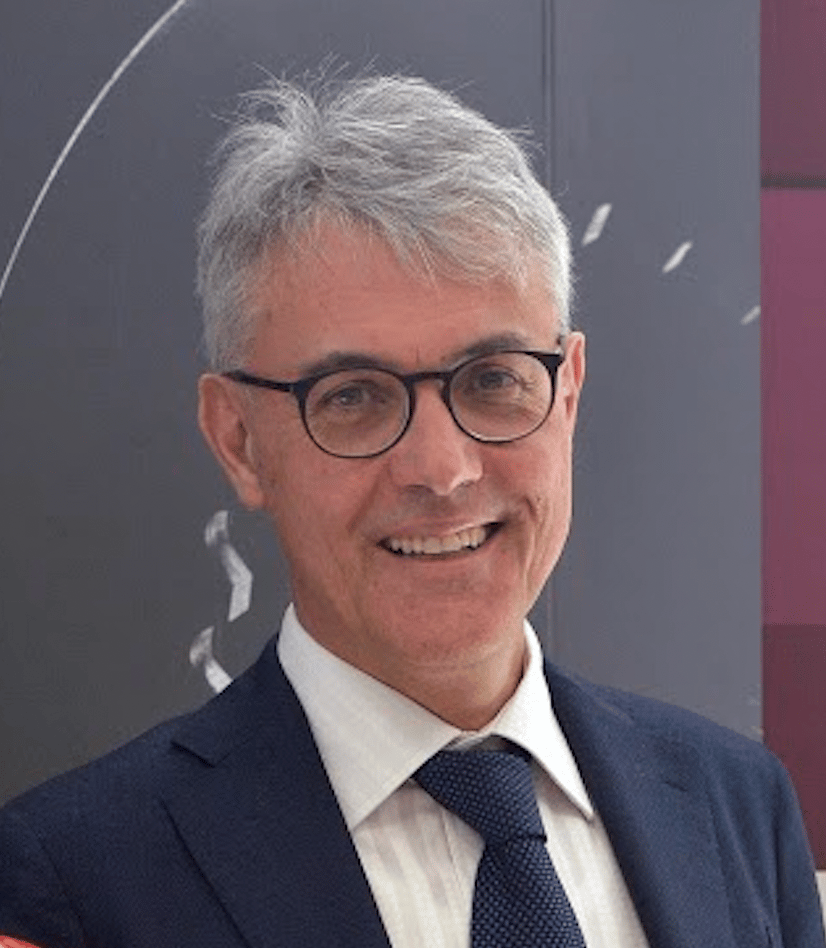
I am Full Professor of Metallurgy at the University of Trento (Italy), where I serve as Coordinator of the Doctoral School in Materials, Mechatronics and Systems Engineering and as the Rector's Delegate for Professional Education and Lifelong Learning. Alongside my research in metallurgy, I write about doctoral education, research careers, and the professional development of early-career researchers. I am the author of What No One Tells You About Academic Careers: A Realistic Guide to PhD, Research, and Becoming an Academic (2026).