The Effect of Listening to a Mother’s Voice on Emergence Delirium in Pediatric Patients Undergoing Adenotonsillectomy: A Prospective Study
Published in General & Internal Medicine, Pharmacy & Pharmacology, and Surgery



The main finding of this study is that the incidence of emergence delirium was lower in children who listened to their mother’s recorded voice during emergence from anesthesia.
Emergence delirium (ED) is most commonly observed within the first 10–20 minutes. Therefore, early intervention is recommended. Since we anticipated that PAED scores would be highest at the initial minutes of admission to the PACU, the maternal voice recording was initiated before emergence from anesthesia.
Effective results have been obtained with auditory stimuli in preventing ED in children. However, when these stimuli are compared with maternal voice, the superiority of maternal voice becomes evident. The maternal voice, delivered in the child’s native language, may therefore reduce anxiety more effectively. There is also evidence suggesting that language and speech abilities may be impaired under anesthesia.
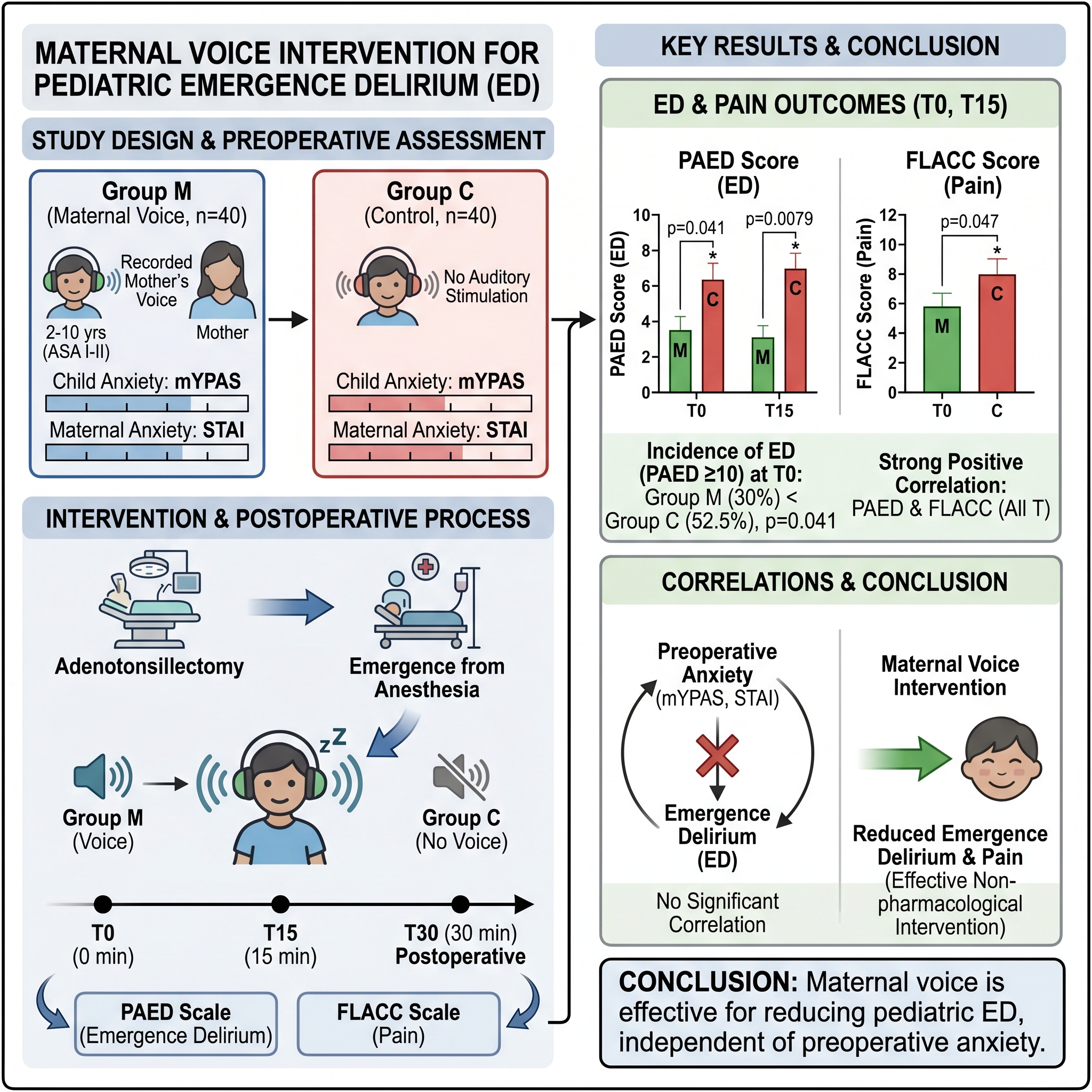
Non-pharmacological interventions, particularly exposure to the maternal voice, are effective in reducing the incidence and severity of emergence delirium. Auditory stimulation appears to be a valuable strategy for the prevention of emergence delirium in pediatric patients; however, maternal voice demonstrated greater efficacy than other auditory stimuli evaluated. Emergence delirium is especially prevalent among children undergoing otorhinolaryngologic procedures, underscoring the importance of preventive approaches. Given that prevention is more effective and clinically feasible than treatment, incorporating maternal voice into perioperative care may represent a simple, safe, and practical strategy for reducing emergence delirium in pediatric surgical patients.
While conducting this study, we closely witnessed children’s deep fear of being separated from their parents. We observed them trying to make sense of the operating room—a cold, noisy, brightly lit, and crowded environment that is anything but welcoming for a child. Once again, we realized that to every parent, their child is a precious miracle. This study forced us to confront a reality we all know but rarely strive to truly understand: we still have a long way to go to make surgical experiences more comfortable and secure for young patients. 🌟"
Follow the Topic
-
Pediatric Research
Pediatric Research publishes original translational research papers, invited reviews, and commentaries on the etiologies and treatment of diseases of children and disorders of development, extending from basic science to epidemiology and quality improvement.