The Ice Man: ancient microbiomes, environmental influences and a dynamic microbial ecosystem
Published in Microbiology


The Ice Man, aka Ötzi, is a 5,300-year-old mummy that was found by tourists in an Alpine glacier in 1991. Ötzi, who died from an arrow wound, is Europe’s oldest known natural mummy, having been preserved in the glacier since his passing back in the Copper Age. Ötzi is now at the South Tyrolean Museum of Archaeology in Bolzano, Italy.
Ötzi provides us with a unique insight into prehistoric times, including a chance to study ancient microbiomes. However, to do this properly, we must account for the mummy’s interaction with the Alpine environment during its entombment in ice for over five millennia. Whilst cold, the environment was not sterile and was home to microbial organisms that would have interacted with and invaded the mummy.
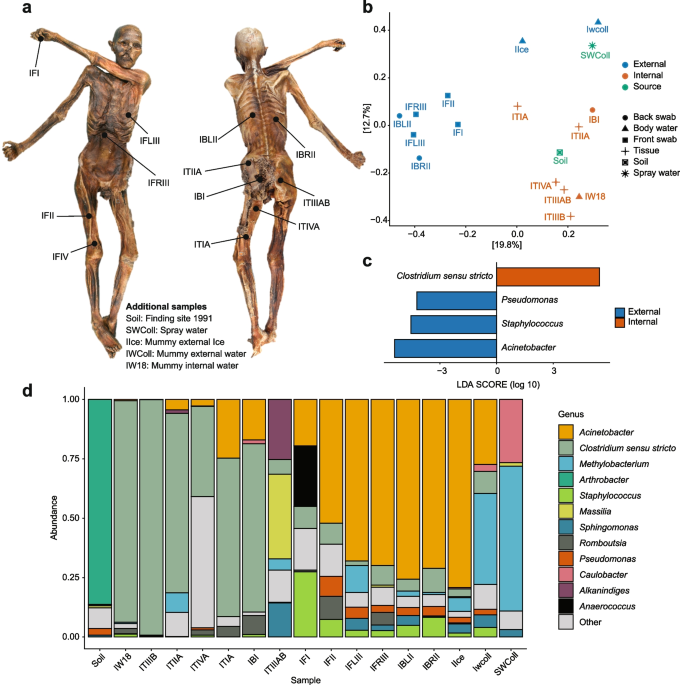
Mohamed S. Sarhan and his colleagues used culturing and molecular techniques to characterise the microbial life on and in Ötzi. They also examined the environment where he had been entombed. They showed that the microbial ecosystem of Ötzi was by no means frozen and has, in fact, been dynamic.
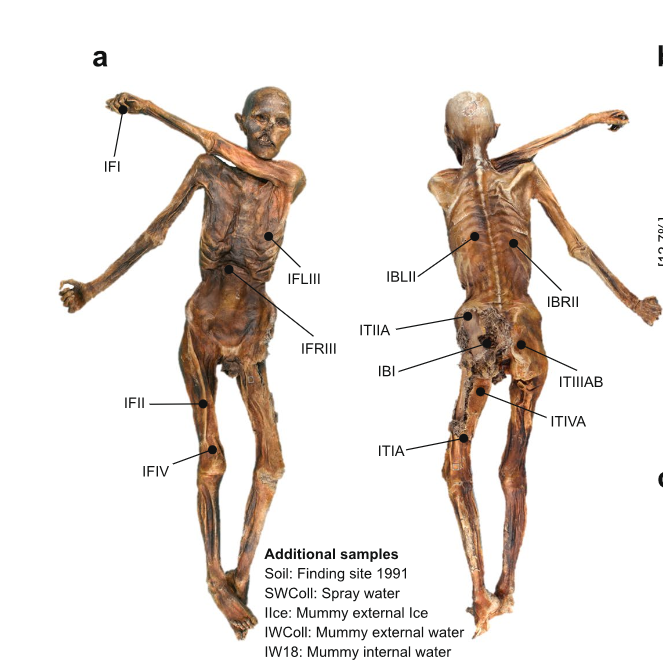
Ötzi - Image from: Sarhan, M.S., Samadelli, M., Zink, A. et al. The Iceman’s microbiome: unveiling millennia of microbial diversity and continuity. Microbiome 14, 135 (2026). https://doi.org/10.1186/s40168-026-02417-6
They found three sources for the ‘microbiome’ of Ötzi:
- Ancient gut microorganisms developed during his lifetime.
- Microbial life that developed post-mortem from the decomposition process and glacier-derived microorganisms from when Ötzi was entombed.
- Modern anthropogenic contaminants that were introduced during handling and storage.
The ancient gut microorganisms were found in internal tissues, whereas the glacier-derived and anthropogenic contaminants were predominant on the external surface of Ötzi.
You can distinguish the ancient microorganisms from the more modern ones due to clear signs of ancient DNA damage. The study identified bacterial species from the Romboutsia, Ruminococcus, and Treponema genera that closely resemble those found in non-industrialised human populations today. They can give insight into how the human microbiome looked before modern diets, lifestyle changes, and antibiotic use altered it – a sort of baseline microbiome, if you will.
Despite being entombed in sub-freezing conditions for over five millennia, not all life on Ötzi was dormant. Cold-loving microorganisms, specifically psychrophilic fungi, invaded Ötzi and continue to grow on him even now during storage at the museum.
And modern microorganisms continue to be introduced during conservation and research processes at the museum. For instance, spray water introduced Methylobacterium and Sphingomonas species, and past phenol usage selected for phenol-degrading microorganisms. There are also microbial contaminants that may carry genes for collagen degradation or protein/lipid breakdown. There was also a strain of Pseudomonas that had persisted in tissue for decades, showing evidence of adaptation to the mummy’s environment. These highlight concerns for the preservation methods being used, calling for a rethink of how we preserve ancient biological specimens. Sarhan and colleagues argue for ongoing microbial genomic surveillance as part of the preservation strategy.
On the plus (and somewhat surprising) side, some of these microorganisms could prove to be beneficial for applications in industry and real-world applications:
- They contain cold-active enzymes that can act as biocatalysts in low-temperature industrial processes.
- They can be used as bioremediators, especially in oceans or polar regions.
- They can be used in material and waste degradation, i.e. the same organisms that are breaking down Ötzi can be used to break down industrial wastes and pollutants.
- They can be used in food processing.
- They can help us develop better cryopreservation technologies.
- They give insights into astrobiology and life off-planet.
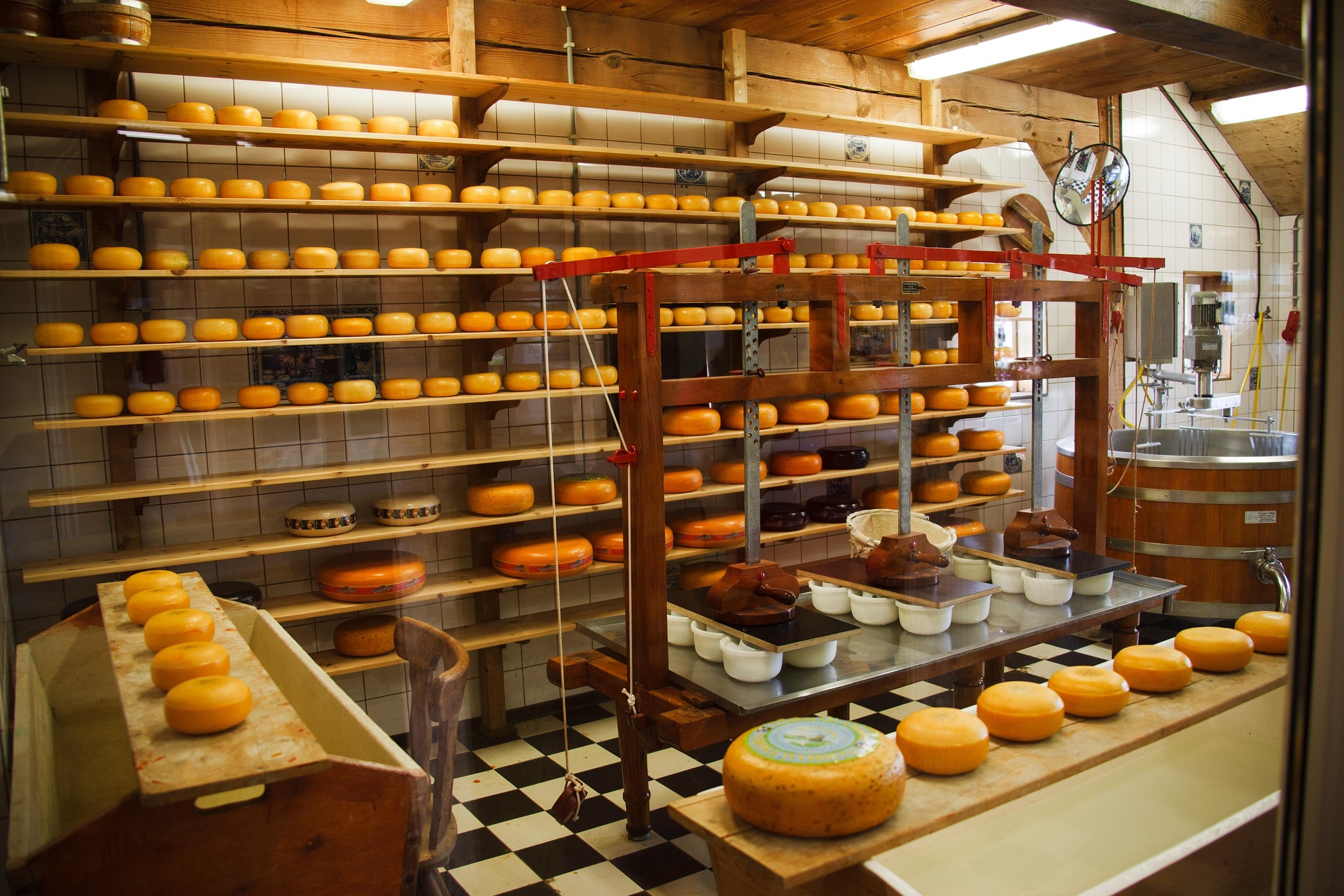
Enzymes could be useful in food processing - Image by PublicDomainPictures from Pixabay
This study on Ötzi’s microbiome has given us insights into the past, flagged concerns over current conservation and preservation practices, and given us potential future real-world uses of these unique microorganisms. Ultimately, Ötzi is proving that he is more than just an ancient relic.
Cover image credit:Image by Andy Bay from Pixabay

I completed a BSc in Microbiology (UCL) and a PhD in environmental microbiology/ atmospheric chemistry (Royal Holloway University of London) before joining BioMed Central. I blog about microbiology, infectious diseases and the environment amongst other things.
I am the Executive Publisher for Parasites & Vectors, Malaria Journal, Microbiome and other microbiology/ infectious diseases journals at BioMed Central.
Follow the Topic
-
BugBitten
A blog for the parasitology and vector biology community.