Tiny proteins, big trees: Can microProteins reshape forest biotechnology?
Published in Bioengineering & Biotechnology, Protocols & Methods, and Agricultural & Food Science



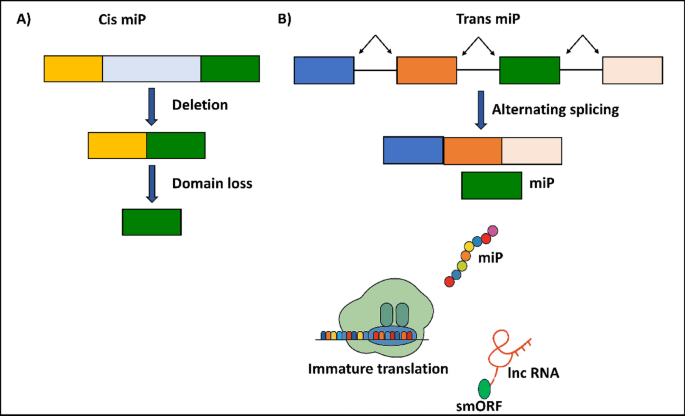

When I first read about microProteins (miPs) few years ago, I had one of those quiet scientific epiphanies. Not the kind with flashing lights, but the kind that makes you lean into your screen and think: Why isn’t everyone working on this?
Here were these tiny molecules, often just 50–150 amino acids long acting as dominant‑negative regulators of some of the most important transcription factor families in plants (Wenkel et al., 2007). They didn’t destroy function. They fine‑tuned it. In Arabidopsis, miPs had already been shown to control flowering, light signalling, and stress responses (Graeff et al., 2016). Elegant. Powerful. And yet, when I looked at the forestry literature, the silence was striking.
That silence became the seed of our review article, now published in Discover Plants.
A gap hiding in plain sight
Trees are not just large herbs. They manage secondary growth (wood formation), seasonal dormancy, stress memory across decades, and perennial development. These are sophisticated regulatory challenges. If miPs are as important as model plant research suggests, surely they must play roles in tree‑specific biology as well.
But when we systematically searched the literature, we found almost nothing. A handful of computational predictions. No functional characterisation in forest trees. No exploration of miPs in cambial activity, xylem differentiation, or long‑term cold acclimation.
This was not a criticism of the field—forestry research has historically focused on physiology, breeding, and ecosystem science, while molecular miP research grew from basic plant development labs. The two worlds simply had not met. Our review was written to build a bridge.
What we know (from models) and what we need to learn
We began by summarising the known universe of plant miPs. They typically act by binding to larger multidomain proteins—often transcription factors—and blocking their interaction with partners. This generates a dominant‑negative effect. Because miPs are often encoded by small open reading frames (sORFs), they were overlooked for years (Eguen et al., 2015). But we now know they regulate HD‑ZIP III, bHLH, MADS‑box, and other major transcription factor families.
In biotechnology, this offers something rare: precision. A gene knockout can be lethal or cause severe pleiotropy. A miP, expressed under a tissue‑specific or inducible promoter, can dial a pathway up or down without breaking it. Recent perspectives have highlighted how miP‑based tuning could be harnessed for crop improvement (Khan et al., 2022).
For trees, the possibilities are compelling. Imagine:
- Fine‑tuning lignin biosynthesis to improve wood pulping efficiency without compromising structural integrity.
- Modulating dormancy regulators to better match shifting seasonal cues under climate change.
- Engineering drought resilience by miP‑mediated tuning of ABA signalling networks.
These are not fantasies. They are logical extensions of work already validated in annual plants.
The hardest part of writing this review
The challenge was not finding evidence—it was managing expectation. Forestry operates on longer timelines than molecular biology. A transgenic poplar takes years to mature. And miPs, while elegant, are not magic. They require careful characterisation: identifying genuine miP‑encoding sORFs, validating protein–protein interactions, and testing function in perennial systems.
Moreover, tree genomes are large, often polyploid or highly heterozygous. Standard miP discovery pipelines, developed for Arabidopsis, may miss lineage‑specific or conifer‑specific miPs. We had to be honest about these obstacles while still making a case for why the effort is worthwhile.
I think we struck the right balance. The review ends not with a triumphant conclusion, but with a list of open questions—which is precisely where good science lives.
What comes next?
For me, the most exciting part is that this field is still young. Very young. We are at the stage where basic discovery is possible with relatively modest resources: a few tree transcriptomes, some co‑expression networks, and a handful of protein interaction assays.
I hope this review does two things. First, I hope it convinces molecular plant scientists that trees are worth studying—not just as model extensions, but as organisms with unique regulatory biology. Second, I hope it encourages forest biotechnologists to look beyond the usual candidate genes and consider that some of the most powerful levers might be very, very small.
Because sometimes, hidden inside tiny proteins, are big ideas.
Reference
Eguen, T., Straub, D., Graeff, M., & Wenkel, S. (2015). MicroProteins: small size – big impact. Trends in Plant Science, 20(8), 477–482.
https://doi.org/10.1016/j.tplants.2015.05.011
Graeff, M., Straub, D., Eguen, T., Dolde, U., Rodrigues, V., Brandt, R., & Wenkel, S. (2016). MicroProtein‑mediated recruitment of CONSTANS into a TOPLESS complex controls flowering in Arabidopsis. The Plant Cell, 28(10), 2476–2484.
https://doi.org/10.1105/tpc.16.00441
Khan, M., Eguen, T., & Wenkel, S. (2022). Microprotein‑based tuning of transcriptional networks for crop improvement. Trends in Plant Science, 27(11), 1133–1135.
https://doi.org/10.1016/j.tplants.2022.07.013
Wenkel, S., Emery, J., Hou, B. H., Evans, M. M., & Barton, M. K. (2007). A feedback regulatory module formed by LITTLE ZIPPER and HD‑ZIPIII genes. The Plant Cell, 19(11), 3379–3390.
https://doi.org/10.1105/tpc.107.055773

Follow the Topic
-
Discover Plants
A fully open access, peer-reviewed journal supporting multidisciplinary research across all fields relevant to molecular, cellular, tissue, organ and whole organism research as well as plant breeding, plant pathology, and the interaction of plants with the environment.

Related Collections
With Collections, you can get published faster and increase your visibility.
Plant–Soil Microbiome Interactions: Microbial Diversity, Networks, and Sustainable Crop Production
This collection focuses on the close relationships between plants, soils, and the many microorganisms that live around plant roots. These microbes are essential for healthy crops and strong ecosystems. They help plants absorb nutrients, store carbon in soil, tolerate stress such as drought, and resist diseases. Instead of working alone, microbes function as connected communities, shaped by plant roots, soil conditions, and the environment.
This collection presents new research on how microbial diversity and community connections affect crop growth and soil health. Special attention is given to network-based studies that identify important microbes, group functions, and interaction patterns that keep microbiomes stable and productive. Topics include how plants communicate with microbes, how root secretions shape microbial communities, the use of genetic tools to study microbial functions, and models that explain microbiome changes over time and space.
The collection also links basic science with real farming practices. It explores ways to use beneficial microbes to improve agriculture, such as microbial fertilizers, mixed microbial communities, soil health measurements, climate-resilient farming systems, and regenerative practices that support healthy soils.
By combining ecological knowledge, modern biological tools, and field studies, this collection aims to better understand plant–soil microbiome systems and apply this knowledge to improve crop production, protect the environment, and support global food security.
Keywords: rhizosphere microbiome; plant–soil feedbacks; microbiome networks; microbial diversity; nutrient cycling; plant growth-promoting rhizobacteria (PGPR); soil health
Publishing Model: Open Access
Deadline: Nov 14, 2026
Nanotechnology for Plant Development & Health Management
Agricultural sustainability is a concern that is rising profoundly around the globe. Where it directly impacts the germination, growth, yield, and overall agricultural productivity, and indirectly, human consumers are also affected. Global climate change is significantly influencing agriculture presently, so the focus is on more sustainable solutions to this issue, which mostly include phytochemicals and nanomaterials. Nanomaterials are supposed to be unpredictable and novel, which enhances their potential for targeting plant growth, development, and stress mitigation. Further, nanomaterials have found applications in various industries as well, which is how the nanomaterials are released directly or indirectly into the atmosphere, including soil and water. Hence, making it is important to evaluate the impact of nanomaterials on plants. Therefore, in the present scenario, it is essential to focus on the impact of NPs synthesized chemically, physically, biologically on various crops in the lab in vitro/ in vivo as well as in field conditions. Further, plant disease detection using nano-based sensors and stress management using nano-fertilizers is another aspect that can be benefited by the application of nanomaterials. This issue will provide an insight on how various nanomaterials possess the potential to target the global issue of agricultural productivity with the drastically increasing human population.
Keywords: Abiotic stress; Biotic stress; Plant health; Agricultural productivity; Crop management; Nanosensor; Plant pathology management
Publishing Model: Open Access
Deadline: Oct 09, 2026

