Tuberculosis Burden Is Not Equal: Understanding Sex Differences in the Global Landscape
Published in Microbiology
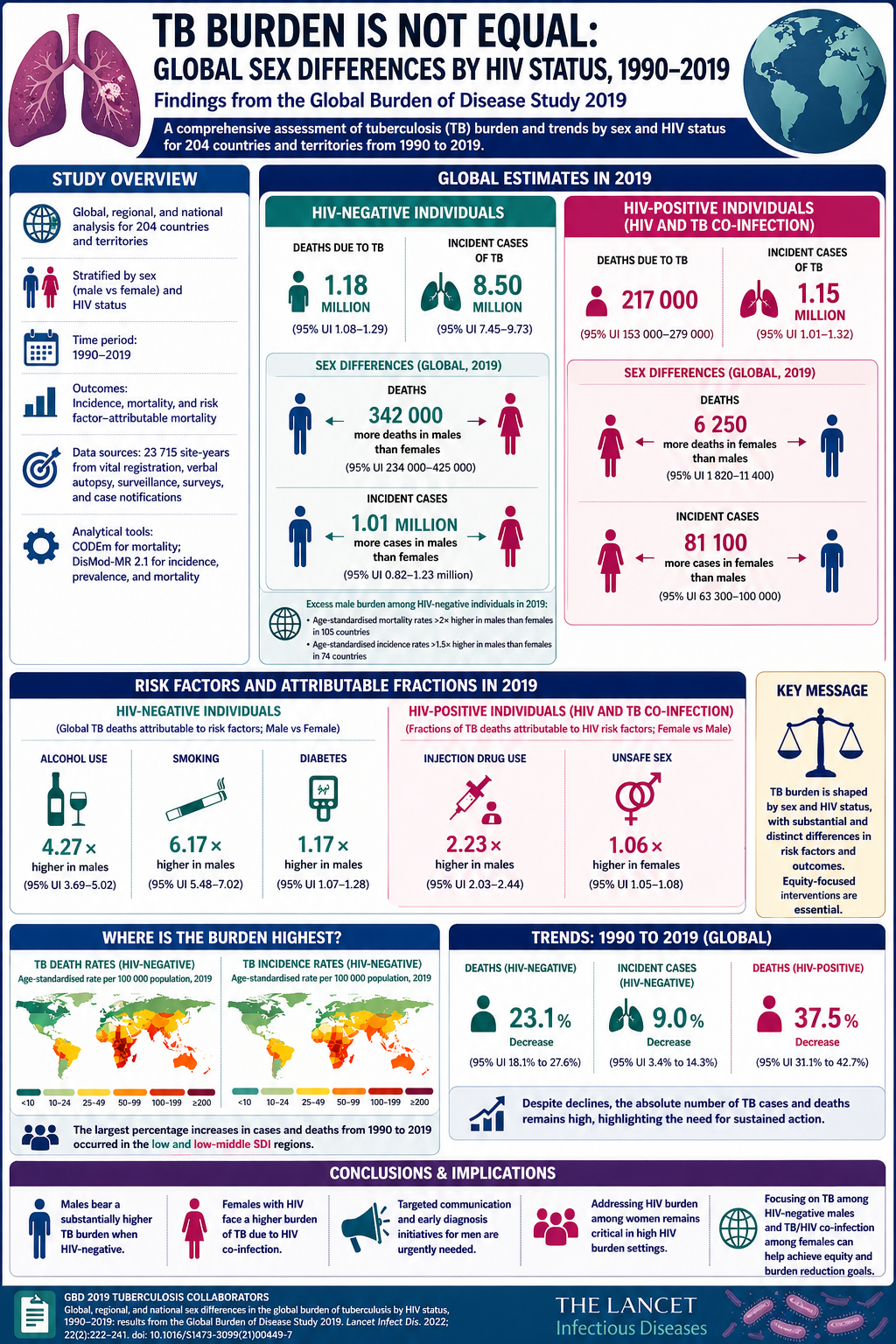

Tuberculosis (TB) remains one of the leading infectious causes of death worldwide. But beyond overall burden, an important question persists:
Who is most affected—and why?
In this comprehensive analysis from the Global Burden of Disease (GBD) 2019 Study, published in The Lancet Infectious Diseases, we examined sex differences in TB burden globally, with a critical focus on HIV status across 204 countries from 1990 to 2019.
🌍 Study Overview
- Data spanning 204 countries and territories
- Timeframe: 1990–2019
- Stratification by:
- Sex (male vs female)
- HIV status (HIV-negative vs HIV-positive)
- Outcomes:
- Incidence
- Mortality
- Risk factor attribution
📊 Key Findings
• Global TB burden remains substantial (2019)
– HIV-negative: 1.18 million deaths, 8.5 million cases
– HIV-positive: 217,000 deaths, 1.15 million cases
• Marked sex disparities in HIV-negative populations
– Significantly higher incidence and mortality in males
– In many countries, male mortality rates were >2× higher than females
• Reversed pattern in HIV-positive populations
– Higher TB burden among females
– Reflecting interaction with HIV epidemiology
• Risk factor differences
– Among HIV-negative individuals, smoking, alcohol use, and diabetes contributed disproportionately more to TB deaths in males
– Among HIV-positive individuals:
– Injection drug use → higher impact in males
– Unsafe sex → slightly higher impact in females
💡 Key Takeaway
This study highlights a critical insight:
➡️ TB is not just a biomedical disease—it is shaped by gendered risk, behavior, and access to care
- Males bear a disproportionate burden of TB in HIV-negative populations
- Females are more affected in the context of HIV-TB coinfection
⚖️ Implications for Practice and Policy
- Targeted screening and outreach for men to improve early diagnosis
- Strengthening HIV prevention and care for women, particularly in high-burden regions
- Addressing modifiable risk factors:
- Smoking
- Alcohol use
- Diabetes
- Designing gender-sensitive TB control strategies
📄 Global, regional, and national sex differences in the global burden of tuberculosis by HIV status, 1990–2019
The Lancet Infectious Diseases (2022)
DOI: 10.1016/S1473-3099(21)00449-7
Article links:
https://pubmed.ncbi.nlm.nih.gov/34563275/
https://linkinghub.elsevier.com/retrieve/pii/S1473309921004497

Dr. Mohamed Mesregah MD is an experienced orthopedic surgeon with a strong background in both clinical practice and orthopedic research. He specializes in the diagnosis and management of musculoskeletal conditions, with a commitment to delivering high-quality, patient-centered care.
With years of hands-on experience, Dr. Mohamed Kamal Mesregah has developed a deep understanding of modern orthopedic techniques and evidence-based treatment approaches. His research involvement reflects his dedication to advancing medical knowledge and improving patient outcomes.


Please sign in or register for FREE
If you are a registered user on Research Communities by Springer Nature, please sign in