What Iron Age Teeth Tell Us About How Farming Spread Across Botswana
Published in Arts & Humanities
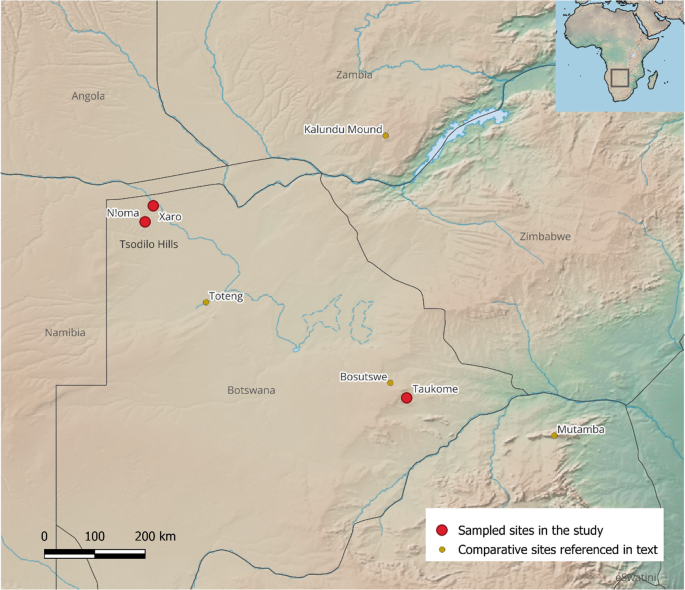

Research rarely follows a straight line, and this paper has been a long time in the making. To tell the story properly, I need to go back to 2016, when I joined the Biological Exchange, Diet and Health in African Prehistory project at the Max Planck Institute for the Science of Human History in Jena, Germany. The opening of the Department of Archaeology at the newly established institute created the conditions for projects like this one. One of the key aims of the Department was to explore prehistoric globalisation across the Indian Ocean world, particularly the role of the Indian Ocean as a long-distance connectivity pathway, and to tackle some of the long-standing questions about how crops spread across Africa. Sites such as Bosutswe also demonstrate that people in Botswana were connected to wider regional trade networks linking southern Africa to the Indian Ocean world. Working at the Max Planck Institute was also an unusually exciting intellectual environment to enter. Around the same time, colleagues such as Steve Goldstein were also beginning major work at Kakapel Rock Shelter in the Great Lakes region of Kenya. The project gave us the resources to tackle questions that had previously been difficult to study systematically.
The Botswana research grew out of that wider initiative. Southern Africa’s past has long been a contested subject, especially around the so-called Kalahari Debate: whether forager communities were largely isolated from neighbouring food-producing societies, or deeply entangled with herders and farmers over long periods of time. Two scholars shaped that debate more than most through decades of fieldwork in Botswana: Edwin Wilmsen and James Denbow. Wilmsen's 1989 book Land Filled with Flies had already upended how many people thought about the Kalahari San, arguing that they had never been the isolated, timeless hunter-gatherers of popular imagination but had long been entangled in wider regional economies and political histories. Denbow brought a complementary archaeological perspective, documenting through excavation how early herding and farming communities had spread across the Kalahari Basin. Between them, they excavated many of the key Iron Age sites in the region, including N!oma/Nqoma, Xaro and Taukome, the sites whose skeletal material I worked with for years. ! indicates an alveolar click sound characteristic of the local Khoisan/Ju|'hoansi languages. Wilmsen died in June 2023, and Denbow in July 2024, before this paper reached publication. They were two of the biggest figures in Kalahari Basin archaeology, and a great deal of what we now understand about Iron Age Botswana rests on work they began decades ago.
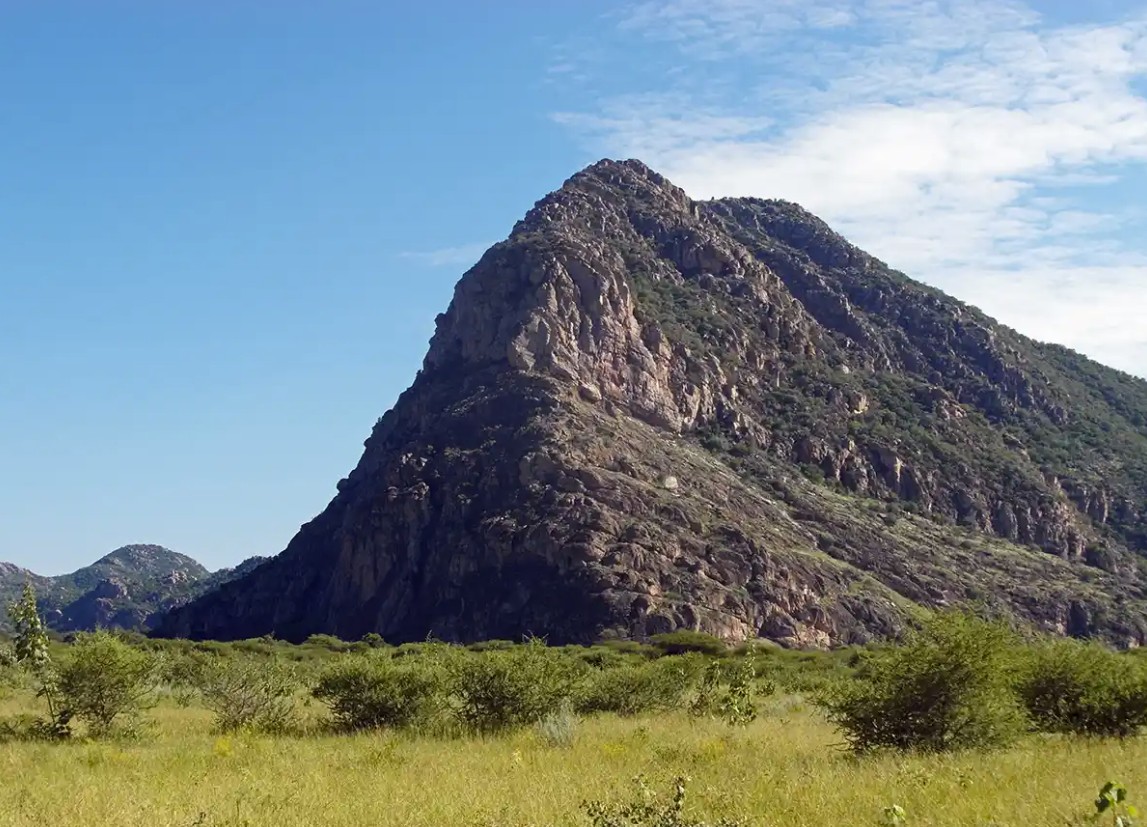
One of the first breakthroughs from the Botswana material came in 2020, when colleagues working on ancient DNA from the same individuals published their results in Science Advances. The findings reshaped how we think about population history in the region. The four ancient individuals from Botswana, three from the Okavango Delta and one from the south-east, showed ancestry primarily related to present-day Bantu-speaking populations, alongside between roughly ten and forty per cent ancestry linked to southern African hunter-gatherers. More importantly, the modelling suggested that admixture between eastern African pastoralists and local foragers happened before the arrival of Bantu-speaking farmers. In other words, herding seems to have reached southern Africa before farming did.
That idea had been proposed before through linguistic and archaeological evidence, but the genomic data gave it much stronger support. Some of the Okavango individuals also carried ancestry associated with eastern African pastoral groups, suggesting earlier episodes of contact between herders and local foragers before later farming expansions moved into the region.
But the genetics could only tell us part of the story. It still left a basic question unanswered: what were these people actually eating? In reality, we still know surprisingly little about Iron Age diet in Botswana. Apart from a handful of key charred seed assemblages from sites such as Bosutswe in eastern-central Botswana, some zooarchaeological assemblages, and the pioneering stable isotope studies carried out by Morongwa Nancy Mosothwane, direct evidence for everyday food consumption remains fairly limited. My contribution to the project focused on microbotanical remains via dental calculus, mineralised plaque preserved on teeth. It is not especially glamorous material to work with, and it can be frustratingly unpredictable, but it preserves microscopic traces of food surprisingly well. Together with my co-authors Sewelo Fane and Madeleine Bleasdale, who contributed palaeoproteomic analyses, I analysed phytoliths and starch grains extracted from calculus samples taken from individuals at Nqoma/N!oma, Taukome and Xaro. The individuals analysed in this study lived during the later first and early second millennium CE, a period when farming, herding and foraging communities were increasingly interacting across the Kalahari Basin. The results added another layer to the picture emerging from the genetic data.
At Nqoma/N!oma and Taukome, the calculus samples contained phytoliths consistent with Panicoideae grasses, the plant subfamily that includes pearl millet and sorghum, crops strongly associated with Bantu-speaking farming communities in the region. This matched earlier stable isotope work suggesting substantial reliance on C4 plants during adulthood.
What stood out most at Nqoma/N!oma was the life-history aspect of the evidence. Tooth enamel forms during childhood, and isotopic signatures from the enamel suggested a diet dominated by C3 resources early in life, likely linked to foraging and fishing. Adult bone collagen, however, pointed toward a much heavier reliance on C4 crops later on. The dental calculus, which accumulated during adulthood, also contained Panicoideae phytoliths consistent with cereal consumption. This may be the first direct microbotanical evidence for cereal consumption recovered from Iron Age Botswana. More importantly, it suggests that farming practices may not simply have been inherited from birth. Some individuals may have grown up in largely foraging communities and adopted farming later in life.
Taukome presents a slightly different pattern. The cereal signal there is stronger overall, while the genetic evidence indicates comparatively lower hunter-gatherer ancestry. That may point to a community in which Bantu-speaking farming lifeways were already more firmly established.
Xaro was more difficult to interpret. The site’s riverine environment appears to have damaged the calculus preservation quite badly, probably because of repeated waterlogging. The number of identifiable microbotanical remains was simply too low to support strong conclusions. Even so, the exceptionally high rates of dental caries reported from the site still hint at a carbohydrate-rich diet, perhaps involving wild fruits or other plant resources. The calculus evidence alone, though, cannot resolve that question confidently.
Taken together, the three sites show the kind of variability you would expect from a long and uneven process of contact and integration. Archaeologists sometimes describe this through the Migration-cum-Immersion model developed in recent Kalahari Basin research. The model proposes that farming spread through long-term interaction between migrants and local forager communities, rather than abrupt population replacement. So farming did not simply replace foraging, but spread gradually through sustained contact between foragers, Khoe-Kwadi herders and Bantu-speaking farmers. Different communities seem to have occupied different positions within that process, shaped by local ecologies, ancestry and historical circumstances.
Looking back, none of this work would have been possible without the fieldwork carried out by Ed Wilmsen, Jim Denbow and many others. I am also deeply grateful to the Botswana Department of National Museum and Monuments for supporting the research and for granting access to the collections that made this work possible. The research was generously supported by the Max Planck Society and by Taighde Éireann – Research Ireland.

Follow the Topic
-
Archaeological and Anthropological Sciences
This is a journal that emphasizes natural scientific methods within archaeological contexts.

Related Collections
With Collections, you can get published faster and increase your visibility.
Characterizing technology, subsistence and settlement dynamics of the Middle Stone Age and Middle Paleolithic
Publishing Model: Hybrid
Deadline: Jul 01, 2026

Please sign in or register for FREE
If you are a registered user on Research Communities by Springer Nature, please sign in