Explore the Research
Just a moment...
Dr Omar Abdihamid MD, MMED, MPH, Research Fellow
Consultant Clinical Oncologist at Garissa Regional Cancer Center
Prostate cancer is a growing public health concern in Kenya, frequently diagnosed at an advanced stage and managed within a resource-constrained health system (1). The clinical literature on this burden is substantial: incidence, staging patterns, treatment access, survival. Considerably less is known about how the illness is actually lived — what a diagnosis does to a man's sense of himself, his marriage, his standing in his household, before any consideration of grade or stage enters the conversation.
Our recently published qualitative study title “When the Doctor Said Cancer, Everything Stopped”: A Qualitative Study of the Lived Experiences of Men With Prostate Cancer in Kenya, addresses this gap directly (1). We conducted in-depth interviews with 130 men recruited from oncology clinics across five Kenyan counties: Garissa, Nairobi, Meru, Machakos, and Kisii, deliberately spanning urban and rural, coastal-adjacent and pastoralist, tertiary and regional settings. Thematic analysis using Braun and Clarke's six-phase framework identified five themes: diagnosis as a confrontation with mortality; treatment as simultaneously a source of hope and of hardship; the disruption of masculine identity, independence, and sexuality; the dual role of family and faith as both support and source of stigma; and, over time, a movement from fear toward acceptance.
None of these themes is unique to Kenya, and that is precisely what makes the study clinically useful rather than only locally interesting. A 2025 systematic review of 34 studies across sub-Saharan Africa found that cultural perceptions linking prostate cancer to spiritual causation and to masculinity consistently produce stigma and delayed care-seeking (2). Work from Uganda has documented men navigating conflicting choices between traditional remedies and biomedical care, between secrecy and disclosure, and between denial of symptoms and timely presentation, choices that offer emotional comfort in the short term at the cost of delayed diagnosis and worse prognosis (3). The pattern recurs with enough consistency across health systems, languages, and ethnic groups that it should be read as a structural feature of prostate cancer care in the region, not an idiosyncrasy of any one population.
What our data add to this literature is texture on the treatment phase specifically, which existing work has addressed less thoroughly than the pre-diagnostic delay. Men described treatment as a genuine source of hope, but one inseparable from a set of costs that rarely appear in a treatment plan: transport over long distances, accommodation near treatment centres, time away from paid work, and dependence on relatives for both logistics and dignity. These are not adherence footnotes. From the patient's perspective, they are the treatment.
This is where the framework of value-based oncology becomes clinically actionable rather than rhetorical. Value in cancer care is not defined by the cheapest available regimen; it is defined by outcomes that matter to the patient, achieved with the least avoidable burden (4). A treatment plan that is oncologically correct but practically unsustainable for the patient in front of you has not, by this definition, delivered value. Common Sense Oncology's framing is useful here precisely because it reframes the clinical question: not only "does this treatment work," but "does this make sense for this patient, in this setting (5).
The masculinity-specific findings warrant particular attention from clinicians managing genitourinary toxicity. Urinary incontinence and erectile dysfunction are conventionally documented as treatment-related adverse events, coded and graded like any other toxicity. Our participants did not experience them this way. In communities where masculine identity is closely tied to strength, independence, and the capacity to provide, these changes were described as threats to identity itself: A man who has spent his life caring for others suddenly needing care, in ways he did not choose and often did not disclose. Comparable findings from Trinidad and Tobago, where hegemonic masculinity norms delayed both screening uptake and disclosure of symptoms to providers, suggest this dynamic is not confined to African settings, though its specific cultural expression in our cohort, the language of headship, provision, and family role, was distinctly Kenyan (6).
The clinical implication is direct: sexual and urinary function should be discussed proactively, in private, and repeatedly across the treatment course, rather than left for the patient to raise. Several participants indicated they would not have volunteered these concerns unprompted. A consultation structure that waits to be asked will systematically under-detect exactly the toxicities patients find hardest to bear.
The health-system implication is broader. Cancer care in Kenya, and across much of the region, continues to be evaluated primarily against whether patients received the guideline-recommended intervention. Our findings suggest a second, necessary axis of evaluation: whether care was accessible, affordable, culturally legible, and aligned with outcomes the patient actually values. A service can score well on the first axis and fail badly on the second, and from the patient's standpoint, the second failure is the one that determines whether treatment is completed at all.
Two practical steps follow, neither requiring new infrastructure. First, structured psychosocial and financial screening, direct questions about distance, cost, and sexual and urinary concerns, should be built into routine oncology consultation rather than left to clinician discretion or patient initiative. Second, peer support structures connecting newly diagnosed men with survivors who have navigated the same terrain may do work that clinical counselling alone cannot, particularly where silence and stigma are the default.
The 130 men in this study were not primarily asking for a different drug. They were describing what it takes to make an oncologically sound treatment plan survivable in the context of an actual life, a marriage, a household, a sense of who one is. Listening to that distinction, and building it into how prostate cancer care is delivered in Kenya and comparable settings, is not a departure from evidence-based oncology. It is what makes evidence-based oncology deliverable.
About the Author:
Dr Omar Abdihamid, MD, MMed, MPH (c) is a Consultant Clinical Oncologist and Cancer Research Fellow. He is the Lead Clinical Oncologist at Garissa Regional Cancer Center and practices in Nairobi. His work focuses on global oncology, equitable access, value-based cancer care, and strengthening cancer services across Africa.
References
- Njuguna DW, Muthiru AW, Riogi B, Abdihamid O, Waihenya C, Chege S, et al. "When the doctor said cancer, everything stopped": a qualitative study of the lived experiences of men with prostate cancer in Kenya. J Patient Exp. 2026;13:23743735261457761.
- Ofori B, Fosu K, Aikins AR, Sarpong KAN. The intersection of culture and prostate cancer care in sub-Saharan Africa: a systematic review. Afr J Urol. 2025;31:41.
- Bunani N, Kisakye AN, Nabunya P, Ssennyonjo A, Nalugya A, Nalukwago GK, Nuwaha F. The dilemma in diagnosis and treatment of prostate cancer in Uganda: a qualitative study at the Uganda Cancer Institute, 2018. J Interv Epidemiol Public Health. 2025;8:47.
- Porter ME. What is value in health care? N Engl J Med. 2010;363(26):2477–81.
5. Gyawali B, Booth CM. Cancer treatments should benefit patients: a common-sense revolution in oncology. Nat Med. 2022 Apr;28(4):617-620. doi: 10.1038/s41591-021-01662- PMID: 35440715.
6. King-Okoye M, Arber A, Faithfull S. Beliefs that contribute to delays in diagnosis of prostate cancer among Afro-Caribbean men in Trinidad and Tobago. Psychooncology. 2019;28(6):1321–7.
About the Author
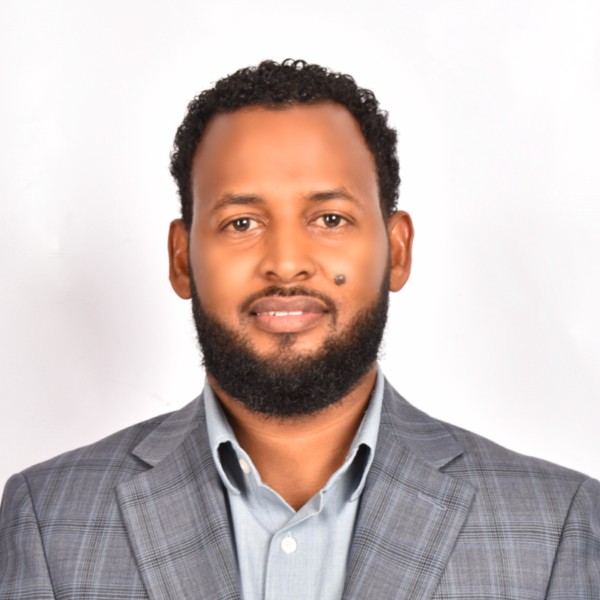
Dr. Omar Abdihamid is a Consultant Clinical Oncologist in Kenya and Vice President for East Africa at the Africa Organization of Research and Training in Cancer. His work focuses on improving access to cancer care in low-resource settings, Community education, with interests in cross-border oncology systems in East Africa
Email: omaryhamidy@gmail.com