When carbon pricing looks progressive for the wrong reason
Published in Sustainability
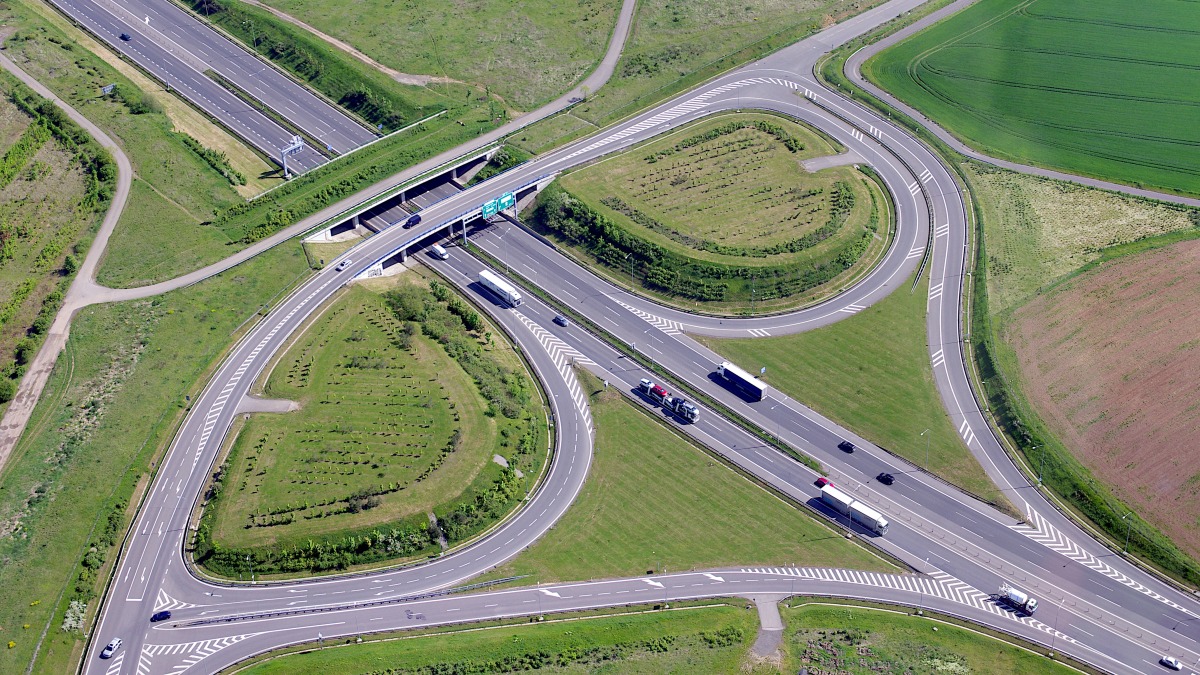

This question is particularly important for road transport. In Europe, the forthcoming extension of carbon pricing to road fuels through the new emissions trading system for buildings and road transport, known as ETS 2, will affect petrol and diesel prices. The policy is designed to help reduce emissions from a sector that has been stubbornly difficult to decarbonize. Yet transport is not just another item in a household budget. For many people, especially outside dense urban areas, using a car is not a luxury but a condition for getting to work, accessing services, caring for relatives, and participating in social life.
This was the starting point of our research. We wanted to understand how a carbon price on road fuels would affect households across Europe, not only on average, but across different income groups, countries, and mobility situations. Would the policy be regressive, placing a heavier burden on poorer households? Would the answer be the same in all countries? And what happens when income alone does not capture the real vulnerability of households exposed to higher fuel prices?
To answer these questions, we used harmonized Household Budget Survey microdata from 23 European countries. These data allow us to observe household expenditure patterns in a comparable way across national contexts. We simulated the effect of higher petrol and diesel prices associated with ETS 2 and estimated the resulting burden for households. We then compared this burden across income groups and countries, using standard measures of tax progressivity, as well as additional indicators capturing variation within income groups.
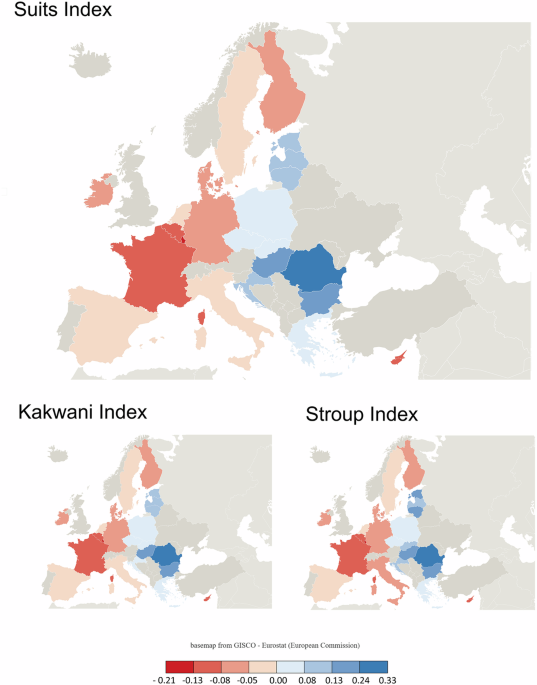
One of the first things we found was that the European picture is not uniform. In several higher-income Western European countries, road-fuel carbon pricing appears regressive: lower-income households tend to face a larger burden relative to their income than richer households. This is the more familiar concern in debates on carbon taxes and fuel prices. If poorer households rely on cars and have limited ability to switch to alternatives, even a moderate increase in fuel prices can matter.
But the results were different in many Eastern European countries. There, the policy often appeared progressive: richer households seemed to bear a larger relative burden than poorer households. At first sight, this might sound reassuring. It could suggest that road-transport carbon pricing is less socially problematic in lower-income European countries. However, this interpretation would be too quick.
The crucial point is that a policy can appear progressive not because vulnerable households are well protected, but because they are weakly integrated into the activity being taxed. In other words, some poorer households face a low direct fuel burden because they do not own or use a car. This may reduce their exposure to carbon pricing, but it can also reflect constrained access to private mobility. From a justice perspective, this is very different from saying that the policy is fair. Low fuel expenditure among poorer households may indicate not freedom from vulnerability, but exclusion from mobility systems that remain essential in many territories.
This is why we argue that the distributive effects of ETS 2 cannot be understood through income alone. Two households with similar income may experience very different impacts depending on whether they own a car, where they live, whether public transport is available, and whether mobility needs can realistically be reduced or substituted. In this sense, the paper is not only about vertical equity between richer and poorer households. It is also about horizontal equity: the unequal effects of the same policy among households that appear similar in income terms.
Looking within income groups revealed this clearly. In some countries, especially where car ownership is less universal, average progressivity coexists with very high dispersion of burdens among poorer households. This means that many low-income households may face little or no direct fuel burden, while a smaller subset of car-dependent low-income households experiences much stronger pressure. These households are easy to miss if we only look at average effects by income decile.
A major methodological challenge was that the survey data contain many households reporting zero fuel expenditure. This is not always straightforward to interpret. Some households genuinely do not use petrol or diesel. Others may own a car but happened not to buy fuel during the short survey recording period. For example, a household might fill the tank shortly before the survey window and therefore report no fuel purchase, even though it normally uses a car. Ignoring this issue would risk overstating the number of households with no exposure to fuel-price increases.
To address this, we used a matching procedure to estimate likely fuel expenditures for motor-insured households reporting no fuel purchase during the survey period. This was one of the less visible but important parts of the work. It forced us to think carefully about the difference between observed expenditure during a short accounting window and actual dependence on mobility over a longer period. In a study about transport justice, that distinction matters.
The broader implication of our findings is that compensation policies need to be carefully designed. Revenue recycling is often proposed as a way to make carbon pricing fairer. We agree that it is essential. But our results suggest that uniform compensation alone may not be enough. The households most exposed to higher road-fuel prices are not simply “the poor” in a generic sense. They are often households where limited resources intersect with car dependence, low-density residence, poor public transport access, and limited flexibility in everyday mobility.
This points toward the need for place-sensitive policies. In dense urban areas, expanding public transport, walking, cycling, and proximity-based planning can reduce reliance on private cars. In rural and low-density areas, the relevant solutions may look different: demand-responsive transport, shared mobility, improved access to essential services, targeted support decoupled from fuel use, and assistance in switching to lower-emission vehicles. The goal should not be to weaken the carbon price signal through fossil-fuel subsidies, but to reduce forced car dependence and protect households during the transition.
For us, the most important lesson is that climate policy should not be evaluated only by asking whether it reduces emissions efficiently. It should also be evaluated by asking what kinds of social and territorial relations it assumes, reinforces, or transforms. Road-fuel carbon pricing can contribute to decarbonization, but its legitimacy will depend on whether people see it as part of a credible transition toward better mobility options, not merely as an additional cost imposed on those with few alternatives.
This is especially important because transport is deeply embedded in everyday life. A fuel-price increase is not experienced abstractly. It is experienced in the commute to work, in the school run, in visits to relatives, in the distance to hospitals, shops, and public offices. These mundane geographies shape whether carbon pricing is perceived as fair, unfair, or simply impossible to avoid.
Our paper therefore tells a somewhat paradoxical story. In some contexts, carbon pricing looks regressive because poorer households are exposed to car dependence. In other contexts, it looks progressive because poorer households are less exposed to cars in the first place. Neither outcome should make policymakers complacent. In both cases, the key challenge is the same: to design climate policy together with social and territorial policies that expand real mobility choices.
A fair transport transition is not achieved only by pricing carbon. It requires using the revenues, institutions, and political attention generated by carbon pricing to build alternatives. Only then can ETS 2 become not just a mechanism for making fossil mobility more expensive, but part of a broader project of making low-carbon mobility accessible, affordable, and socially just.

Follow the Topic
-
Communications Sustainability
An open-access journal publishing high-quality, editorially selected and peer-reviewed advances in all sustainability-related areas of science, including the natural and social sciences as well as engineering.

What are SDG Topics?
An introduction to Sustainable Development Goals (SDGs) Topics and their role in highlighting sustainable development research.
Continue reading announcementRelated Collections
With Collections, you can get published faster and increase your visibility.
Carbon Dioxide Removal
Publishing Model: Hybrid
Deadline: Jan 16, 2027
Critical materials supply chain sustainability
Publishing Model: Open Access
Deadline: Oct 26, 2026
![When PSMA-targeted therapy is not enough: high-risk localized prostate cancer after repeated [177Lu]Lu-PSMA radioligand therapy](/cdn-cgi/image/metadata=copyright,fit=scale-down,format=auto,quality=95,width=256,height=256/https://public-storage.zapnito.com/Ku6h7Yyp4Q0LXqRRMICCHR2v4LcOsmxMrmDPtOYuI1c)


Please sign in or register for FREE
If you are a registered user on Research Communities by Springer Nature, please sign in