When Drug Programs Fail Before They Begin 2.0: Beyond Generation, Teaching AI to Understand Biology
Published in Biomedical Research
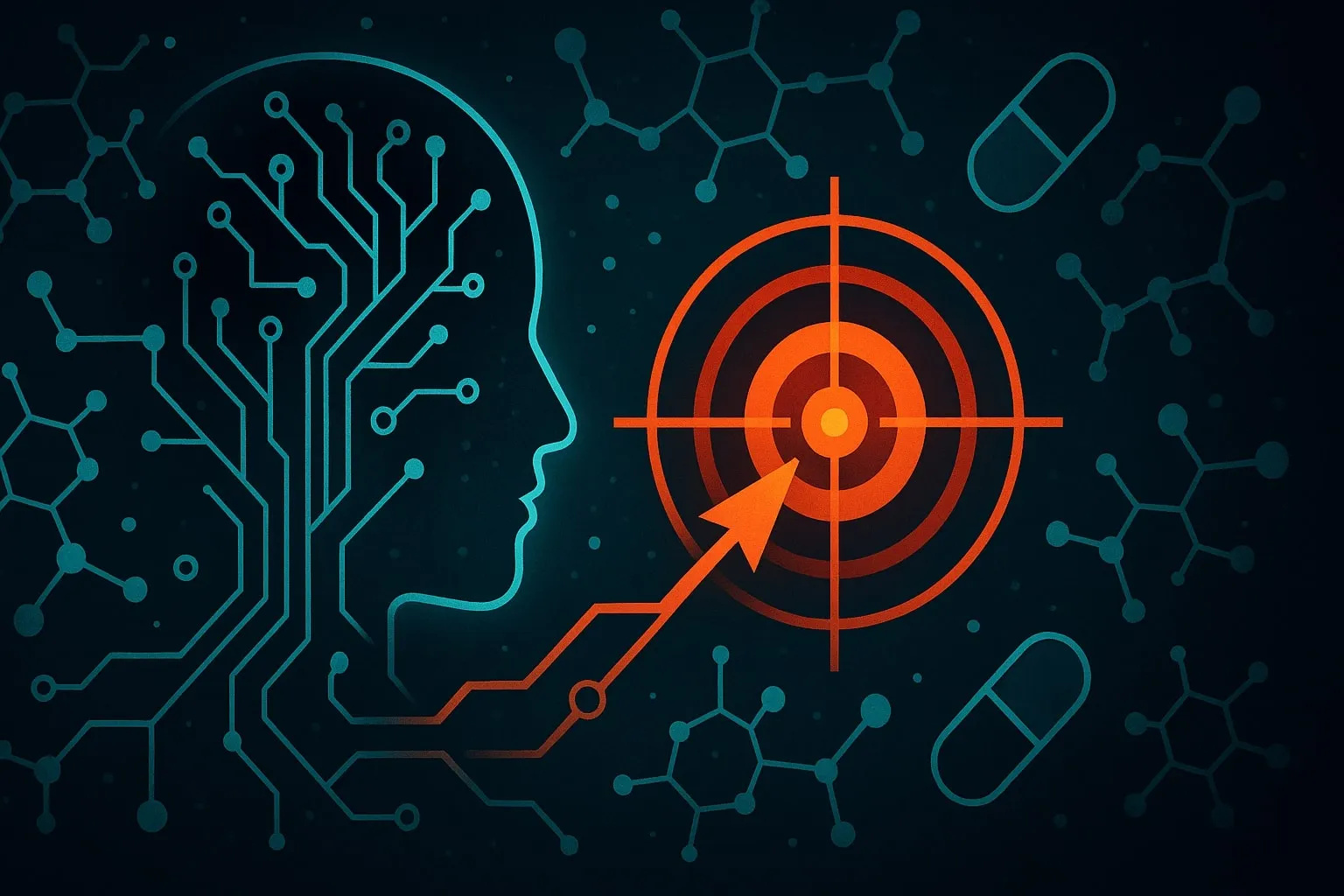
In the aftermath of every failed drug program lies a familiar post-mortem: the target looked promising, the models aligned, the data convinced, the AI agreed and yet, biology said no.
We have entered an age where algorithms now propose, prioritize, and even design molecules faster than any human team could imagine. But speed without understanding is not progress. It is automation without comprehension; a system that can generate hypotheses in seconds yet still doesn’t know what makes one true.
The industry calls this the dawn of AI-driven drug discovery.
In reality, we are still teaching machines to recognize patterns in data that we ourselves barely understand.
The Illusion of Intelligence
AI has mastered generation: it can enumerate structures, dock molecules, and predict properties with extraordinary computational grace.
But beneath that precision lies a deeper illusion that pattern recognition equals biological understanding. It doesn’t.
Every success story of “AI-designed drugs” hides an inconvenient symmetry with the failures of the past: they begin with association, not causation. AI learns correlation at planetary scale, but biology operates through mechanism through perturbation, context, and time.
We have built a system that can simulate discovery without truly comprehending what discovery means.
AI can optimize chemistry, but it cannot yet recognize truth.
Pattern Recognition ≠ Mechanistic Comprehension
The foundation of every drug is a mechanism, not a model fit, not a correlation coefficient. Yet most current AI systems are optimized for pattern fidelity, not mechanistic fidelity. They learn from snapshots of biology frozen in time, gene expression tables, omics datasets, molecular graphs, none of which capture the dynamic architecture of disease.
The model sees what correlates, not what compels. It identifies who is active, not who is responsible. Without mechanistic grounding, every prediction remains a probabilistic hallucination.
When learning is divorced from mechanism, prediction becomes mimicry.
The Missing Layer: Causal Grounding
True understanding in biology requires a shift from observation to intervention, from data fitting to causal inference.
A drug does not work because a molecule correlates with disease; it works because altering that molecule changes the system’s state.
AI can only achieve this level of insight when it learns to model counterfactuals, when it can ask: What would happen if this node were perturbed?
Causality is not a feature to be extracted; it is a structure to be inferred.
This demands multi-omic coherence, perturbation data, and longitudinal context; the kind of information current training paradigms ignore or collapse.
Until AI learns causality, it will remain a spectator to biology’s complexity, observing relationships it cannot yet explain.
Data Without Epistemology
The industry’s response to AI’s limitations has been to feed it more data; larger, deeper, richer datasets. But data without epistemology only amplifies confusion.
Biological data are not neutral. They encode biases in sample selection, temporal capture, model choice, and measurement error. Without structured reproducibility frameworks, AI simply learns the noise of legacy science, the same epistemic artifacts that created decades of failed targets.
A model trained on unstable truth will reproduce instability faster. We are now industrializing irreproducibility at scale.
We have taught AI to learn from uncertainty, not to resolve it.
The Reproducibility Deficit in Machine Learning
Machine learning’s greatest strength, flexibility, is also its greatest epistemic weakness. A model can always fit the data, but rarely does it ask if the data deserve to be fit.
Reproducibility must become a quantitative constraint in AI, not an afterthought.
Each prediction should be weighted by its reproducibility index: how consistently it survives across cohorts, modalities, and perturbations.
An algorithm that understands reproducibility is not just predictive; it is epistemically disciplined. It begins to learn what truth looks like.
Toward Causal AI in Biomedicine
If the first generation of AI was statistical, learning from associations, the next must be causal: reasoning from interventions, perturbations, and reproducible dynamics.
This next frontier will be built upon four non-negotiable principles:
- Temporal Awareness. Disease is not static; it unfolds. AI must learn to model progression, not snapshots.
- Cellular Context. Single-cell resolution is not luxury; it’s necessity. Population averages obscure causality.
- Perturbational Logic. Understanding emerges from active experiments, not passive observation. AI must simulate intervention, not just infer correlation.
- Cross-Modal Coherence. True signals persist across omic layers. If transcriptomic, proteomic, and phenotypic data disagree, the biology is unresolved.
The systems that integrate these principles won’t just generate drugs, they will generate understanding.
The Economics of Comprehension
AI’s value will not be measured by the number of candidates it produces but by the truth yield per dollar; the fraction of hypotheses that survive mechanistic validation and cross-cohort reproducibility.
Every false signal eliminated upstream saves years and billions downstream.
Every true driver uncovered early collapses timelines and risk simultaneously.
This is the reproducibility dividend; the economic return on epistemic discipline. Investors, executives, and scientists who internalize this metric will redefine productivity in drug discovery.
The next efficiency revolution will come from truth compression, not data expansion.
The New Equation for Discovery
The old equation:
Discovery = Data × Computation
The new one:
Discovery = (Causality × Reproducibility) ÷ Noise
Data and computation are inputs; they do not guarantee insight. Causality and reproducibility are the only true amplifiers of understanding. Without them, every algorithm is guessing elegantly.
From Generative to Epistemic AI
AI has conquered the generative frontier. It can draw, write, and design. But in medicine, creation without comprehension is perilous.
The next frontier is epistemic AI: systems that know what they do not know, that can question their own inferences, and that treat falsification as learning. An AI that can reason about biology, not just represent it.
When that happens, “AI-designed drugs” will no longer be a marketing claim; they will be a scientific reality.
The Future of Understanding
The promise of AI in medicine will not be realized by building larger models or buying larger datasets. It will be realized by teaching machines, and ourselves, the discipline of asking better questions.
Who drives the disease?
What is reproducible across patients, models, and time?
What survives falsification?
Until we answer these questions, every innovation downstream remains a gamble, statistically rigorous, technologically dazzling, and biologically uncertain.
The future will belong to those who begin not with data, but with understanding.
The next revolution in drug discovery will not come from generating more molecules. It will come from teaching AI what truth looks like.



Please sign in or register for FREE
If you are a registered user on Research Communities by Springer Nature, please sign in