When the personal meets the political: Reimagining transformation in South African universities
Published in Education and Business & Management


Not too long ago, I sat in a university governance meeting and watched transformation get reduced to a line item – discussed briefly, then moved past on the way to risk reports and audit findings. That moment stayed with me. It became one of the reasons why I pursued my doctoral studies, and why I wrote this paper.
South Africa's public universities sit at a complicated intersection. They carry the enduring weight of apartheid's exclusions, and at the same time face new external pressures – a global backlash against diversity, equity, and inclusion (DEI) initiatives, populist movements weaponising language about "reverse discrimination", technological disruption, and ecological uncertainty. Transformation, which should be the work of building inclusive, future-ready institutions, gets caught in the crossfire. It is reframed as ideological overreach by some, reduced to demographic targets by others, and quietly deferred during every crisis.
We wanted to ask: what would it take to reclaim transformation as something more than a compliance task?
Transformation as regenerative force, not checklist
One of the most important moves we make in this paper is in how we define transformation itself. We argue that transformation is not merely demographic redress or symbolic reform.
It is a value-driven, systemic process of epistemic, cultural, structural, and governance change – one that enables public universities to become inclusive, future-ready institutions aligned with social justice imperatives.
This matters because the narrow, compliance-based reading of transformation has been part of the problem. When transformation gets reduced to representation numbers, renamed buildings, or policy documents that satisfy auditors, the deeper questions go unasked. Whose knowledge counts? Whose voices shape institutional decisions? What futures are we preparing for, and who is included in imagining them?
We argue transformation must be regenerative – something that emerges through what scholars call double-loop learning, through ethical leadership, and through genuine participatory governance. It cannot be linearly imposed from above. It has to grow from below and across.
Lived experience as a way of knowing
The conceptual scaffolding of the paper draws on three traditions: Heracleous' (1998) distinction between strategic planning and strategic thinking, Complexity Theory, and the King V Code of Corporate Governance for South Africa. Each offers tools for re-imagining how universities make decisions.
But these frameworks only come fully alive when read against lived experience. In the Discussion section, I write that
these insights are only fully grasped when read against the backdrop of lived governance experience, particularly in spaces like Stellenbosch University's Institutional Forum, and Council.
I sat in those rooms. I watched how global ideological shifts – particularly the anti-DEI populism we now see weaponised internationally – find local expression in Council debates. I watched how the Institutional Forum, designed under the Higher Education Act 101 of 1997 to be a transformative structure, was too often treated as symbolic rather than substantive. I watched the bureaucratic drift where transformation became spreadsheets and metrics appended as afterthoughts in lengthy annual reports.
I also watched, again and again, the way crisis management swallows strategy. Whether the crisis was COVID-19, gender-based violence protests, national student funding failures, or an inquiry into leadership conduct, Council was locked into reactive cycles. The visionary work – the asking of "what are the futures we are preparing for?" – kept getting postponed.
This is what the paper tries to name: the disjuncture between what governance structures are supposed to do and what they actually enable.
Strategic thinking, complexity, and the King V Code
A central distinction in the paper, drawn from Heracleous (1998), is between strategic planning and strategic thinking. Strategic planning is analytical, retrospective, and works within existing assumptions. Strategic thinking is generative, creative, and interrogates underlying assumptions. South African universities have leaned heavily on the first and neglected the second.
Complexity Theory reinforces this by reminding us that universities are not machines to be programmed. They are open, adaptive systems where change emerges through feedback, interaction, and self-organisation. The King V Code of Corporate Governance – though originally written for the corporate sector in South Africa – offers seventeen principles that, read carefully, can guide universities toward something better. We engage with the principles that speak to ethical leadership, stakeholder inclusivity, integrated thinking, and long-term value creation.
Across the paper we also point to what some South African higher education institutions are already doing well: the Future Africa platform at the University of Pretoria, scenario modelling at Wits, language policy innovation at the University of KwaZulu-Natal, and pan-African research alliances like ARUA. These are not perfect models, but they offer glimpses of what becomes possible when foresight and ethical governance are taken seriously.
Why this matters now
The global landscape has shifted dramatically. The Trump administration's reversal of affirmative action policies, and the false "white genocide" claims made about South Africa, are not isolated events. They are part of a coordinated populist project that aims to delegitimise equity work everywhere. South African universities are not insulated from this. They are already feeling it — in donor pressures, in Council debates, in the rhetorical strategies used by those who would prefer the status quo.
To navigate this, universities need more than good intentions. They need the capacity for futures thinking, complexity-aware leadership, and principled governance that can defend transformation when it is under attack – not just approve it when convenient.
An invitation
This paper is part of an ongoing conversation. I hope it speaks to colleagues across higher education governance in South Africa and beyond, to students who continue to push their institutions to do better, and to anyone wrestling with how to build inclusive futures inside imperfect institutions. The work of transformation belongs to all of us.
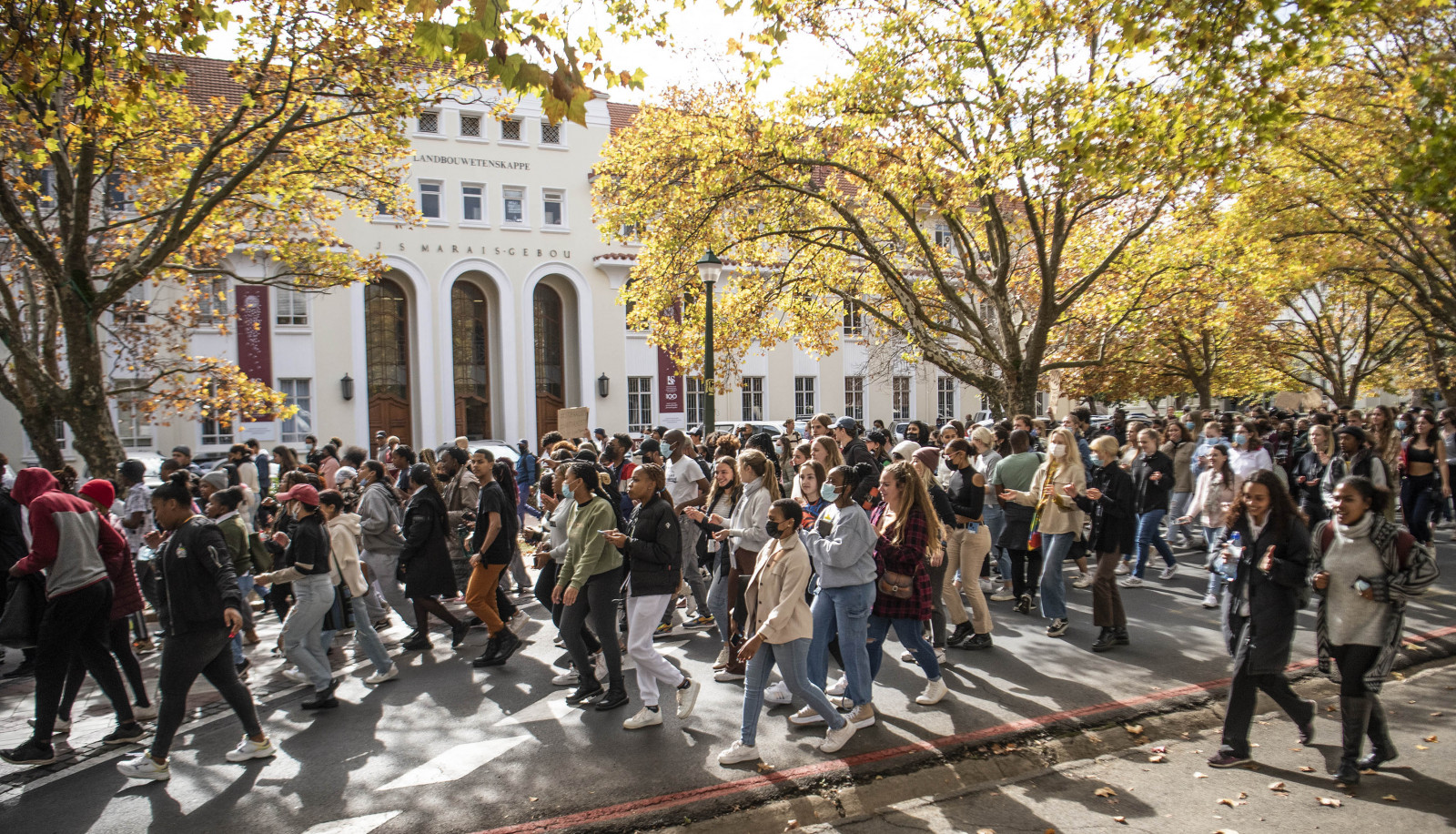
[Poster image, by Brenton Geach, is of student's protesting against racism at Stellenbosch University, South Africa, on 19 May, 2022.]
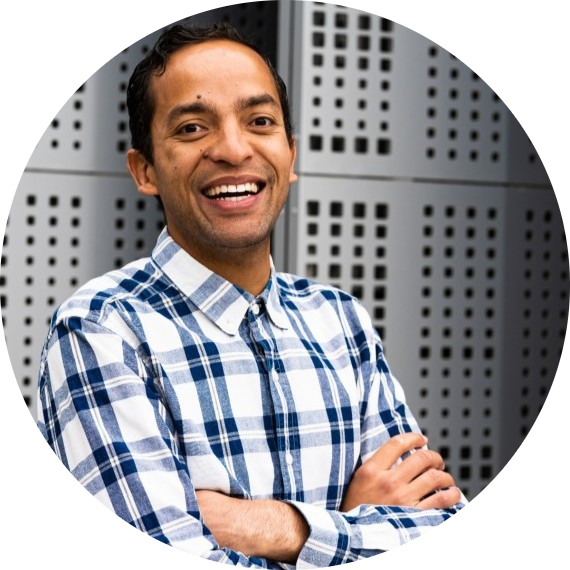
Bryan Jason Bergsteedt is a doctoral candidate, studying a Doctor of Education (DEd) in Educational Leadership and Management, at the University of Pretoria. His research draws on Complexity Theory, ethical leadership, and socioemotional dynamics, to explore how systems of governance can advance equity, social cohesion, and nation-building. He holds a Postgraduate Diploma in Leadership Development (cum laude), from Stellenbosch Business School, graduating top of his cohort. He received undergraduate and postgraduate qualifications at faculties of Science, Medicine and Health Sciences, and Economic and Management sciences, at Stellenbosch University.
Bryan has held multiple executive governance roles, including Chairperson of the Institutional Forum, and Council Member, at Stellenbosch University, contributing to policy reform, transformation oversight, and strategy. His interdisciplinary background spans governance, education, and multilateralism, with over a decade of experience in teaching and academic leadership in the higher education sector.
He recently attended the 63rd United Nations Graduate Study Programme, in Geneva, as the sole South African representative, and represents South Africa on the Global Youth AI Advisory Body – a global network of emerging leaders examining the intersection of artificial intelligence and its impact on humanity. His lived experiences continue to shape his advocacy for inclusive, ethically grounded approaches to governance and policy.
Follow the Topic
-
Higher Education
This is a leading international journal dedicated to advancing knowledge in the field of higher education studies.


Please sign in or register for FREE
If you are a registered user on Research Communities by Springer Nature, please sign in