Why a bachelor's programme fell to national security fears
Published in Education
When Nobel laureate Brian Schmidt — former vice-chancellor of the Australian National University (ANU) — learned that his institution had been ordered to terminate its undergraduate partnership with Shandong University, his reaction was one of genuine bafflement. "This is an undergraduate partnership," he told the media. "It has no research capability. It is extremely low risk. I do not know why the government singled it out."
Yet on 10 August 2026, Australia's Foreign Minister Penny Wong signed a formal notice under the Foreign Relations (State and Territory Arrangements) Act 2020 requiring ANU to end the arrangement by 18 January 2027. The notice invoked force majeure — a legal concept more commonly associated with natural disasters than with undergraduate classrooms — and declared the partnership "invalid and unenforceable." It was the first time this law had been used to terminate a university-level international collaboration, and it sent a chill through Australia's higher-education sector.
The Shandong–ANU Joint Science College, established in 2019 and operational from 2022, offered bachelor's degrees in mathematics, physics, chemistry and biological sciences through a "3+2" transnational education model. Hundreds of Chinese students had already enrolled. There were no classified laboratories, no defence contracts, no sensitive technology transfers — just standard undergraduate science curricula. So why did a basic teaching programme trigger a foreign-ministerial intervention normally reserved for diplomatic disputes?
From project risk to institutional risk
The answer lies in a fundamental shift in how governments assess the dangers of international academic collaboration. Traditionally, risk evaluation focused on the project itself: Does the research involve dual-use technology? Are funding sources transparent? Are intellectual-property arrangements sound? The ANU–Shandong case reveals a new paradigm — what might be called "comprehensive affiliation" risk assessment.
The Australian government did not base its decision on the content of the joint college's teaching. Instead, it relied on a chain of inference: Shandong University maintains ties to China's state and military research apparatus; the United States placed it on a high-risk foreign-institution list (Section 1286 of the US National Defense Authorization Act); ANU is a cornerstone of Australia's defence, intelligence and security ecosystem; therefore, any continued collaboration poses a risk. The logic rests on an assumption of risk spillover: even a bachelor's programme can, in this framing, lend legitimacy to a "problematic" institution, create a pipeline for future talent, or open the door to deeper research ties down the line.
Julian Hill, Australia's Assistant Minister for Education, publicly cited the US "change in assessment status" for Shandong University as background to the decision. This is significant: American lists are becoming the de facto upstream standard for academic security screening across the Five Eyes intelligence alliance. When one partner labels an institution risky, others follow — often without independent verification of whether the specific collaboration in question is actually problematic.
The drift from "technology sensitivity" to "partner identity sensitivity" is equally troubling. Around the same time, the University of Queensland was ordered to terminate a research collaboration with the Chinese Academy of Sciences on proteins and toxins in Australian native plants — work with potential applications in pain therapy. Nothing about the project screamed national security. Yet it, too, was deemed too risky. The message is clear: who you work with now matters more than what you work on.
A global pattern: from federal bans to state-level lockdowns
If Australia's use of the Foreign Relations Act was a legal first, the United States has been building a more systematic architecture of exclusion. On 8 July 2026, the US National Science Foundation (NSF) issued an open letter to the research community announcing that, from the new fiscal year (beginning 1 October 2026), NSF funds could no longer support any collaborative research with institutions on the US government's restricted-entity lists. Principal investigators and key personnel could not hold concurrent positions at those institutions; could not accept research funding from them; and could not collaborate with their researchers on NSF-funded projects.
The scope is breathtaking. "Collaboration" is defined to include not only joint grant applications and shared laboratories, but also data sharing, co-authored papers, joint supervision of graduate students and postdocs, academic visits, joint conferences, and shared experimental or computing infrastructure. Because the restricted-entity lists encompass hundreds of Chinese institutions — from top universities to national laboratories — Science magazine described the policy as "effectively severing most NSF-funded collaborations with the Chinese research system." It is a fragmentation of the global basic-research network with few historical precedents.
Nor is the NSF move an isolated event. In March 2026, the US Department of Defence expanded the number of reference lists it uses for screening from four to thirteen. In May, the White House Office of Management and Budget issued a proposed rule to create a unified standard for restricting research collaboration across all federal funding streams. In August, the Pentagon ordered thirty leading universities — including Harvard, MIT and Johns Hopkins — to audit their foreign institutional partnerships within two weeks or risk losing federal funding. The pressure on institutions to self-censor has never been greater.
Meanwhile, some US states have gone further than the federal government. In March 2025, Ohio passed legislation requiring its public universities to cease all academic and financial partnerships with Chinese institutions. Florida — already the most restrictive state for Chinese students — bars public universities from hiring Chinese graduate students as research or teaching assistants unless granted a special state exemption, a policy that has forced numerous doctoral candidates to transfer or return home. North Carolina and other states are advancing bills to prohibit Chinese nationals from entering laboratories in artificial intelligence, quantum computing and robotics. At the federal legislative level, the House of Representatives passed the SAFE Research Act in 2025, which would have banned federal funding for researchers affiliated with "foreign adversaries" (China, Russia, Iran and North Korea) and imposed a five-year lookback period. Although the bill was not ultimately included in the defence authorization act, its sponsor, Representative John Moolenaar, introduced the SIRA Act in May 2026, keeping the pressure on.
The reshaping of global partnerships
Faced with this tightening landscape, universities worldwide are adapting — but not always in ways that preserve the openness on which scientific progress depends. A new paradigm of "risk-tiered management" is emerging. Rather than treating all international collaboration as equally suspect, institutions are sorting partnerships into three rough categories: basic education and humanities (generally deemed low-risk); applied science and engineering (requiring additional compliance review); and "critical technologies" such as AI, quantum computing, semiconductors and aerospace (facing near-total restriction).
The perverse effect of this tiering is a widening grey zone. As the boundaries of "sensitive" fields expand — from clearly military technologies to biotechnology, clean energy and advanced materials — researchers find it increasingly difficult to predict which collaborations are "safe." This uncertainty breeds over-compliance: universities and scholars voluntarily abandon legitimate, beneficial partnerships rather than risk political or legal blowback. The result is a chilling effect that extends far beyond any formal prohibition.
Some institutions are pursuing "multilateral buffering" — channelling cooperation through multilateral frameworks such as the ASEAN University Network, Campus Asia or the European Union's Erasmus+ programme. The political neutrality of these platforms makes them less likely to trigger bilateral security reviews. Others are experimenting with "corporate embedding," in which multinational firms act as third-party intermediaries in university–industry–university triangles. Because corporate-funded research often falls outside direct federal security screening, this model offers a workaround — at the cost of subordinating academic freedom to commercial interests and restricting the open publication of findings.
Chinese universities, for their part, are shifting toward "non-sensitive" fields. The May 2026 round of approvals for Australia–China joint programmes, for example, was dominated by business analytics, digital transformation and environmental science. Shandong Province itself, historically a hub for Sino-foreign educational collaboration, is showing a marked "de-STEMization" trend in new approvals. At the same time, Chinese institutions are pursuing a "southward" and multilateral diversification strategy, deepening ties with universities in Southeast Asia, the Middle East, Africa and Latin America. These adaptations maintain the appearance of global engagement, but they may leave Chinese science less connected to the cutting-edge research ecosystems of North America and Europe.
The hidden costs: students, scholars and science itself
Lost in the geopolitical discourse are the human costs. The most immediate victims of the ANU–Shandong termination are the hundreds of students already enrolled in the programme. After three years at Shandong, they had expected to complete their degrees in Canberra. Now they face an uncertain path to graduation. News.com.au captured the human dimension with its headline: "Chinese students' futures uncertain after ANU security axe." When educational partnerships are politicized, students become hostages.
The plight of Chinese researchers in the United States is equally concerning. The NSF's use of the term "affiliation" is deliberately vague, potentially covering not only formal employment but also past collaboration histories, co-authorship and academic visits over the past five years. This ambiguity creates arbitrary enforcement, and the group most affected is Chinese-American scientists — a community that, as one commentator noted, has "always been treated as permanent outsiders." The SAFE Research Act's five-year lookback means that any prior academic interaction with a Chinese institution could disqualify a researcher from future federal funding. The result is a wave of self-censorship: scholars severing ties with former colleagues, avoiding co-authorship with Chinese partners, and withdrawing from international conferences. In the first half of 2025 alone, fifteen visiting scholars and doctoral students funded by the China Scholarship Council were expelled from US universities.
The damage to basic science may be the most insidious. Climate modelling, infectious-disease surveillance and astronomical observation all depend on global data sharing and distributed research networks. These are not luxuries; they are necessities for addressing existential threats that no single nation can solve alone. When the NSF prohibits data sharing, sample exchange and co-authored papers with Chinese counterparts, the cost is borne not by any one country, but by the collective capacity of humanity to understand and respond to shared challenges. As Science warned, the global basic-research network is fragmenting into parallel systems with incompatible standards and redundant efforts — an outcome that serves nobody's long-term interests.
A path forward: bounded openness
The academic community is not opposed to security review. What it demands is transparency, due process and predictability. If an undergraduate teaching programme can be terminated without evidence of specific wrongdoing, and if restricted-entity lists can expand without transparent appeal mechanisms, then the stability of all international collaboration is called into question. The black-box nature of these decisions — whether under Australia's Foreign Relations Act or the US Section 1286 lists — erodes the legitimacy of security screening itself, making it appear less like a genuine safeguard and more like a political instrument.
A better approach would be "bounded openness": clearly delineating what is protectable and what should remain open. Undergraduate classrooms, basic mathematics, climate science and public-health research should be ring-fenced from security review, while research with direct military applications can legitimately be restricted. This requires moving from institution-level blacklists to project-level risk assessment. The Netherlands and Switzerland have experimented with independent review committees — comprising university representatives, government officials and security experts — that evaluate international partnerships on a case-by-case basis. Such "academic security buffer zones" treat security review as a technical rather than a political exercise.
International organizations also have a role to play. UNESCO, the International Science Council and other bodies could establish neutral evaluation frameworks, ethical guidelines for cross-border research, and even temporary safeguards for scholars caught in geopolitical crossfire. A "Global Science Collaboration Compact" — modelled on the Paris Agreement — could set multilateral norms, dispute-resolution mechanisms and exception clauses for basic research. Such a compact would lack enforcement power, but it would provide a reference point for governments, a compliance roadmap for universities, and a shield for researchers against arbitrary political interference.
Finally, any framework for terminating educational partnerships must include robust student-protection provisions: guaranteed degree-completion pathways, credit-transfer mechanisms, and compensation for sunk costs. Education is not merely a tradable service; it is a long-term commitment to individual futures. When governments tear up these commitments for political reasons, they undermine the very credibility of the international education market.
Conclusion
The ANU–Shandong case is not an anomaly. It sits alongside the NSF's sweeping collaboration ban, Ohio's prohibition on state-university partnerships with China, Florida's exclusion of Chinese graduate assistants, and the SAFE Research Act's five-year lookback. Together, they paint a coherent picture: under the banner of national security, undergraduate classrooms and nuclear-weapons laboratories are being placed in the same risk-assessment frame, the boundary between basic scientific inquiry and strategic technology competition is dissolving, and "institutional risk" is displacing "project risk" as the default criterion for international engagement.
Yet total decoupling is neither realistic nor in anyone's long-term interest. Data from May 2026 show that Australia–China joint programmes are still being approved; European and Asian research networks continue to expand; and Chinese universities are adapting through field diversification and southward outreach. International academic collaboration possesses what might be called "open resilience" — the capacity to deform, adjust and find alternative pathways under pressure without being extinguished.
The real question is not whether collaboration will continue, but at what quality. If security screening remains opaque, arbitrary and devoid of due process; if restricted-entity lists can grow indefinitely without explanation; if basic research is treated as indistinguishable from technology espionage — then the global knowledge ecosystem will fragment into inefficient, mistrustful silos. The ultimate loser will not be any single country's scientific competitiveness, but humanity's collective ability to confront climate change, pandemics and the frontiers of knowledge.
In this sense, the question raised by the ANU–Shandong affair goes far beyond the fate of one joint college. It asks whether we can still defend the ideal of the university as a borderless bridge for knowledge — or whether we have accepted its transformation into a forward operating base for geopolitical rivalry. The answer will shape the architecture of global knowledge production for decades to come.
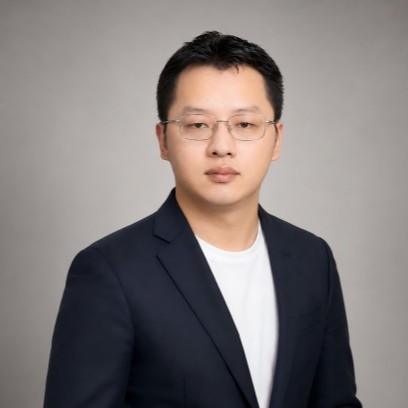
Dr. Jiachao Peng is an associate professor, with a Ph.D. in Applied Economics and a postdoctoral fellowship in Business Administration. He is a Chutian Scholar in Hubei province and an outstanding talent at Wuhan Institute of Technology. He has been a visiting scholar at Macquarie University and has led numerous funded projects. His research focuses on sustainable development, applied economics and business administration, contributing significantly to the field through various high-impact studies. He has published more than 80 peer-viewed papers in high-level journals and 9 books within Chinese and Enghlish. Dr. Peng's work has influenced both academic circles and practical applications in sustainable economics and business. He has been invited to serve as the associate editor of Total Quality Management & Business Excellence, Energy Exploration & Exploitation, and as the section editor of Cogent Economics & Finance. Also, he is the editorial board member and editor of high-level journals, such as Humanities & Social Sciences Communications, Communications Sustainability, Scientific Report and Journal of Environment & Development. Dr. Peng currently organizes sustainability issues in more than 10 high-level journals, including Environmental Research, Carbon Balance and Management, which have received enthusiastic response from the academic community and governments. Notably, he was selected as 0.5% Top Scholar - Prior 5 Years (ScholarGPS) and 1% Top Scholar Highly Cited (CNKI, 2024-2025).
Please sign in or register for FREE
If you are a registered user on Research Communities by Springer Nature, please sign in