Why antimicrobial resistance is a silent crisis
Published in Arts & Humanities
Abstract
The discovery of a hierarchy of antimicrobials with their marvellous life curing and saving properties is a wonder phase in the history of human life. The antimicrobial use improved the human life in terms of increasing the life expectancy rates, reducing the infant mortality rate, lowering the parturition death rate, decreasing the incidence of diversity of infectious diseases, stabilising the worst pandemic episodes, and simplifying the various operative procedures. However, at the same time millions of human die alone due to the emerging resistant microbial infections. The antimicrobial resistance (AMR) alone results in the death of at least 700,000 people each year at global level. Therefore, AMR itself is a new human health crisis. The unregulated antimicrobial utilisation practices and easy access to antimicrobial medicines is a burning issue. The wanton feeding, excessive and misuse of antimicrobial drugs (AMDs) is on rise not only in human but also in livestock sector, the consumption of whose products also results in the transfer of resistant zoonotic infections. Therefore, AMR has evolved as the most significant global health management challenge, and demands a responsible, equitable and sustainable use of AMDs throughout the world. Further, the development of eco-friendly and novel alternatives to conventional antimicrobials must form the backbone of new research in the field of antimicrobial drug discovery.
- Introduction
The first antibiotic discovery is set to hit a century landmark by 2028, as it was in year 1928, when Alexander Fleming accidently discovered the first antibiotic- Penicillin. He himself was not able to purify it from the Pencilium mould, but paved the way towards knowing the world of AMDs with amazing therapeutic potential. No doubt, the discovery of a hierarchy of AMDs thereafter with their marvellous life curing properties is a wonder phase in the history of human life in terms of their revolutionary role by increasing the life expectancy rates, reducing the infant mortality rate, lowering the parturition death rate, decreasing the incidence of diversity of infectious diseases, stabilising the worst pandemic episodes, simplifying the various operative procedures, maintaining the overall quality of public health and increasing the livestock and agricultural productivity. However, at the same time millions of human die alone due to the emerging resistant microbial infections. Thus, it is hard to strike a balance between the pros and cons of AMDs use and AMR emergence even during the first centenary of antibiotic discovery. That reminds the old and wise saying that nothing is good or bad, it is the usage attitude that makes it so. The continuing usage of antibiotics alone against viral infections in human as worsened the problem further. It will not be wrong to say that humans are slave to AMDs but masters of AMR due to wrong and unregulated antimicrobial utilisation practices particularly in developing and resource poor countries of the world.
- The threat
Infectious diseases are on continuous rise, so is the availability of AMDs including antibiotics, antivirals, antifungals and antiparasitics used to prevent and treat these infectious diseases. Despite the availability of diversity of broad spectrum AMDs, the infectious diseases control is facing complex challenges due to continuous threat with emerging and re-emerging infections. On the one hand climate change is posing a continuous threat of emerging diseases and on the other hand AMR diseases are also on increasing trend. Therefore, global public health is under tremendous stress. For example, during the first half of 2025, infectious diseases like Cholera, Mpox, and Measles continued to spread globally and diseases such as Dengue fever, Chikungunya, Malaria, and Zika virus showed remarkable spatial heterogeneity and dynamic evolution (Lin et. al., 2025).
Although, the discovery and use of AMDs transformed medical science and improved human health, however; the advent of AMR among microorganisms is weakening the worth of these AMDs. Right from the beginning of antibiotic therapy, the AMR developed, enabling the evolution of resistant superbugs or rogue microbes that can fight off any broad-spectrum AMD. AMR alone results in the death of at least 700,000 people each year at global level, indicating its urgent nature. Quite disheartening to know is that, if no action is taken, AMR based diseases in human alone can be responsible for 10 million deaths each year by the end of next three decades i.e. by 2050.
Therefore, the biggest disease in-itself will be the AMR, and not the diseases treated with AMDs. AMR is already a leading cause of mortality. According to Charlotte et al., 2025, approximately 5 million deaths associated with bacterial AMR occurred in 2019 alone. AMR contributes to about 9% of all global deaths (ARC, 2022). AMR has also led to a substantial increase in health-care expenditures due to the cost of prolonged hospital admission, and intensive investigations or treatments. For example, it has been estimated that $4.6 billion emerged as an extra expenditure during 2017 in the USA only (Charlotte et al., 2025). The same may be true in other parts of the world or more escalating figures may be available. Socioeconomic issues play a crucial role in AMR. Regions with little access to clean water, sanitation facilities, and effective antibiotics, in addition to weak health infrastructures account for greater than 90% of AMR-related deaths (Maki et al., 2021). Most of hospital admissions worldwide are either do to side effects of antimicrobials or infections by drug resistant microbes coming from the bacterial biofilms alone (Saima et al. 2014). Bacterial biofilm is one of most significant factors contributing to the development of microbial resistance and incidence of diversity of new microbial infections. The biofilms are not easily accessible to the components of our immune system and also show extreme antibiotic resistance because of low penetration and slow diffusion of antibiotics through their exopolysaccharide film matrix. Further, the presence of neutralising enzymes in them renders the antibiotics ineffective.
- Why Antimicrobial resistance
The wanton feeding and misuse of AMDs is on rise in both human and livestock sector. Even getting them from the market is as easy as is obtaining a grocery item for a home particularly in South Asian countries. India alone is facing a great crisis in the form of unregulated antimicrobial utilisation practices. AMR occurs when bacteria, viruses, fungi and parasites do not respond to conventional AMDs. As a result, infections become difficult or impossible to treat, increasing the risk of disease spread, severe illness, disability and death (WHO). The AMR active against a diversity of AMDs has engulfed us severely besides the ill consequences in terms of death and destruction of useful microbial flora (Microbiota) of our body. That alone adds extra oil to the burning lamp of AMR. The destruction of Microbiota disturbs the whole body metabolism and physiology, which subsequently alters the normal homeostasis and well-being of the body. Therefore, AMR is striking the human and public health from multiple directions.
As the need to consume AMDs is on increasing trend and development of AMR is a natural process, so it is a big challenge to human as the dependence on antibiotics alone is huge. For example, humans currently produce and use an estimated 175,000 tonnes of antibiotics per year. With the current level of action, total cost to treat resistant bacterial infections alone is predicted to reach US$ 412 billion annually up to 2035, with additional productivity losses of US$ 443 billion per year (GLG report, 2024). World Health Organisation leads global efforts to prevent and control AMR in humans, as part of the Global action plan on drug resistance (GAP-AMR 2026–2036). The GAP-AMR aims to preserve the ability to treat human and animal infections by expanding equitable access and appropriate use of effective AMDs and reducing infections through a One Health approach (WHO, 2026). AMR remains one of the most significant global health challenges, affecting humans, animals, plants, food systems and the environment. The need for responsible, equitable and sustainable use of AMDs, strengthened surveillance, innovation, and sustainable agri-food systems is felt worldwide (Lin et. al., 2025).
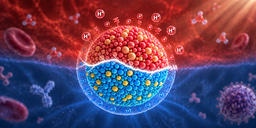
Two distinct mechanisms of AMR allow microbes to withstand the effects of AMDs. The “intrinsic resistance” which is also known as innate or natural resistance is inherent to a microbial species against an AMD. It is not influenced by prior antibiotic exposure or the genetic resistance reservoir in other microbial species. Acquired resistance is under an evolutionary process whereby microbes adapt to the presence of AMDs through a number of mechanisms capable of horizontal transmission between microbes. Typical AMR mechanisms involve enzymatic modification or degradation of antibiotics, limiting the entry of antibiotics into cells to prevent their build-up, alterations to metabolic pathways, modifying binding sites like ribosomes to reduce drug effectiveness, and increasing the activity of efflux pumps that remove antibiotics from cells before they can reach adequate levels (Chiss et al., 2022). The development of resistance to antibiotics or antivirals is, therefore, a very simple natural phenomenon and whatever the drugs are used to control infections, the more likely resistance develops. This is because drug treatment leads to the selection, survival and propagation of resistant pathogens (biologically fit population), thereby contributing resistance genes to the next generation. Once the resistance genes become fixed in the microbial genome then resistance becomes an established phenomenon.
- The need of awareness
Bacterial AMR was estimated to be associated with more than 4.7 million deaths globally in 2021 (GBD, 2024). Therefore, Strategies and alternatives to AMR is the cornerstone of worldwide research in this regard. Although, the contributing factors to AMR development are several. However, the sensitisation and awareness of AMR is of utmost priority. The AMR week is an annual awareness event celebrated globally from November 18-24 to cover and highlight different aspects of AMD discovery, their usage, the threat associated with the development of AMR in microbes, promotion of best antimicrobial utilisation practices and the need of identifying reliable and sustainable alternatives in both human and animal health sector.
Considering the global evidences, the AMR is not a localized phenomenon, or a regional problem, but a problem of major international concern and significance with a pandemic status. Therefore, rather than searching and researching for next generation AMDs against drug resistant microbes, it is the time to rely on bio-inspiration and search for alternative antimicrobials taking cues from the nature itself. The discoveries of antimicrobial peptides in fishes as natural defence agents are one of the most promising alternative to traditional and drug resistant antibiotics. Therefore, antimicrobial agents of immunomodulatory nature, which can activate and recruit host immune cells to sites of infection, to enable the natural cure of microbial infections. Or artificial peptide design technology can be used to synthesize their synthetic counterparts or analogs as a sustainable and non-toxic alternative. Nature has designed our immune system in such a way that it offers hope and choice for every disease or abnormality itself
But above all, the most important thing to understand is why this situation is knocking our doors. Reasons are several. Human beings are so gravely addicted to the AMD consumption that almost every household keep a reserve of the common antibiotics just like daily consumables. Every home is a carrier of a medicinal box much to the easy access of all; even small children are fed heavy doses for even a minor infection. The main factors for the development of AMR and emergence of superbugs are uncontrolled prescriptions by medical professionals, self-medication without any knowledge of the infection and the need along with untimely, frequent and indiscriminate usage, incomplete course, over dosage, under dosage and improper administration of the particular drug or its ingredient. Thus the onus lies not only in the medical fraternity, but within the common man, and with the society also.
Furthermore, using antibiotics indiscriminately to treat viral diseases e.g. common cold has resulted in the evolution of viral super-infections, which are subsequently resistant to routine drugs. Thus, advocating the concept of antibiotic apocalypse is no more a remote concept, as the world is now heading towards post antibiotic era full of new challenges and health issues. The misuse of antibiotics in human and animal health, as well as in agriculture, contributes to the spread of resistance genes, creating a "Silent Pandemic" that could surpass other causes of mortality by 2050 (Sirwan et. al., 2024).
- Environmental concerns and the alternatives
The AMDs used in farming practices get leached into the environment and unnecessarily either kills the non-target life forms or disturb their biochemical and metabolic pathways and the overall ecological functioning. At the same time the accumulation of antimicrobial waste compounds released from the pharmaceutical companies and manufacturing industries or discharge of their packing material, waste accumulation of expired or unused drug products is another serious environmental issue. Therefore, indiscriminate antimicrobial consumption is not only a threat to human and animals but to the natural environment too. Thus, every person has a role to perform within his/her self, within houses, within workplaces, within markets, within societies, within agricultural fields, within industries and factories to contribute in minimising the antimicrobial consumption and discharge of expired/excessive/ unused/ waste into immediate surroundings. However, this statement may prove hard to digest due to emergence and re-emergence of fatal infectious agents and the dependence on traditional antibiotics in absence of viable and validated alternative. We are promoting the building up of antibiotic concentration in the environment, animals and human beings. In either of the ways we are building up the heavy load of antibiotics in our body and are hampering the normal physiological processes of our body.
Hope lies in the availability of eco-friendly and novel alternatives to conventional antimicrobials including the development of phytogenic compounds, antimicrobial peptides, vaccines, immunotherapy and probiotics. Immunomodulatory approach to treat and cure microbial infections can be one of the reliable alternatives. Antimicrobial peptide-antibiotic combination therapy serves as another attractive strategy that can enhance the overall antimicrobial activity and reduce the dose-dependent toxicity of antimicrobial peptides and antibiotics (Lazar et. al., 2018). Phytochemicals have potency to be developed into great synergistic alternatives of antimicrobials. Antibody-antibiotic conjugates, conceptually derived from antibody-drug conjugates, are advanced drugs consisting of monoclonal antibodies that are covalently linked to potent antibiotics and are designed to selectively bind to specific antigens and deliver antibiotics directly to the infection site (Cavaco et. al., 2022). Due to the advancements in technologies, artificial intelligence is emerging as a powerful tool for tackling infectious diseases and addressing AMR, ranging from antibiotic susceptibility testing, AMR surveillance, and diagnosis, to AMD development (Wan et. al., 2024). Maintaining a very good hygiene (particularly hand hygiene), safe cooking practices and timely vaccine shots help in minimising the superbug problem. Secondly, homeopathy seems to be a viable alternative of treating human microbial infections with no development of AMR, because mechanism of action of homeopathic medicines is based on the natural principles of the body through strengthening of the immune system, and basic physio-anatomical make-up, and stimulating the body’s own curative power. So hygiene and homeopathy are the two best alternatives to manage the problem of AMR.
- Conclusion and the way ahead
As it is not possible to do away with the antimicrobials, their prescription should be allowed only after strict and regulated permission by the competent authorities. Thus, before waiting for other things to happen, unnecessary/ excessive prescriptions and self-medication has to stop. Addressing AMR requires sustainable and collaborative efforts, which include improving local and international policies and education on antibiotic usage, strengthening surveillance systems, preventing AMR-related infections and transmission, and developing new technologies and alternative antimicrobial therapies (Charlotte et al., 2025). Furthermore, timely and accurate diagnosis of the infection is essential for reducing unnecessary antibiotic prescribing and consumption. It is also crucial to emphasize the importance of using antimicrobials responsibly in order to effectively mitigate the selective pressure that contributes to the development of AMR. Worldwide climate change has been predicted to result in the emergence and re-emergence of microbial infections whose control will be a big challenge in presence of AMR crisis. Therefore, awareness, role and responsibility at individual, family, society, and policy level will address the crisis and enable the development of sustainable and resistance free alternatives.
References
A.A. Chiș, L.L. Rus, C. Morgovan, A.M. Arseniu, A. Frum, A.L. Vonicațincu, F.G. Gligor, M.L. Mureșan, C.M. Dobrea. 2022. Microbial Resistance to Antibiotics and Effective Antibiotherapy. Biomedicines, 10,p. 1121, 10.3390/biomedicines10051121.
Antimicrobial Resistance Collaborators. Global burden of bacterial antimicrobial resistance in 2019: a systematic analysis, Lancet. 2022; 399:629-655.
Cavaco, M ∙ Castanho, MARB ∙ Neves, V. 2022. The use of antibody-antibiotic conjugates to fight bacterial infections. Front Microbiol.; 13, 835677.
Charlotte,S Ho, Carlos,T.H. Wong, Thet,Tun Aung, Rajamani Lakshminarayanan, Jodhbir S Mehta, Saaeha Rauz, et al. 2025. Antimicrobial resistance: a concise update. The Lancet Microbe 6(1), 100947. doi: 10.1016/j.lanmic.2024.07.010
GBD 2021 Antimicrobial Resistance Collaborators. Global burden of bacterial antimicrobial resistance 1990-2021: a systematic analysis with forecasts to 2050. Lancet. 2024 Sep 28; 404 (10459): 1199-1226.
GLG report: Towards specific commitments and action in the response to antimicrobial resistance (2024). https://www.amrleaders.org/resources/m/item/glg-report.
Lázár, V ∙ Martins, A ∙ Spohn, R ∙ et al. 2018. Antibiotic-resistant bacteria show widespread collateral sensitivity to antimicrobial peptides. Nat Microbiol.; 3:718-731.
Lin Lin, Xiang Guo and Yan Wu et al. Global Status of Infectious Diseases from January to June of 2025. Zoonoses. 2025. Vol. 5(1). DOI: 10.15212/ZOONOSES-2025-1002.
Maki, G ∙ Zervos, M. 2021. Health care-acquired infections in low- and middle-income countries and the role of infection prevention and control. Infect Dis Clin North Am.; 35:827-839.
Saima Aftab, Jacquelyn R. Evans, 2014. NICU environment and principles of infection control. Book chapter: Fetal and Neonatal Secrets (3rd Ed) pp. 67-93, Editors: Richard A. Polin, Alan R. Spitzer, ISBN: 9780323091398.
Sirwan Khalid Ahmed, Safin Hussein, Karzan Qurbani, Radhwan Hussein Ibrahim, Abdulmalik Fareeq, Kochr Ali Mahmood, Mona Gamal Mohamed. 2024. Antimicrobial resistance: Impacts, challenges, and future prospects, Journal of Medicine, Surgery, and Public Health, Volume 2. https://doi.org/10.1016/j.glmedi.2024.100081.
The World Health Assembly adopts updated Global Action Plan on Antimicrobial Resistance (2026–2036), 25 May 2026 Departmental update Geneva, Switzerland.
Wan, F ∙ Wong, F ∙ Collins, JJ ∙ et al.2024. Machine learning for antimicrobial peptide identification and design. Nat Rev Bioeng.; 2:392-407.

Dr. Khurshid A. Tariq obtained his graduation (BSc) in Life-sciences in year 2000 and Master’s (MSc) in Zoology in the year 2004 in first class first position from University of Kashmir. He has to its credit university merit scholarship, certificate of excellence and gold medal at M. Sc. level. He became the first student of University’s Zoology Department to qualify CSIR-UGC National Eligibility Test in the year 2005 for Junior Research Fellowship (JRF) award from Council of Scientific and Industrial Research (CSIR), New Delhi, India.
Dr. Tariq was awarded Doctorate Degree (PhD) in Zoology with specialisation in Parasitology in the year 2008 from University of Kashmir. He has also received Project Research Fellowships in the year 2005 from Department of Science and Technology (DST), New Delhi, India.
Dr. Tariq was appointed by JKPSC as lecturer Zoology for School Education Department in the year 2008 and subsequently as Assistant Professor of Zoology in Islamia College of Science and Commerce, Srinagar in the year 2009 and is presently working as Associate Professor of Zoology. Dr. Tariq has attended various Symposia, Webinars, MOOCs, Leadership development programs, Faculty development programs, Orientation courses, Refresher courses, Workshops, Seminars and Conferences. Dr. Tariq has delivered various lectures and invited talks in different symposia, seminars, webinars, workshops, conferences.
He has more than sixteen years of research and teaching experience at UG & PG level in Zoology. Dr. Tariq is a registered research co-guide/co-supervisor in the subject of Zoology. He has published about 36 orginal research and review papers, 8 book chapters and around 80 general articles.
Dr. Khurshid has also acted as an External Reviewer for a four credit SWAYAM MOOC titled “Human Genetics” and “Human Population Genetics” . Dr. Tariq has supervised various student projects/dissertation at UG & PG level. He is a member of curriculum development and board of studies in Zoology.
Follow the Topic
Introducing the Palgrave Macmillan Campaign for the Humanities
At Palgrave Macmillan we publish cutting-edge humanities research that has real-world impact. This research community brings together the voices of our authors and editorial team to highlight and publicize the value of the humanities and humanities research in our world today.
Continue reading announcement