Why promising cancer treatments fall short: connecting resistance biology, clinical trials, and withdrawn therapies
Published in Bioengineering & Biotechnology, Cancer, and General & Internal Medicine
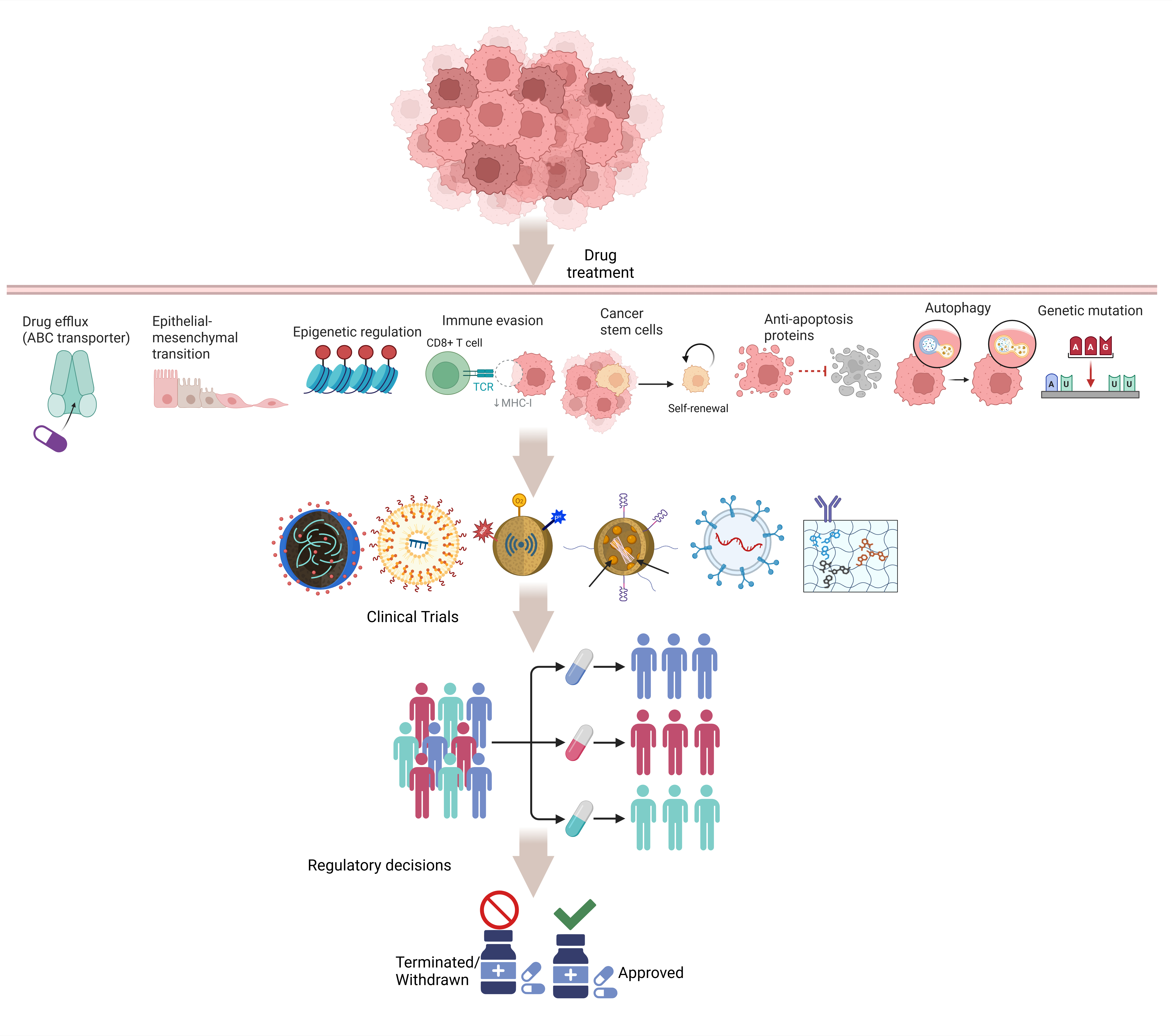 Why do promising cancer treatments sometimes fail to deliver lasting benefits?
A compelling biological target, an effective delivery system, and encouraging early results are important steps. Yet understanding a treatment’s potential also requires examining what happens when it reaches clinical testing and what can be learned when development stops or an approval is withdrawn.
Our review, published in the Journal of Experimental & Clinical Cancer Research, brings these questions together. We connect the biology of chemotherapy resistance with the clinical experience of developing treatments, examining both therapeutic opportunities and the obstacles encountered along the way.
Connecting the tumor environment with resistance
Cancer cells exist within a surrounding network of stromal cells, immune cells, blood vessels, and extracellular matrix. Low oxygen, acidity, and signals from neighboring cells can influence how cancer cells survive treatment.
Our review examines how these conditions interact with cellular signaling and epigenetic regulation, changes in gene activity that do not require changes to the DNA sequence. DNA methylation, histone modifications, and microRNA networks can help maintain resistant cellular states. These processes interact, making it important to consider how an intervention affects the wider system.
This provides the biological foundation for the therapeutic strategies discussed throughout the article.
Where nanotechnology and gene therapy could intervene
Nanotechnology offers ways to deliver therapeutic cargo and combine agents within a delivery platform. Gene-based approaches offer tools for modifying the molecular processes that sustain resistance.
We examine these approaches alongside epigenetic treatments and combination strategies. The central question is how to match an intervention to a defined resistance mechanism while ensuring that it reaches the appropriate cells.
That requires addressing practical limitations: uneven nanoparticle accumulation, poor penetration through tumor tissue, immune clearance, gene-delivery efficiency, and potential off-target effects. A promising mechanism must be accompanied by evidence that the intended intervention can work under clinically relevant conditions.
What do clinical trials contribute to this understanding?
An important part of our review is its examination of clinical-trial experience across nanomedicine, gene-targeting approaches, and combination immunotherapies.
The trial summaries allow readers to consider therapeutic concepts alongside their development stage and reported outcomes. We also examine terminated or withdrawn studies and the reasons reported for stopping them, including safety concerns, insufficient efficacy, recruitment difficulties, funding interruptions, and changes in development priorities.
These distinctions matter. A completed trial does not automatically establish clinical benefit, and a terminated trial does not necessarily demonstrate that the underlying biological strategy was ineffective. Interpreting the reason for an outcome is essential to deciding what should change in the next study.
Learning from withdrawn oncology treatments
The review also examines withdrawn oncology drugs or indications and the importance of confirming benefit after initial approval.
Drug withdrawals, indication-specific withdrawals, and discontinued investigational programs represent different situations. Considering them separately helps avoid treating every setback as the same kind of failure.
For researchers, these examples raise important questions about the evidence needed to advance a treatment. Which endpoints establish meaningful benefit? How should early signals be tested? What information is needed to identify the patients most likely to respond?
These questions make clinical and regulatory experience directly relevant to experimental design.
Making resistance biology visible in treatment failure
Our review highlights a communication gap between the biological understanding of cancer resistance and how treatment failures are described. Labels such as “lack of efficacy” or “failure to confirm clinical benefit” document an outcome but can leave the underlying resistance mechanisms unexplained even where relevant molecular evidence exists.
We argue that this gap matters beyond terminology. How failures are explained can influence research priorities, funding decisions, and the design of subsequent therapies. When evidence of tumor adaptation receives insufficient attention, opportunities to develop resistance-focused treatments and predictive biomarkers may be missed.
The review calls for closer integration of molecular resistance data with clinical outcomes and regulatory summaries, greater transparency around emerging resistance mechanisms, and trial designs that account for tumor evolution.
Learning from discontinued trials and withdrawn treatments should help us identify what future therapies must address to achieve durable benefit.
Looking ahead
For me, the value of this review lies in bringing mechanistic detail, therapeutic design, clinical experience, and development setbacks into one discussion.
The resulting priorities include better biomarkers for patient selection, more representative experimental models, improved delivery, and carefully justified treatment combinations. These priorities can help researchers formulate studies that test both whether an intervention works and whether it works for the intended reason.
I am grateful to all my co-authors for their contributions. I hope the review is useful to researchers designing new platforms, clinicians following emerging treatments, and readers seeking a connected view of chemoresistance.
What should future trials measure to explain treatment failure more clearly—and help the next generation of therapies avoid repeating it?
Read the full review:
Transforming tumor microenvironments: nanotechnology and gene therapy in cellular signaling and epigenetic insight into chemoresistance
https://doi.org/10.1186/s13046-026-03720-8