Workforce Governance: Why Staffing Visibility Matters for Sustainable Healthcare Quality
Published in Healthcare & Nursing and Business & Management

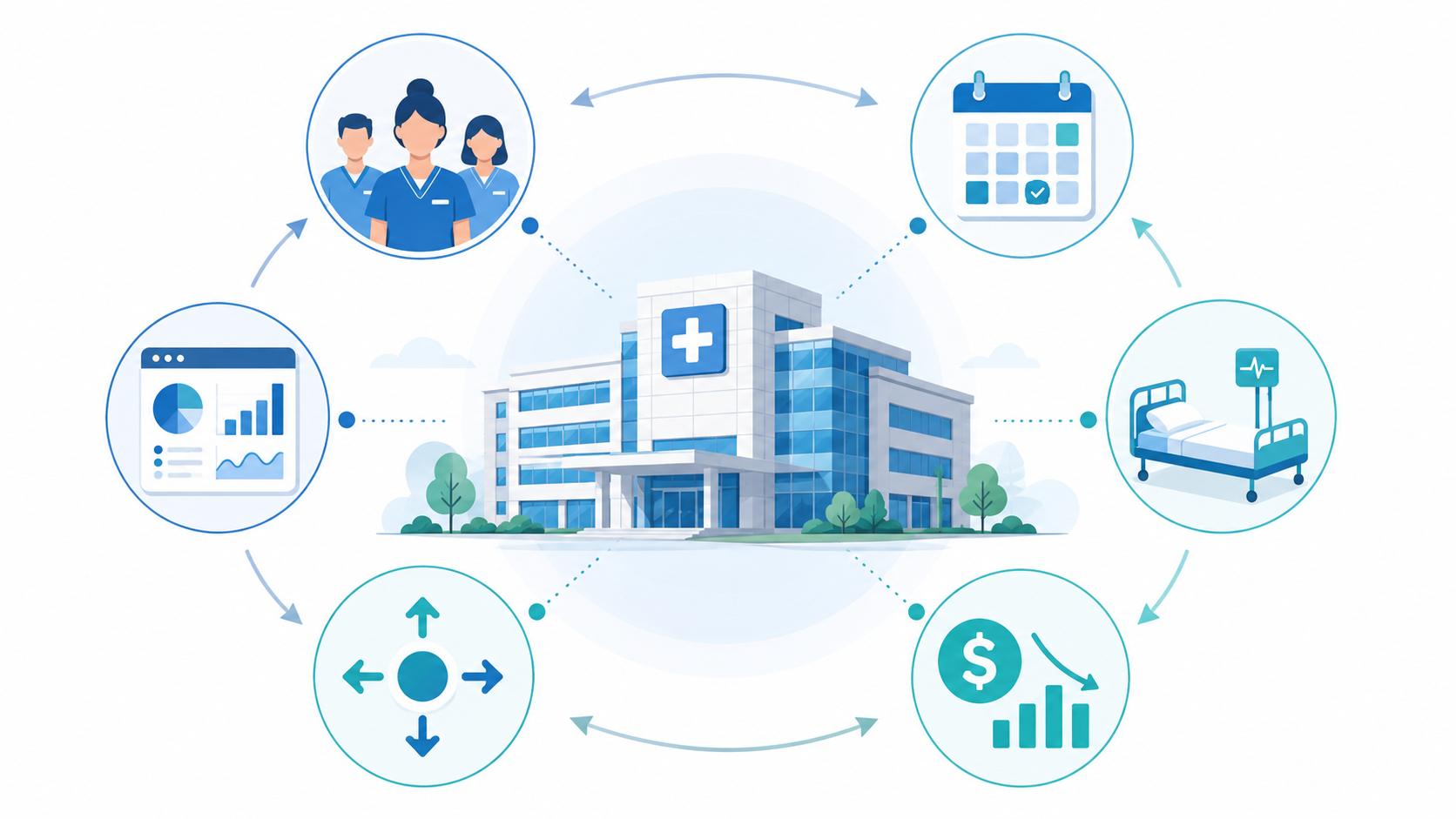


Healthcare quality depends on people.
Protocols, technology, accreditation, and dashboards are important, but none of them can sustain safe care when the workforce is poorly balanced, chronically overloaded, or managed only through reactive decisions.
This is particularly relevant in nursing.
Nursing teams are central to care continuity, patient safety, operational flow, and patient experience. When staffing capacity is misaligned with hospital demand, the consequences appear quickly: overtime coverage, delayed responses, staff fatigue, financial pressure, and increased operational instability.
For this reason, workforce management should not be understood only as an administrative function.
It is a governance function.
In many hospitals, staffing decisions are made under pressure. Absences occur. Occupancy changes. Patient demand fluctuates. Vacancies remain open. New employees require onboarding. Some units operate with surplus capacity while others face deficits.
When this information is fragmented, managers respond late.
When it becomes visible, organizations can act earlier.
This was the central logic behind our recent quality improvement preprint, Visual Management of Nursing Schedules for Workforce Balancing and Reduction of Overtime Coverage: A Longitudinal Quality Improvement Study.
The intervention integrated nursing schedules, absenteeism, hospital occupancy, staff redistribution, overtime coverage events, and associated costs into a visual workforce management process.
The objective was not to reduce the workforce.
The objective was to improve visibility.
By making staffing imbalances visible earlier, leaders could identify deficits and surpluses across units and redistribute available professionals before overtime coverage became necessary.
After implementation, average monthly overtime coverage decreased substantially, and overtime-related expenditure also fell. Because only one pre-intervention month was available, these findings should be interpreted as temporal associations rather than definitive causal evidence.
Even with this limitation, the operational lesson is important.
Visibility changed the quality of decisions.
This experience reinforced a broader principle: healthcare organizations cannot govern workforce performance effectively if they cannot see workforce variation in real time.
A staffing problem may appear to be a human resources issue.
But often it is also a system visibility issue.
A coordination issue.
A decision-making issue.
A governance issue.
When leaders lack integrated information on schedules, absenteeism, occupancy, redistribution, and costs, workforce management becomes reactive. Overtime becomes the default response to imbalance. Financial impact accumulates. Teams experience overload. Managers spend more time correcting problems than preventing them.
Visual workforce management changes this dynamic.
It connects information to action.
It allows earlier identification of gaps.
It supports internal redistribution.
It improves accountability.
It helps leaders distinguish structural shortages from daily variation.
It transforms workforce management from operational firefighting into a governance routine.
This perspective also connects with our previous longitudinal study on organizational maturity and quality governance, published in International Journal for Quality in Health Care Communications.
That study suggested that sustainable quality improvement depends not only on isolated interventions, but on the organization’s ability to coordinate, monitor, standardize, and sustain improvement across multiple domains.
Workforce visibility may be one practical expression of that maturity.
A mature organization does not manage staffing only at the end of the problem.
It creates systems to see imbalance earlier.
It builds routines to respond consistently.
It uses data to support coordination.
It learns from variation.
It protects both care delivery and workforce sustainability.
For healthcare leaders, this raises important questions:
Can we see staffing imbalance before it becomes overtime?
Do we understand how occupancy, absenteeism, and vacancies interact?
Are staffing decisions based on integrated information or isolated perceptions?
Do our dashboards support action or only reporting?
Are workforce indicators connected to governance routines?
Can we redistribute capacity before pressure becomes crisis?
These questions move workforce management from staffing control to workforce governance.
And this distinction matters.
In complex hospitals, sustainable quality requires more than having enough people.
It requires knowing where people are needed, when variation emerges, how resources can be rebalanced, and which governance routines convert information into timely decisions.
Perhaps one of the most important lessons from visual workforce management is this:
Staffing visibility is not just an operational tool.
It is part of the infrastructure of healthcare quality.
Related research
Rodrigues Filho RND, Morais LG. Organizational Maturity as a Tool for Quality Governance: A Longitudinal Study in a Brazilian Hospital. International Journal for Quality in Health Care Communications. 2026. DOI: 10.1093/ijcoms/lyag022.
Rodrigues Filho RND, Barbosa MCP, Miranda GFS, Morais LG. Visual Management of Nursing Schedules for Workforce Balancing and Reduction of Overtime Coverage: A Longitudinal Quality Improvement Study. Research Square Preprint. DOI: 10.21203/rs.3.rs-10121229/v1.
Related literature: nursing workforce management, Lean Healthcare, visual management, workforce governance, hospital operations, patient safety, organizational maturity, and sustainability of quality improvement interventions.
Follow the Topic
-
BMC Nursing
This is an open access, peer-reviewed journal that considers articles on all aspects of evidence-based nursing care; nursing research methods; nursing service delivery, utilization, and evaluation; nursing administration and human resources.
-
Journal of Business Economics
-
A Collection of original research articles on nursing and mentorship, including studies examining the development and assessment of nursing mentorship programs and quantitative and mixed-methods studies examining the experiences of individual mentor-mentee relationships.


Related Collections
With Collections, you can get published faster and increase your visibility.
Career development for nursing students
BMC Nursing is calling for submissions to its Collection, Career development for nursing students. The transition from nursing education to professional practice is a pivotal phase for nursing students, fraught with challenges and opportunities. As the healthcare landscape continues to evolve, nursing students must navigate a myriad of career pathways, requiring not only clinical competence but also a solid understanding of professional development strategies. This Collection aims to explore the various dimensions of career development for nursing students, including mentorship, networking, and skill acquisition, to better prepare them for successful careers in nursing and healthcare.
Addressing career development in nursing education is essential for fostering a skilled and adaptable workforce. Recent advancements in nursing curricula emphasize the importance of integrating career readiness into educational programs. Initiatives such as simulation training, mentorship programs, and career counseling services have emerged to support nursing students in their professional journeys. By equipping future nurses with the tools and knowledge needed for career success, we can enhance job satisfaction, reduce turnover rates, and ultimately improve patient care outcomes.
Future research in this area holds promise for innovative approaches to career development tailored to the needs of nursing students. As technology continues to reshape healthcare, there may be a rise in virtual mentorship programs and online networking platforms that facilitate connections among nursing professionals. Additionally, ongoing research may lead to the identification of best practices for career development that can be standardized across nursing programs, ensuring that all students have equitable access to the resources they need for successful career trajectories.
We call for studies contributing to the examination of topics relating to career development for nursing students, including but not limited to:
- Mentorship programs in nursing education
- Integration of career readiness in nursing curricula
- The role of simulation in career development
- Effective networking strategies for nursing students
- Peer mentoring and its influence on career maturity and decision-making self-efficacy
- Leadership development and mentoring for emerging nurse leaders
- Digital health and technology skills for modern nursing practice
All manuscripts submitted to this journal, including those submitted to collections and special issues, are assessed in line with our editorial policies and the journal’s peer review process. Reviewers and editors are required to declare competing interests and can be excluded from the peer review process if a competing interest exists.
Publishing Model: Open Access
Deadline: Mar 12, 2027
Person-centered care in nursing 2026
BMC Nursing is calling for submissions to its Collection, Person-centered care in nursing 2026. Person-centered care (PCC), often embraced as part of the culture change movement, describes a shift from staff-centric task-based and disease-centered care to a focus on the individual. This philosophy is characterized by health care professionals’ (such as nurses’) knowledge of the individual with various care needs and a close and trusting relationship between care professionals and recipients. Furthermore, this integrates a clinical perspective with a broader understanding that recognizes the unique experiences of each person with various care needs. Particular attention is required for populations such as older adults in long-term and home-care settings and individuals with complex, multi-morbid conditions, where coordinating person-centered, inter-professional care is critical. In recent years, PCC has gained traction as a “gold standard” in nursing and healthcare, fostering improved communication between individuals with various care needs and healthcare professionals, enhancing the quality of nursing, and promoting better health outcomes. The integration of the perspectives of individuals with various care needs and their loved ones into care planning and decision-making is vital for the successful implementation of PCC.
Advancements in technology (e.g., artificial intelligence) seems to provide promising contributions to the evolution of person-centered care, allowing for greater autonomy and empowerment of individuals with various care needs and involvement in their own care. Research has shown that when people with various care needs are actively engaged in their care, they are more satisfied with it. Moreover, the emphasis on gender and ethnic competence and health equity within PCC frameworks highlights the need for nurses to tailor care interventions to diverse populations, ensuring that all individuals receive equitable treatment that respects their unique backgrounds.
As research in PCC continues to evolve, new methodologies and frameworks are anticipated to further empower individuals with diverse care needs and their loved ones in their care. Future advancements may include innovative digital tools that enhance care communication, more comprehensive approaches to informed consent, and strategies to ensure that care delivery is equitable and gender- and culturally sensitive. Such developments will likely transform how nurses engage with individuals receiving care, ultimately leading to improved health outcomes and a more inclusive healthcare system.
We call for studies contributing to the investigation of topics relating to person-centered care, including but not limited to:
- Empowerment strategies through PCC for individuals with diverse care needs
- Development of innovative PCC interventions and their implementation
- Enhancing health equity through PCC
- Gender and cultural competence in PCC
- PCC approaches in aged-care and long-term residential facilities
- PCC models for dementia, frailty and multimorbidity
- Coordination of complex care across settings (acute, community, home)
- Technology-enabled PCC for older and complex-care populations (e.g., remote monitoring, AI-supported care planning)
- Innovative PCC outcomes
All manuscripts submitted to this journal, including those submitted to collections and special issues, are assessed in line with our editorial policies and the journal’s peer-review process. Reviewers and editors are required to declare competing interests and can be excluded from the peer review process if a competing interest exists.
Publishing Model: Open Access
Deadline: Jan 15, 2027





Please sign in or register for FREE
If you are a registered user on Research Communities by Springer Nature, please sign in