World Breastfeeding Week 2025 - Breastfeeding-friendly environments support sustainable infant feeding
Published in Social Sciences, Sustainability, and Public Health







Published on behalf of Prof Lisa Amir, Editor-in-Chief of International Breastfeeding Journal.
 World Breastfeeding Week is an opportunity of us to share some of our recent publications in International Breastfeeding Journal which highlight the importance of supporting breastfeeding. Breastfeeding is the method of infant feeding that creates a sustainable environment while reducing the impact of climate change caused by artificial feeding.
To create a breastfeeding friendly environment we need support at all levels: national, health, workplace and community.
In order to restrict the promotion of commercial milk formula (CMF), the International Code of Marketing of Breast-milk Substitutes was adopted in 1981 with subsequent resolutions adopted in later years, referred to as ‘the Code’, by the World Health Assembly. As CMF sales continue to increase worldwide, the WHO and UNICEF recommended countries legislate the Code into national laws. Topothai and colleagues conducted a review of outcomes of the Code implementation in countries where the Code has been legislated as national law. They found compliance for the media promotion of CMF for infants aged 0–12 months was generally high, but lower compliance for promotions at the point of sale, within health facilities, and among health workers across different countries. They concluded
“To bolster the effectiveness of law implementation, countries should adopt robust legislative provisions that restrict the promotion of CMF for children aged 0–36 months, address digital marketing and cross-promotion, and establish infrastructures to regularly monitor compliance, particularly at the point of sales and in healthcare settings.”
How can environmental factors support breastfeeding? Chen and colleagues looked at this question in Taiwan using a prospective cohort study. Exclusive breastfeeding at six months was associated with receiving Baby-Friendly Hospital Initiative practices, perceiving acceptance of breastfeeding in live-in families, and availability of lactation rooms in public settings.
In hospital support was effective in a randomised controlled trial in Brazil (Ruiz and colleagues). Mothers who received at least two breastfeeding counselling sessions during their postpartum stay were more likely to exclusively breastfeed to six months than mothers in the control group. Evidence from a time-series study in Canada by Hui and colleagues, showed the negative impact of withdrawing hospital lactation consultants in Manitoba. Infant formula use in hospital subsequently increased, and exclusive breastfeeding in First Nation infants dropped.
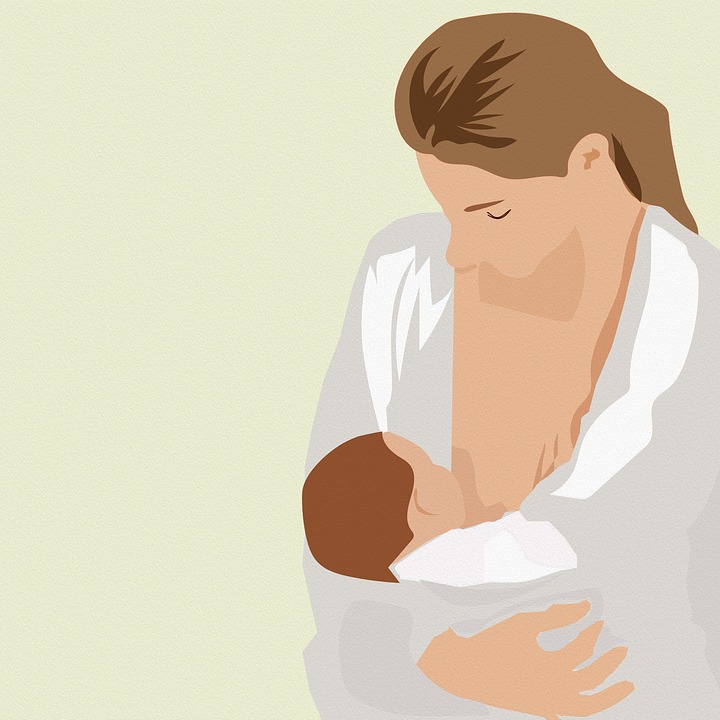 Infants born preterm face many challenges, in particular with establishing breastfeeding. To address the delay in infants in the NICU receiving colostrum Hellström and colleagues conducted a quality assurance program in Sweden. Implementing a colostrum-kit with instructions for mothers of infants admitted to the NICU significantly reduced the time to first colostrum administered to the infant in all gestational ages.
Women with medical conditions or living with disability may not be receiving support to breastfeed. Peripartum cardiomyopathy (PPCM) is a form of heart failure occurring towards the end of pregnancy or in the months following delivery. Noll and colleagues used chart review and patient survey to assess breastfeeding and cardiac outcomes following PPCM in the USA. Lactation was not associated with lower rates of myocardial recovery. Physician support for breastfeeding was low: the majority of patients received counselling that they should not breastfeed.
Women with high BMIs are less likely to breastfeed than other women, so Lyons and colleagues in the UK developed an intervention with the assistance of a Patient and Public Involvement (PPI) group of women with a BMI ≥ 30 kg/m2 who had breastfed, health professionals and researchers. They found that the intervention is acceptable and shows promise for increasing breastfeeding initiation and duration.
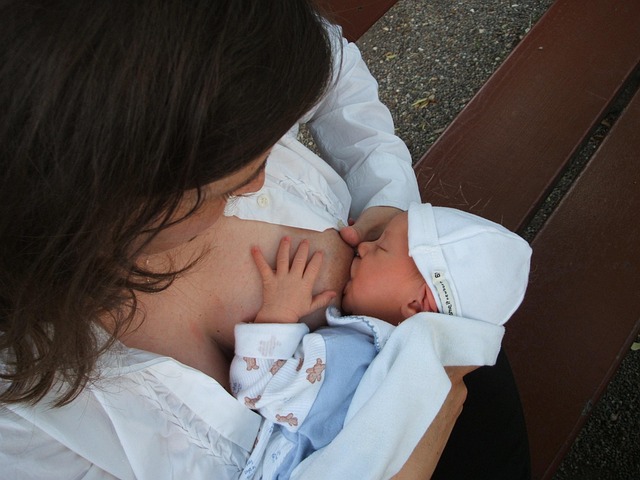 In South Africa, Zunza and colleagues tested an intervention using text messaging and motivational interviewing for women living with HIV. They found low rates of exclusive breastfeeding, and no difference between outcomes in intervention and standard care arms of the trial at 24 weeks. Return to work was the main reason given for stopping exclusive breastfeeding.
Mothers unable to provide a full milk supply for their infants may be supported by human milk banks or informal milk sharing. Harris and colleagues surveyed health professionals (HPs) and parents in New Zealand about donor human milk (DHM). They concluded:
“Informal milk sharing in NZ is common and highly supported by parents and HPs. However, limited structure, guidance and lack of standardised operations prevent equitable access to DHM. Establishing national and standardised guidelines for milk sharing is required to minimise the potential risks associated with informal HM donation. More support for HM banks in New Zealand is urgently needed to ensure all hospitalised vulnerable infants have access to DHM.”
Partners can be another source of support for breastfeeding. Zhou and colleagues identified eight relevant studies to include in their meta-analysis of paternal support interventions. They found consistent evidence that educational initiatives directed at fathers improved breastfeeding outcomes.
 Mothers and their use of brelfies –a self-image capturing breastfeeding – were studied by Davis and colleagues in the UK. They found that women are using brelfies to positively represent their different identity shifts. “In this transitional time, they are finding a concrete form of representation not just to physically recognize themselves as mothers for the first time, but also to show their followers their new identity, thus actualizing themselves as breastfeeding mothers.”
These are just ten of the articles published in the last 12 months investigating ways to support breastfeeding around the world. Evidence shows successful breastfeeding is not women’s individual responsibility: we need governments, institutions, families and the community to provide supportive environments that enable women to reach their breastfeeding goals.
Follow the Topic
-
International Breastfeeding Journal
This journal encompasses articles about breastfeeding, focusing on nursing, midwifery, paediatric, obstetric, family medicine, public health, immunology, physiology, sociology and many other topics.





Please sign in or register for FREE
If you are a registered user on Research Communities by Springer Nature, please sign in