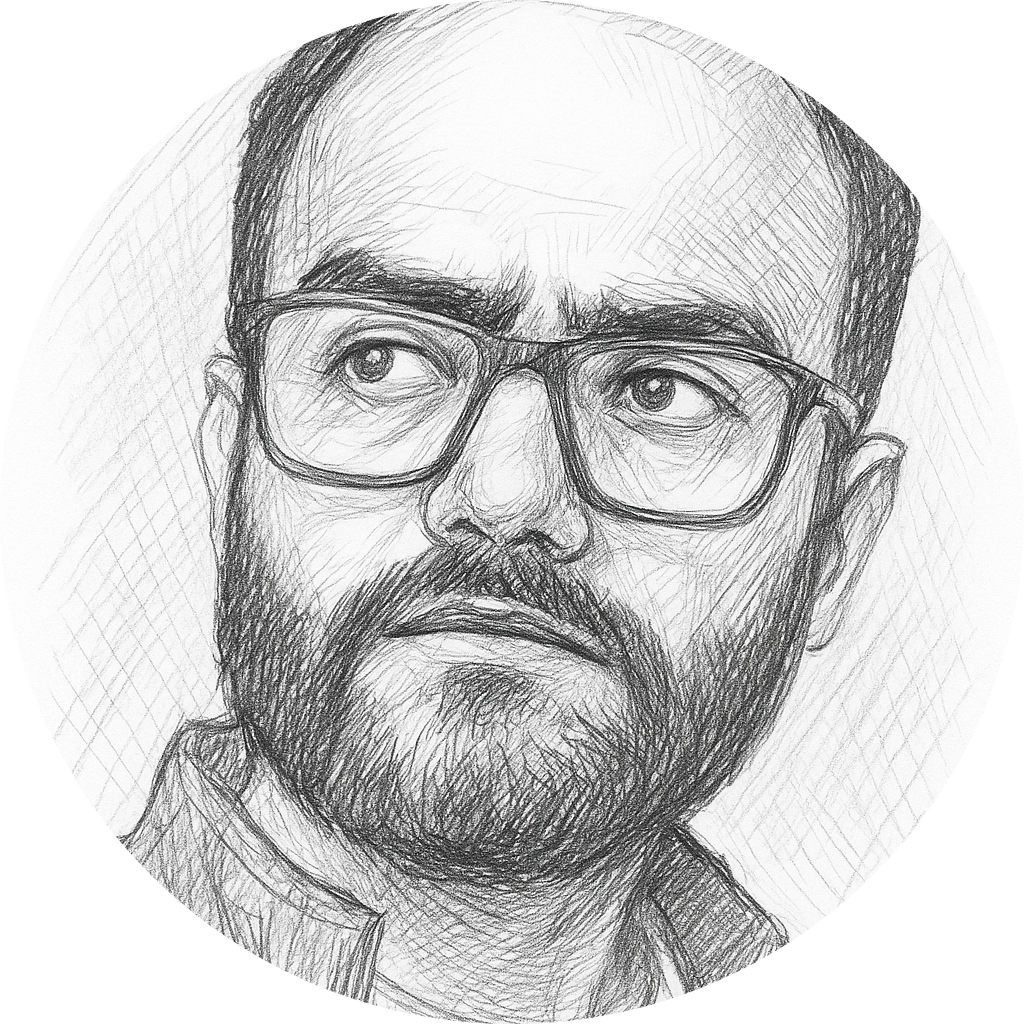
muzammil ahad dar (He/Him)
Assistant Professor, Kumaraguru College of Liberal Arts and Science
- India
About muzammil ahad dar
Assistant Professor of Political Science at Kumaraguru College of Liberal Arts and Science, Coimbatore. He holds a PhD from Pondicherry University and specialises in International Relations, security studies, and South Asian politics. An ICSSR Doctoral Fellow and author of Spontaneity Framework in International Relations: Dynamic Adaptive Realism, and Pakistan- Afghanistan Relations: Pashtunistan Factor, he has published widely in national and international journals and taught at institutions including the University of Ladakh and IGNOU.
Recent Comments
Every revolution in evolution claims its victims. And humans are overwhelmed by their prefrontal cortex. The narrative self has been ruling this Earth by cruel means ever since. Sooner or later, natural selection will put an end to this mismatch behavior.
wow, in a line you speak volumes sir,
Thank you for this insightful and thought-provoking comment. Your observation that evolutionary “revolutions” often carry internal contradictions and costs is particularly compelling, especially when applied to the emergence of advanced human cognition.
I find your emphasis on the prefrontal cortex and the “narrative self” especially relevant to the argument I advance in this essay. Indeed, the capacity for abstract reasoning, self-reflection, and meaning-making—hallmarks of the prefrontal cortex—has enabled unprecedented forms of social organization, but it has also facilitated the construction of powerful narratives that can justify exclusion, domination, and violence. In this sense, I agree that the narrative self has played a significant role in shaping the historical trajectory of cruelty and conflict.
However, I would suggest a slight shift in emphasis. Rather than viewing the prefrontal cortex or consciousness itself as an evolutionary “mismatch,” it may be more precise to understand the problem as arising from a disjunction between meaning-production and its ethical or institutional regulation. Human beings generate meanings, identities, and narratives at a pace and scale that often exceed the stabilizing capacities of social and political structures. This is where the “anomaly of meaning” emerges—not merely from cognition, but from the absence of adequate frameworks to mediate and contain it.
Regarding the point on natural selection, I would approach this more cautiously. Evolution, as understood in contemporary biology, does not operate with corrective intent or teleological direction. While maladaptive patterns can indeed have consequences, the trajectory of human societies is increasingly shaped not only by biological evolution but by culture, technology, and institutions. These factors complicate any straightforward expectation that natural selection will “resolve” the tensions we observe.
In this light, reciprocal destruction is not simply an evolutionary byproduct but a condition sustained by meaning systems that both organize and destabilize human life. The challenge, therefore, may not lie in overcoming consciousness, but in rethinking how meaning itself is produced, shared, and restrained within collective life.
I appreciate your comment for opening up this important line of reflection, which resonates closely with the core concerns of the article.