Dosimetric investigation of small fields in radiotherapy measurements using Monte Carlo simulations, CC04 ionization chamber, and razor diode
Published in Bioengineering & Biotechnology, Cancer, and Physics
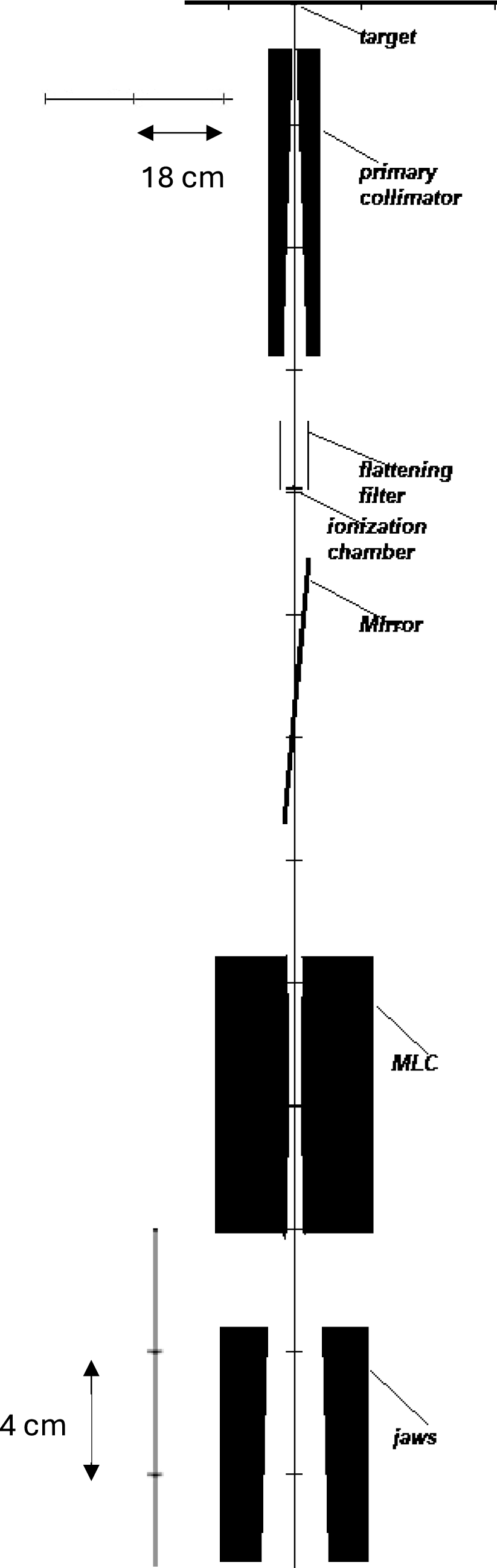

Over the past few years, small-field dosimetry has advanced significantly, particularly with the rise of stereotactic and highly modulated treatments.
However, as field sizes approach the sub-centimeter regime, the agreement between measurement, TPS modeling, and Monte Carlo simulations can sometimes diverge in ways that are not purely detector-related.
Monte Carlo methods are often considered the gold standard in dose calculation. Yet in practice, several coupled factors influence the final agreement:
Beam source width and stability
Accelerator tuning and steering
MLC modeling and head scatter representation
Detector perturbation effects
Commissioning assumptions based on conventional field sizes
When segment sizes reach 1 cm or even 0.5 cm, very small variations in electron source width or beam alignment can lead to measurable output factor differences.
This suggests that the discussion may be shifting from “which detector is correct” toward how accurately the beam itself is represented in both measurement and modeling frameworks.
This raises the question of whether current protocols fully capture the sensitivity of these regimes.
I’m curious to hear perspectives from researchers and clinical physicists working in:
• small-field dosimetry
• Monte Carlo modeling
• beam commissioning and tuning
• SRS/VMAT physics
Are we mainly facing detector limitations — or are we beginning to observe the practical limits of current modeling approaches?

Follow the Topic
-
Physical and Engineering Sciences in Medicine
Physical and Engineering Sciences in Medicine is a multidisciplinary forum for information and research on the application of physics and engineering to medicine.

Related Collections
With Collections, you can get published faster and increase your visibility.
Advancements and future directions of quantum technologies in the medical domain
In recognition of the United Nations 2025 International Year of Quantum Science and Technology, this special issue of Physical and Engineering Sciences in Medicine aims to explore the latest advancements and future directions of quantum technologies in the medical domain, with a focus on applications relevant to medical physics and biomedical engineering.
Motivation and Scope:
This special issue is motivated by the rapidly evolving landscape of quantum technologies and their potential to revolutionize healthcare. We seek contributions that go beyond existing medical devices and technologies that utilize basic quantum phenomena (such as standard MRI or SQUID magnetometers) to focus on emerging quantum technologies or significant enhancements to existing technologies that leverage quantum principles.
Within medical physics and biomedical engineering, this special issue focuses on applying quantum science and technology. We seek work demonstrating how unique quantum phenomena like superposition, entanglement, coherence, tunnelling, quantization of light, and quantum confinement enable new capabilities or yield performance superior to classical methods (e.g., in sensitivity, resolution, speed, computation, security).
Illustrative examples of topics within scope include, but are not limited to:
•Advanced Quantum Sensing: Innovative quantum sensor designs for medical diagnostics (e.g., next-generation optically pumped magnetometers for MEG/MCG, nitrogen-vacancy centre thermometry), quantum probes for single-molecule detection, and quantum-enhanced techniques for medical imaging (like quantum-noise limited imaging or entanglement-assisted MRI).
•Quantum Computing Applications: Development and application of quantum algorithms for drug discovery, protein folding, medical image analysis, radiation treatment planning optimization, and predictive modelling in healthcare.
•Quantum Imaging Techniques: Exploration of quantum ghost imaging, imaging with entangled photons for enhanced resolution or reduced dose, and the use of advanced quantum detectors.
•Secure Medical Data Handling: Applications of quantum communication and quantum key distribution for ensuring the privacy and security of medical data.
•Translational and System Aspects: Contributions addressing the challenges and opportunities in translating quantum technologies from lab to clinic, including aspects of engineering, manufacturing, supply chain, regulatory pathways, and economic feasibility.
We are keen to feature contributions from across the entire quantum ecosystem relevant to medicine. This includes fundamental research from academia, technological development from industry, clinical perspectives on the potential impact and requirements of these technologies, insights into manufacturing and supply chain challenges, and discussions on policy and regulatory frameworks. We welcome original research articles, comprehensive reviews, forward-looking perspectives, opinion pieces, and bibliometric studies that help map the landscape, identify key trends, and foster the growth of this interdisciplinary field.
By bringing together diverse perspectives from researchers, engineers, clinicians, and industry professionals, this special issue aims to provide a comprehensive overview of the state-of-the-art and future potential of quantum technologies in medical physics and biomedical engineering, driving innovation and accelerating their adoption in healthcare.
Publishing Model: Hybrid
Deadline: Ongoing