Morphing hand
Published in Materials



Explore the Research
 Nature
A starfish-inspired 4D self-healing morphing structure - Scientific Reports
Scientific Reports - A starfish-inspired 4D self-healing morphing structure
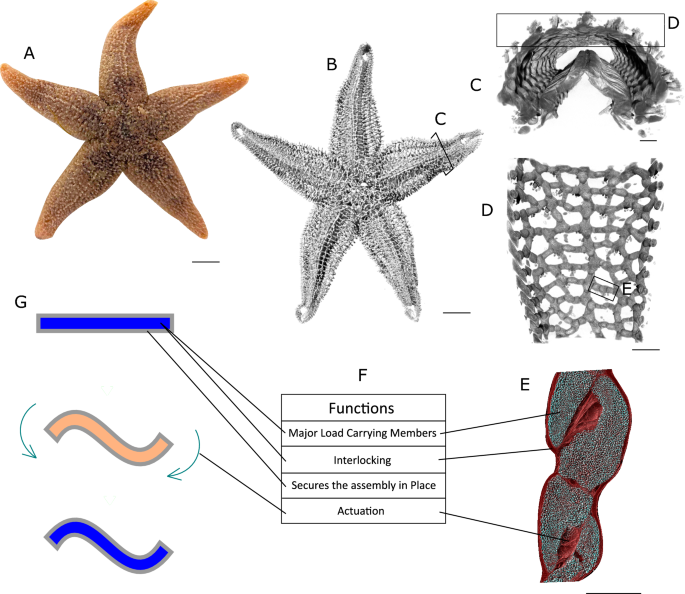
The internal thermoplastic mesh softens when heated above its glass transition temperature, allowing the structure to change shape. Once cooled, the mesh hardenes again and thus locks the structure into place without needing any external energy to maintain the new posture. The elastomer jacket plays a crucial role, protecting the mesh and controlling deformation while maintaining the structure's overall dimensions during the shape change.
Follow the Topic
-
Scientific Reports
An open access journal publishing original research from across all areas of the natural sciences, psychology, medicine and engineering.

Related Collections
With Collections, you can get published faster and increase your visibility.
Cancer Prevention and Control
Publishing Model: Hybrid
Deadline: Feb 19, 2027
Healthy Aging
Publishing Model: Open Access
Deadline: Dec 31, 2026