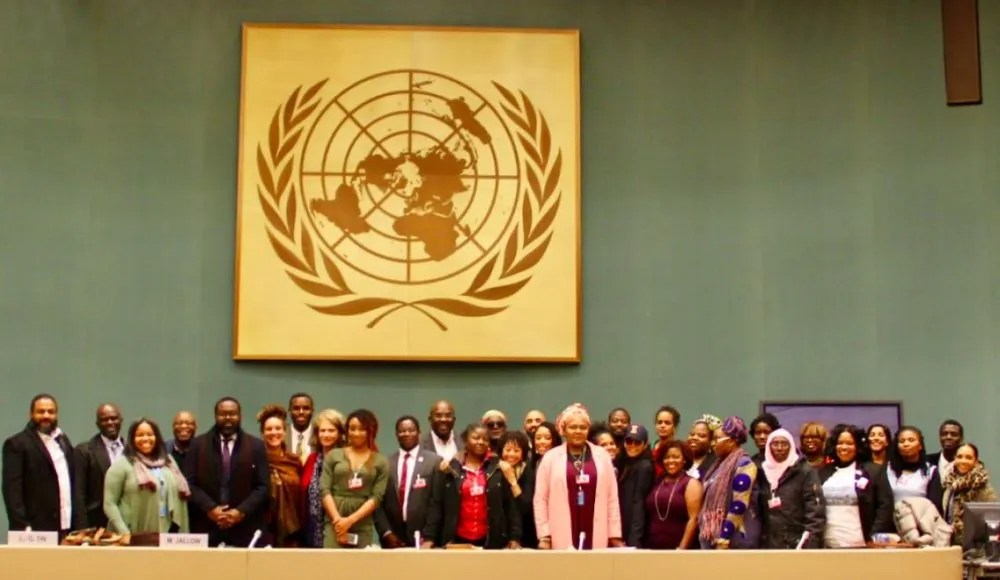
3rd Session of the UN Permanent Forum on People of African Descent 16 – 19 April 2024
Published in Social Sciences, Education, and Law, Politics & International Studies

My recommendations
- Greater recognition of the importance of supplementary schools (i.e. grassroots education groups) through UNESCO as part of its Rights Respecting Schools Programme (this would seem to be a logical extension of its current provision, since we are its first supplementary school in the UK to have gained its Bronze Portfolio Award)
- Greater funding and support of supplementary schools, if not through member states through UNESCO as part of its Rights Respecting Schools Programme
- Greater recognition for the need of training programmes for community educators working in these settings through UNESCO as part of its Rights Respecting Schools Programme
Update
My recommendations were accepted and incorporated into the Preliminary Conclusions and Recommendations United Nations Permanent Forum on People of African Descent Third session, 16-19 April 2024, Geneva, Switzerland in its Education section:
(d) Supporting community- and grassroots-based, supplementary education through training programmes and online educational material for community educators.
Taken from here
Background
In 2017, as a representative of Manchester Metropolitan University, where I led its Critical Race and Ethnicity Research Cluster, I was invited to participate in a UN Regional Meeting discussing the founding of the Permanent Forum on People of African Descent (PfPAD). My work as a Scholar-Activist working with grassroots communities was recognised by the organising committee. My main ambition in participating in the meeting and subsequently working with the international declaration draft editing team, was that this new Forum had to be accessible to civil society actors. In fact, not just civil society organisations but also (usually much) smaller grassroots organisations. This distinction was important because up until then, UN reports recognised civil society but often elided grassroots organisations under that term, not appreciating the structural differences between the two. Although grassroots organisations are indeed part of civil society, their scale and infrastructural capacity for local service delivery are often vastly smaller or more limited than large charities and NGOs who more commonly occupy the "civil society" space in the UN imagination.
As the UN is a member state institution, bringing civil society and the grassroots into the centre of creating one of its Human Rights mechanisms was an exciting prospect. One of the things that the Working Group of Experts on People of African Descent (WGEPAD) were especially interested in was my work with my research group that mapped community outputs across national metrics and in turn across to the Sustainable Development Goals (SDGs). So they commissioned our Community Reporting Matrix. For us, by applying the metrics of the SDGs to grassroots outputs and outcomes, this provided the opportunity for the reporting of such work to be visible and intelligible to the United Nations, via its Office of the High Commissioner for Human Rights (OHCHR).
It was at this initial meeting, that I advocated for the recognition of both supplementary education and grassroots enterprises as sites for addressing social injustice globally.
My Research into Community Education
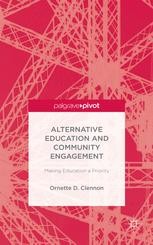
My early volume, Alternative Education and Community Engagement came out of a 2013 Manchester Metropolitan University education conference that I co-organised involving the MP Diane Abbott as keynote speaker. It was at this conference, that we really explored the impact of education on grassroots communities and their educational aspirations. Since the conference was funded by Manchester Metropolitan University (ManMet) as part of its impact statement for a new campus in the Hulme area, we looked at which types of educational provision would benefit the local communities. We examined Free Schools, Cooperative Schools, Studio Schools, Arts-led Special Schools and Supplementary Schools. Of all of these delivery models we looked at, local communities wanted to further develop their own homegrown Supplementary schools, the oldest of which had been running in Manchester since 1966. The local groups wanted to work with ManMet on how best to train their local teachers (volunteers) and raise educational standards.
This was the birth of the community consortium of African diaspora led organisations called Making Education a Priority (MEaP). The volume, Alternative Education and Community Engagement picked up and developed the ethical and philosophical issues of each delivery model and how they would affect local communities.
UN Advocacy for Community Education
So, as outlined, I have been extensively involved in OHCHR advocacy and the civil society support for the Permanent Forum on People of African Descent (PfPAD). In my capacity as lead researcher at ManMet's Critical Race and Ethnicity Research Cluster and latterly as of Head of Institute at the Manchester Community Training and Research Institute (MACTRI), I have contributed to several key policy documents at subsequent PfPAD meetings.
However, it was at the Third Session of PfPAD that had a specific thematic strand for Education where I was able to submit the opening statement of this post, advocating for supplementary education, to the proceedings under our previous name of the MEaP Academy Community Training and Research Institute.
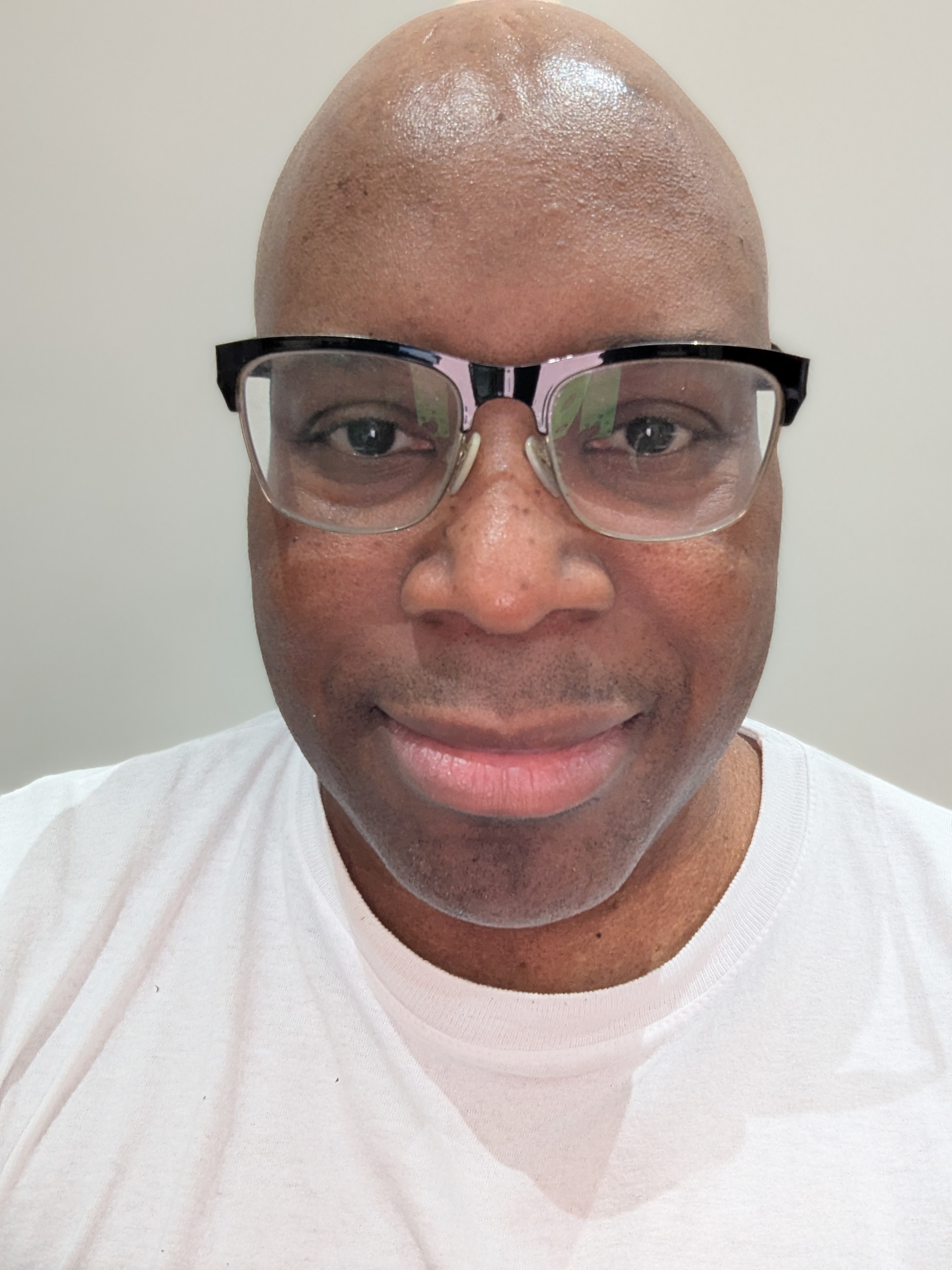
Dr. Ornette D. Clennon is the Head of Institute at MACTRI (Manchester Community Training & Research Institute). He is also a collaborating researcher and Visiting Professor at the Federal University of Amazon (UFAM), where he contributes to the theme of decolonial community and liberation psychology.
Ornette has also been a Visiting Research Fellow in critical race studies and lecturer in community arts practices and popular musicology at Manchester Metropolitan University (ManMet), where he led its Critical Race and Ethnicity Research Cluster.
As a ManMet representative, Ornette was a Public Engagement Ambassador for the National Co-ordinating Centre for Public Engagement (NCCPE). Ornette's engaged scholarship that bridges the gap between the academy and the grassroots has been recognized with the 2011 NCCPE New Partnership Award.
Ornette is a community activist at local, national and international levels, as he works with the MEaP Academy Community Education Centre where he is their Head of Online Learning, The Ubele Initiative, Locality, The Alci Matos Community (Manaus, Brazil), United Nations International Coalition of People of African Descent (ICPAD) in association with OHCHR, MACC (Manchester Community Central), CAHN (Caribbean and African Health Network), GMHSCP (GM Health and Social Care Partnership), Young Manchester, Young People’s Foundation (YPF) and the National Resource Centre for Supplementary Education (NRCSE), where he has been their Chair of Trustees.
Ornette is widely published, among his latest books are Alternative Education and Community Engagement: Making Education a Priority (Palgrave Macmillan, 2014), Urban Dialectics, The Market and Youth Engagement: The Black Face of Eurocentrism? (Nova Science Publishers, 2015), International Perspectives of Multiculturalism: The Ethical Challenges (Nova Science Publishers, 2016), The Polemics of CLR James and Contemporary Black Activism (Palgrave Macmillan, 2017) and Black Scholarly Activism between the Academy and Grassroots: A Bridge for Identities and Social Justice (Palgrave Macmillan, 2018).
Ornette is also the Series Editor for book series Palgrave Studies in Decolonisation and Grassroots Black Organic Intellectualism and co-author with Professor Claudia Sampaio of Decoloniality in the Grassroots: The Re-emergence of the Black Organic Intellectual (2023), the first volume in the series.
Follow the Topic
Introducing: Social Science Matters
Social Science Matters is a campaign from the team at Palgrave Macmillan that aims to increase the visibility and impact of the social sciences
Continue reading announcement