A Neurosurgeon’s Environmental Science Perspective
Published in Earth & Environment and Neuroscience
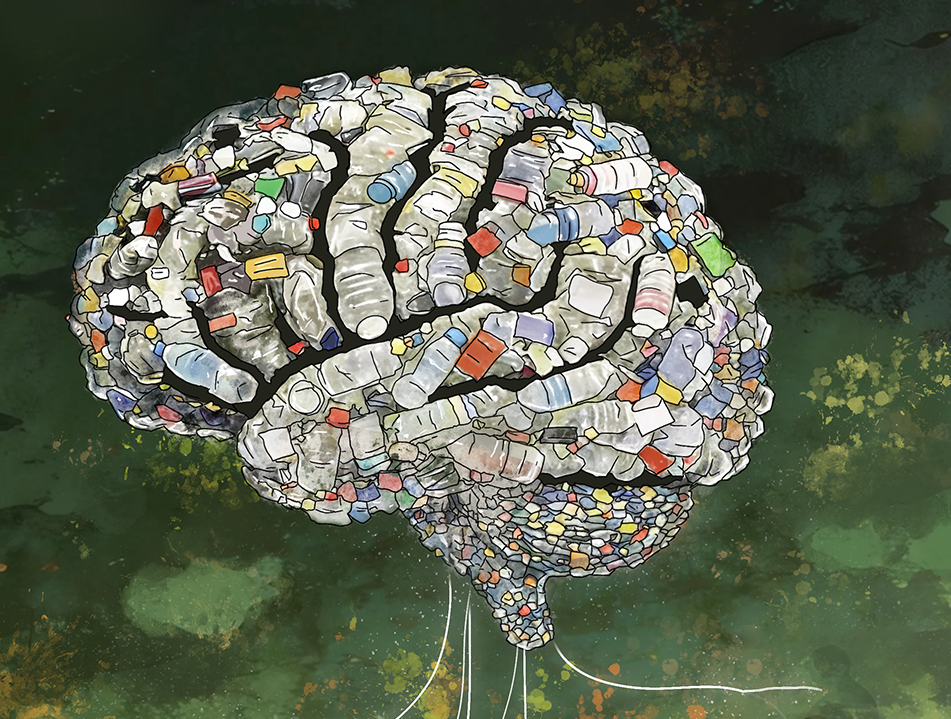
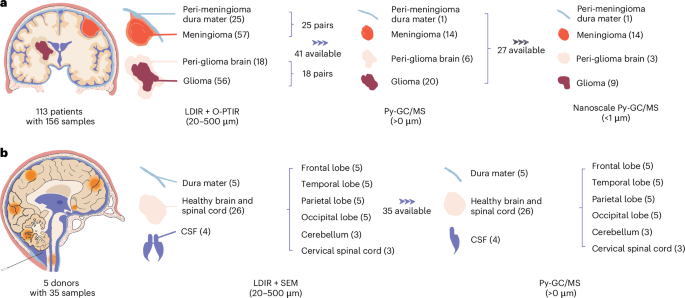


From my master’s training to my postdoctoral research, I have focused on brain tumors and cerebrovascular diseases. This interdisciplinary background, together with the strong support of three different mentors over the years, provided a solid foundation for this research and opened the door for further exploration. In the early stages of the project, we collected pathological tissue samples from nearly all major neurosurgical diseases. Using FTIR technology, we made our first important observation: micro-nano plastics (MNPs) were present at higher concentrations in brain tumor tissues. After revising and refining the manuscript, we submitted the first version to Nature on April 12, 2024. Although it was ultimately rejected, the detailed and professional comments from the reviewers gave us a valuable opportunity to improve the work further. Building on the original findings, we focused the second version more specifically on patients with brain tumors and upgraded our detection methods. After two rounds of peer review, the paper was eventually accepted by Nature Health.
As a neurosurgeon, stepping into this new field was far from easy. Over the course of three years, our small team devoted ourselves to this paper, which also meant that there was a long period during which our environmental research group had no output. That absence brought doubt about my choices and many moments of anxiety. But looking back, we made it. I am deeply grateful to everyone who supported us throughout this process, especially the experts from the field of environmental science, whose technical guidance helped us grow from complete newcomers into neurosurgeons with a much deeper understanding of environmental science. This extraordinary journey has also given us the courage to keep exploring even deeper and more challenging research questions.

Figure 2. Our team often discusses issues, writes, and creates figures in the classroom of the operating room after daily surgeries
Research on MNPs is not only a global hotspot but also an issue of real importance for human health and social development. Addressing this challenge requires a rigorous and cautious approach. To be honest, the field is still developing rapidly, and many methodological challenges remain. In this paper, we discuss the limitations of current research objectively and share our reflections and experiences from the process. Looking ahead, we hope to see more high-quality interdisciplinary breakthroughs. I believe that technological innovation and the establishment of industry standards will be crucial to advancing this field.
Ultimately, the study of environmental pollutants points back to human health. Researchers should not rely solely on the maturity of detection technologies, but should also continue to explore the mechanisms linking different pollutants to health outcomes. In other words, we need to build a more complete picture. Without mechanistic support, detection alone may lead to unnecessary public concern, which is a common issue in the current field. I believe that future research should move from focusing on single pollutants to addressing multiple pollutants, while also establishing a research framework that integrates pollutant levels in human tissues, multi-omics data, and external exposure surveys. Such an approach could help connect external and internal exposures and, through large-scale data, establish dose-response relationships that clarify the links between internal exposure levels and disease development. I also believe that advances in artificial intelligence and organoid models will be essential for deeper research in the future.
We warmly welcome everyone to follow our CLEAN study (NCT07140601). This year, we will continue our in-depth exploration of environmental exposomics and neurological health, with the hope that this work may ultimately benefit human life. Finally, I would like to leave you with a question that has stayed with me throughout this research journey: who should lead the exploration of environmental exposomics? Should it be environmental scientists, public health experts, chemists, or frontline clinicians? There may not be a single answer, but it is precisely through these interdisciplinary exchanges and questions that science continues to move forward.
Figure 3. Please follow our CLEAN study (NCT 07140601), as more in-depth research related to environmental pollutants and human health will be published in the future.

I am a neurosurgeon focused on environmental pollutants and brain health, dedicated to ensuring that research benefits life. On a personal note, I currently enjoy Tom Yum and curry, and I don’t like using any straws when drinking beverages.
Follow the Topic
-
Nature Health
Nature Health publishes health research across the medical, social and environmental sciences and requires meaningful engagement with research participants and their communities.

Your space to connect: The Psychedelics Hub
A new Communities’ space to connect, collaborate, and explore research on Psychotherapy, Clinical Psychology, and Neuroscience!
Continue reading announcement



Please sign in or register for FREE
If you are a registered user on Research Communities by Springer Nature, please sign in