A Successful Fruit Set for SN Comprehensive Clinical Medicine

Moving forward to complete indexing
A Successful Fruit Set for SN Comprehensive Clinical Medicine
Like

Share this post

Choose a social network to share with, or copy the URL to share elsewhere

This is a representation of how your post may appear on social media. The actual post will vary between social networks

It all began in July 2018. I was called upon to contribute to the birth of a new, ambitious project—the creation of not just another journal but an entirely new brand that could offer a unified platform for the many clinical disciplines spanning medical and surgical fields. In an era of cross-disciplinary approaches and clinical interconnections, the project appeared both ambitious and bold. Entering a crowded space, filled with high-impact journals as well as many short-lived ones, risked confusing readers and authors, making the effort seem like a hazardous  experiment. Yet, I accepted this major challenge with great enthusiasm, aware that a phase of steady growth would only follow a cautious and selective beginning.

Then came COVID-19, and with it, an overwhelming surge in publications—a flood that also reached SN Comprehensive Clinical Medicine. Like all journals, the sheer volume of scientific output during that period did not always match its quality, leaving us, like many others, facing a reset in 2021. With new benchmarks and hard-earned experience, the second phase of growth began, driven by a decisive kinetic phenomenon (Newton’s Second Law), as citations and journal usage started rising at a steady pace.

Observing this trend and awaiting further consolidation—based on the global origin of manuscripts and a 28% acceptance rate—we launched thematic series with cross-disciplinary and cross-cultural relevance, anchored in SDG3 and SDG5.

The time had finally come to pursue inclusion in major indexing services, starting with Scopus.
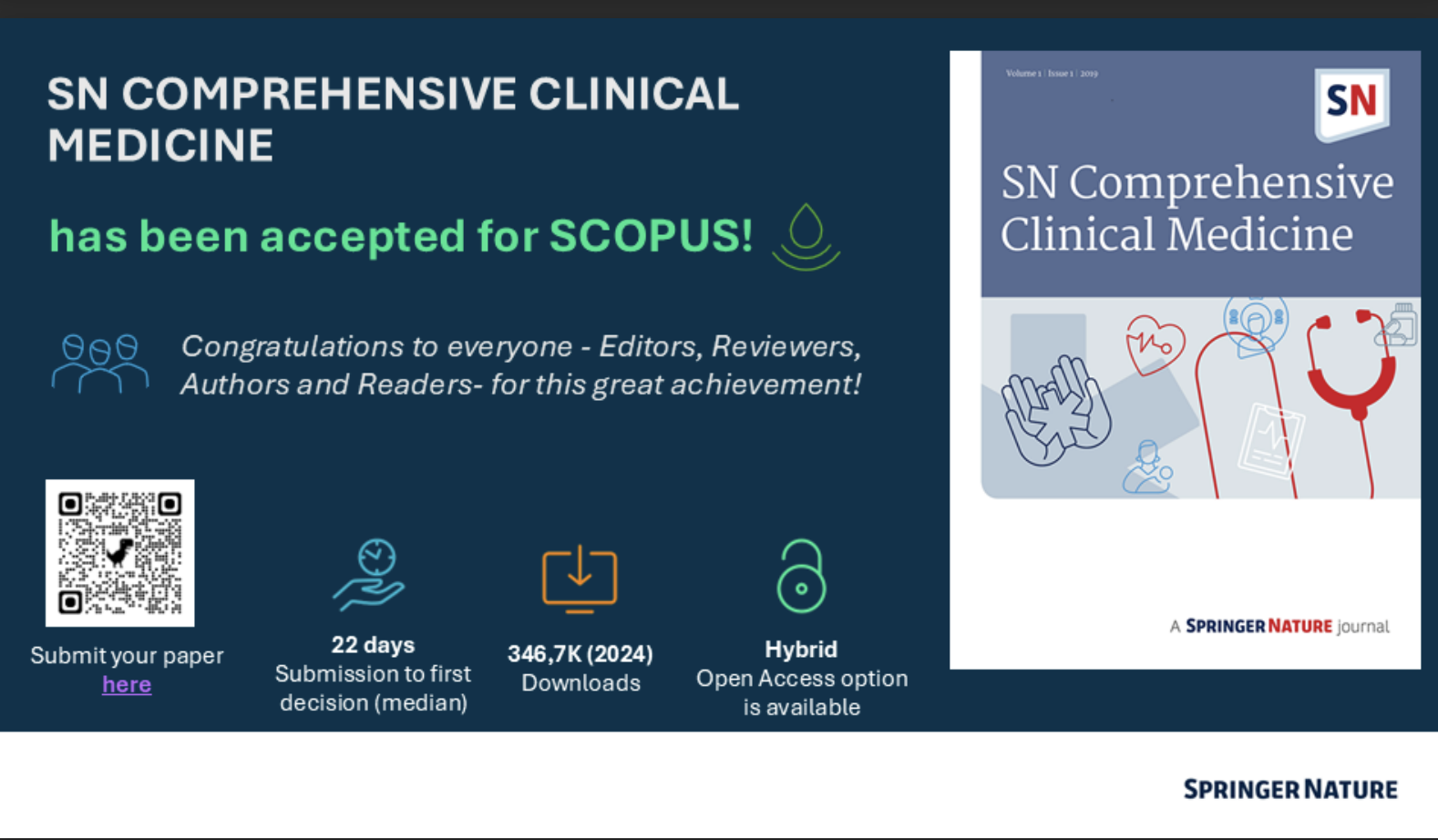
Now that we have secured Scopus indexing and are swiftly moving toward inclusion in other leading databases, we can confidently hope for a prominent role for our journal.

A long spring has allowed for the proper transformation of flower into fruit, and we trust that this long-awaited fruit set will nourish and serve the global medical community.

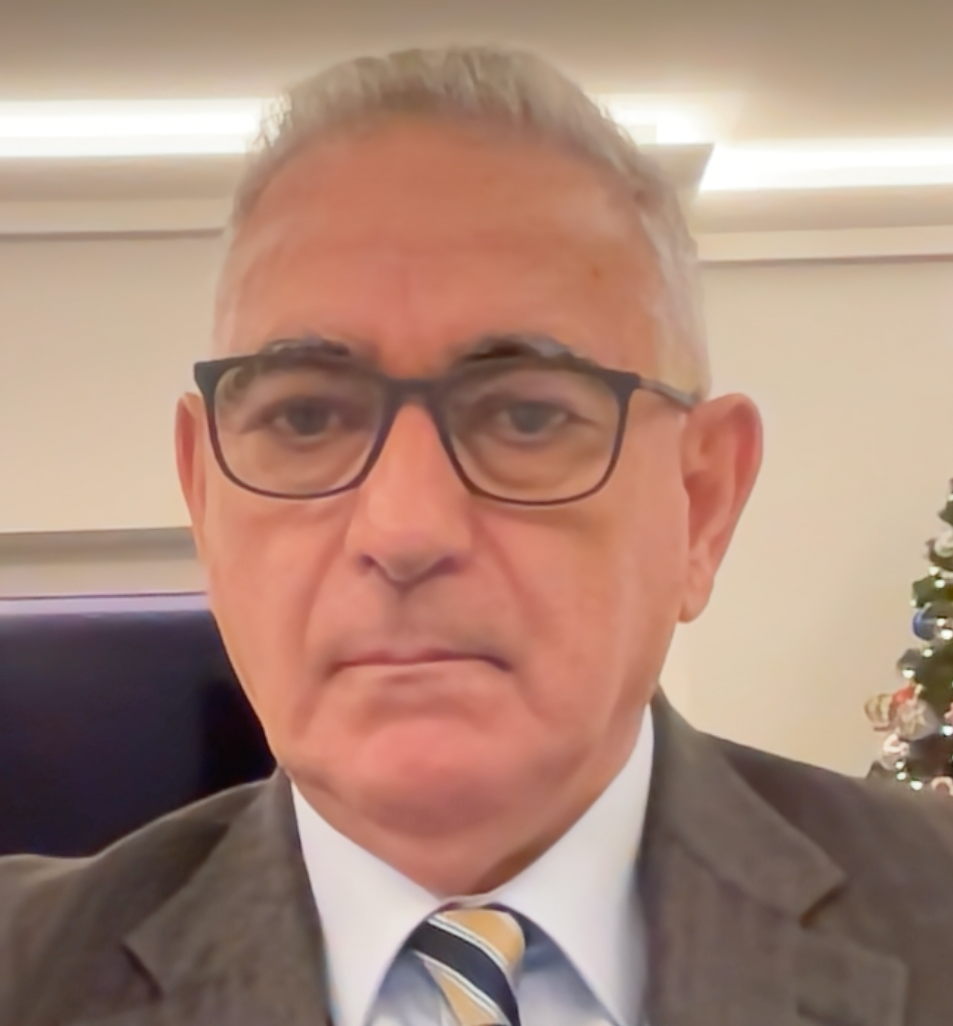
Paolo Martelletti, Editor-in-Chief
Please sign in or register for FREE

If you are a registered user on Research Communities by Springer Nature, please sign in

Go to the profile of Wei Wang
5 months ago

Dear Prof. Paolo,

Reading your editorial message filled me with both pride and deep admiration. It is truly inspiring to witness the journey of our journal—from its bold inception in July 2018 to its steadily growing influence in the scientific community today. Your leadership, vision, and resilience—especially through the unprecedented challenges of the COVID-19 era—have clearly been instrumental in shaping the identity and trajectory of SN Comprehensive Clinical Medicine.

I am particularly impressed by the thoughtful strategy that guided the journal through its cautious early stages, the disciplined response to the publication surge during the pandemic, and the insightful alignment with SDG3 and SDG5 through our thematic series. These milestones not only reflect editorial excellence but also a sincere commitment to scientific relevance and cross-disciplinary dialogue.

The progress we’ve made—rising citations, increased international submissions, and the pursuit of indexing in major services like Scopus—is a testament to the collective effort under your steady stewardship. I am both encouraged and honored to contribute to this ongoing endeavor.

Looking ahead, I remain fully committed to supporting the journal’s growth and impact. Whether through editorial contributions, peer review, or author support, I will continue to offer my utmost dedication to our shared mission.

With sincere appreciation and renewed motivation,

Best wishes,

Wei

Follow the Topic

General Surgery
Life Sciences > Health Sciences > Surgery > General Surgery
Clinical Medicine
Life Sciences > Health Sciences > Clinical Medicine
Clinical Research
Life Sciences > Health Sciences > Biomedical Research > Clinical Research
Surgery
Life Sciences > Health Sciences > Surgery

Your space to connect: The Primary immunodeficiency disorders Hub

A new Communities’ space to connect, collaborate, and explore research on Clinical Medicine, Immunology, and Diseases!

Continue reading announcement

Related Collections

With Collections, you can get published faster and increase your visibility.

Biological age and Frailty

In the recent years, the ageing of the population has progressively raised in relation to the increase of the average life expectancy. The life span has been supported by the availability of advanced and targeted care and by the awareness of the importance of prevention, besides the decrease of the birth rate. A similar trend for the future has been estimated both for the higher- and for the lower-income countries. At the same time, epidemiological estimates describe an exponential increase in age-related diseases, among which dementia, cancer and cardiovascular diseases represent the greatest challenge. The molecular and cellular mechanisms of aging may disrupt the activities of the homeostatic systems, driving deficit accumulation, the decline of physical and cognitive functions, the development of sarcopenia and chronic diseases with disability. Frailty is a syndrome characterized by the reduction in the resistance to endogenous and exogenous stressors, leading to the increase an individual’s vulnerability to the diseases. The biological age captures the discrepancy between the chronological age and the age based on individual’s biological and clinical information. The aim of this Collection is to provide a better understanding of the molecular, cellular and integrative mechanisms of the development of frailty and of the pace of aging. This may lead to better elucidate the diagnostic and prognostic value of frailty and chronological age for the subjects affected by age-related diseases. A deeper knowledge of the specific profile and their multiple components may give a chance to a more efficient treatment in a personalized manner. Possible topics include: Basic mechanisms and profiles of genomic instability, epigenetic changes, loss of proteostasis, disabled autophagy, deregulated nutrient sensing, mitochondrial dysfunction, cellular senescence, altered intercellular communication, stem cell exhaustion, dysbiosis, chronic inflammation, hormonal and metabolic dysregulation, as areas involved in the frailty and the biological age. Strategies and newly developed compounds to enhance fit behaviors and evidence that the pace of aging is malleable. Debate and research on advantages and disadvantages of measures of frailty and chronological age with respect to their predictive role in chronic diseases and in the outcomes after specific treatment. Additional investigation and discussion on other candidates as that may offer new and alternative diagnostic possibilities for the aging mechanisms. Translational value and applications of treating frailty of modify the biological age of the patients.

Publishing Model: Hybrid

Deadline: Ongoing

Multimodal Imaging of Neurological Disorders: Advanced Neuroimaging in Clinical Practice

The aim of this topic is to collect retro- and prospective studies, case reports, as well as review articles on multimodal imaging approaches involving Positron Emission Tomography (PET), Magnetic Resonance Imaging (MRI), as well as combined imaging (hybrid) techniques in their application to neurological disorders. The key element is that structural and functional signatures (via MRI) as well as metabolic and tracer specific-functional signatures (via PET) can be simultaneously assessed under the same physiological conditions. To obtain comprehensive information about the physiological function or diseased function/disorders of the human brain, different analytical approaches can be complemented. Thus, in intermodal multimodality imaging, highest spatial resolution (MRI, functional MRI [fMRI]) with the best temporal resolution (magnetoencephalography [MEG] or electroencephalography [EEG]) could be combined. Intramodal multiparametric imaging combines various MRI techniques, such as fMRI, diffusion imaging (like DTI), and/or morphometric/volumetric analysis. The multimodal approach is conceptually based on the combination of different noninvasive neuroimaging methods and their cointegration. In particular, the combination of imaging applications that map different functional systems is useful, such as fMRI as a technique for the localization of cortical function and DTI as a technique for mapping of white matter fiber bundles or tracts. With respect to analysis of multimodal data, integrative approaches including AI-assisted techniques may further expand the boundaries of neuroimaging in research and clinical practice. This collection gives an insight into the wide field of multimodal imaging with respect to concepts, data acquisition, postprocessing, and applications to neurological disorders for intermodal and intramodal multimodality imaging.

Publishing Model: Hybrid

Deadline: Ongoing