After the Paper: Current state of ethical challenges reported in Saudi Arabia: a systematic review & bibliometric analysis from 2010 to 2021
Published in Social Sciences, Education, and Arts & Humanities

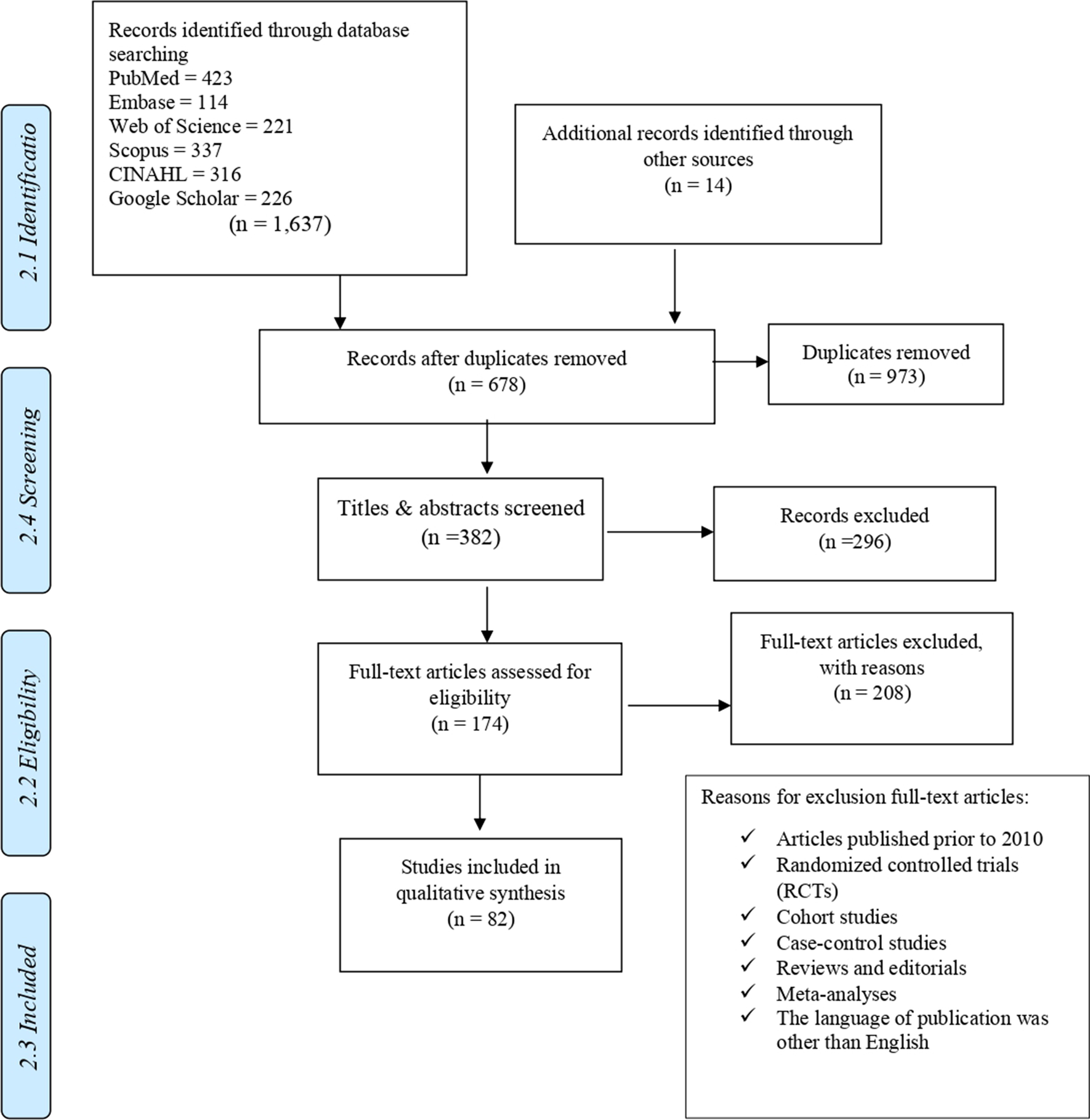

The academic significance of health and medical research lies in its explicit contributions to existing knowledge and the development of new theories and hypotheses that advance academic progress across disciplines, progress science, and improve health outcomes. One of such papers in my research career has become Current state of ethical challenges reported in Saudi Arabia: a systematic review & bibliometric analysis from 2010 to 2021 published in BMC Medical Ethics in 2022.
Over the past decade, my medical research in the Middle East, combined with my deep interest in medical ethics, has led me to collaborate with pioneers of Islamic bioethics. Together, we aimed to identify aspects of clinical care that may be perceived differently in the West. This experience, along with my training at the Interdisciplinary Center for Bioethics at Yale University in New Haven, CT, has allowed me to explore a wide range of bioethical issues, motivating this paper.
In preparing this paper, I was mindful that while contemporary bioethical research encompasses issues such as stem cell research, genetics and biobanking, cloning, and infertility treatment, bioethics in Saudi Arabia is still in its infancy, exploring the very foundations of medical ethics. Accordingly, this study presented fundamental areas of bioethics to shed light on core ethical questions and applied ethics in Saudi Arabia. My task was not only to collect data but also to use the most rigorous methodology to ensure the validity and reliability of the data presented. In this context, I conducted a systematic review and bibliometric analysis, describing each step in as much detail as possible to enable future researchers to replicate the study in their own.
As a result, the article Current state of ethical challenges reported in Saudi Arabia: a systematic review & bibliometric analysis from 2010 to 2021 has proven to be one of the most influential works for my colleagues, international researchers, Saudi ethicists, and me. Since its publication, the article has received 34 citations, which, while not a measure of success, does demonstrate that it has generated 34 new research hypotheses not only in Saudi Arabia but throughout the Middle East.
Little did I know then that this work would also lead my colleagues and myself to the design and publication of two new articles: Knowledge, Attitude, and Behavior Toward Organ Donation and Transplantation Among Medical Students in the Eastern Province of Saudi Arabia and A Multicenter Study to Determine Knowledge and Perceptions on Stem Cell Donation, Transplantation Among Saudi Medical Students, published in Transplantation Proceedings by Elsevier. These studies were designed not simply to collect quantitative data, but to enable future researchers to use valid data collection instruments developed and validated specifically for medical students. Moreover, these articles demonstrated how much work remains to be done by ethicists and medical educators to educate medical students about the principles of organ and stem cell donation and transplantation. In terms of impact, these two articles received over 30 citations and have been replicated in various settings, from India to Jordan. To this day, my colleagues and I continue to receive emails requesting the use of the data collection tool. This demonstrates that researchers and scholars around the world strive not only to use and cite specific papers but also to view these articles as valid and reliable sources of information for their own work—a fundamental value of ethical research.
In generating our hypothesis for Current state of ethical challenges reported in Saudi Arabia: a systematic review & bibliometric analysis from 2010 to 2021, my colleagues and I stated:
"To the authors’ knowledge, there are no previous studies aimed to systematically identify, compile, describe, and discuss ethical arguments and concepts in the best-studied domains of bioethics in Saudi Arabia and to present cultural, social, educational, and humane perspectives."
Indeed, this paper has become a pioneering paper that has created an encyclopedic body of knowledge and has had a significant impact, thus, benefiting public health, education, and the cultural context of bioethics, as well as contributing to the expansion of the academic knowledge base.
As a summer faculty member at Yale University, I perceive this work as a complex mechanism that illustrates the various ways knowledge is generated and utilized. I firmly believe that just as I developed this idea as a Yale student with the support of my professors, one of my future students will propose a similar innovative research idea. I will undoubtedly encourage them to persist and create work that ultimately becomes a success story for many researchers and, most importantly, enhances healthcare.
References
Woodman, A., Waheed, K. B., Rasheed, M., & Ahmad, S. (2022). Current state of ethical challenges reported in Saudi Arabia: a systematic review & bibliometric analysis from 2010 to 2021. BMC medical ethics, 23(1), 82. https://doi.org/10.1186/s12910-022-00816-6
Woodman, A., Al-Jamea, L. H., Zahrani, E. M. A., Elsafi, S. H., Waheed, K. B., Al-Yami, F. S., Qahtani, S. H., Quiambao, J. V., Jebakumar, A. Z., & Al-Attar, B. (2022). Knowledge, Attitude, and Behavior Toward Organ Donation and Transplantation Among Medical Students in the Eastern Province of Saudi Arabia. Transplantation proceedings, 54(7), 1690–1696. https://doi.org/10.1016/j.transproceed.2022.05.034
Woodman, A., Elsafi, M. S., Zahrani, E. M. A., Jebakumar, A. Z., Quiambao, J. V., Maawadh, R. M., Aldossary, A. M., Alsakatawi, M. J., Alotaibi, Y. F., Algamdi, A. A., & Alfahad, O. A. (2023). A Multicenter Study to Determine Knowledge and Perceptions on Stem Cell Donation, Transplantation Among Saudi Medical Students. Transplantation proceedings, 55(9), 2009–2015. https://doi.org/10.1016/j.transproceed.2023.08.009

Follow the Topic
-
BMC Medical Ethics
This journal is an open access journal publishing original peer-reviewed research articles in relation to the ethical aspects of biomedical research and clinical practice, including professional choices and conduct, medical technologies, healthcare systems and health policies.

Introducing the Palgrave Macmillan Campaign for the Humanities
At Palgrave Macmillan we publish cutting-edge humanities research that has real-world impact. This research community brings together the voices of our authors and editorial team to highlight and publicize the value of the humanities and humanities research in our world today.
Continue reading announcementRelated Collections
With Collections, you can get published faster and increase your visibility.
Global health equity and ethics
BMC Medical Ethics invites submissions to our new Collection, Global health equity and ethics. The concept of global health equity encompasses the moral principles that guide health policies and practices aimed at reducing disparities in healthcare access and outcomes among different populations. As the world becomes increasingly interconnected, ethical considerations surrounding health equity are more critical than ever.
Promoting health equity is an ethical imperative in public health. As social determinants continue to drive disparities, public health ethics and ethical advocacy are essential to ensuring that policies and interventions are not only effective but also just. We encourage research that confronts these ethical challenges and supports a more equitable healthcare landscape.
This Collection welcomes submissions that explore the ethical dimensions of health equity, examining the systemic barriers that marginalized populations face and how these barriers can be dismantled to promote equitable healthcare for all. Key topics of interest for submission include, but are not limited to:
Ethical considerations in healthcare access
Addressing global disparities in health outcomes
Health justice and marginalized populations
Social determinants of health and health inequities
Policy implications for equitable healthcare
This Collection supports and amplifies research related to SDG 3: Good Health and Well-Being, SDG 10: Reduced Inequalities, and SDG 16: Peace, Justice and Strong Institutions.
All manuscripts submitted to this journal, including those submitted to collections and special issues, are assessed in line with our editorial policies and the journal’s peer review process. Reviewers and editors are required to declare competing interests and can be excluded from the peer review process if a competing interest exists.
Publishing Model: Open Access
Deadline: Dec 30, 2026
Digital determinants and ethical AI in global health
BMC Medical Ethics invites submissions to our new Collection, Digital determinants and ethical AI in global health. The integration of digital technologies and artificial intelligence (AI) into healthcare has transformed the landscape of global health, introducing new opportunities and challenges. As these technologies become more embedded in clinical practice and public health strategies, emphasizing the ethical implications surrounding their use is crucial.
Recent advancements have highlighted the necessity for algorithmic transparency and accountability, as well as the need for inclusive approaches to AI that prioritize health equity. With this, researchers are encouraged to contribute to a more equitable healthcare system that respects patient rights and fosters trust in digital health solutions. Embedding ethical considerations at the forefront of digital innovation, rather than treating them as secondary concerns, is critical to ensuring that emerging technologies do not reinforce existing health inequities.
This Collection examines the intersection of digital determinants and ethical AI, with particular attention to informed consent, algorithmic transparency, and the implications of emerging technologies for patient autonomy and healthcare equity. To ensure a genuinely interdisciplinary dialogue, we invite submissions from physicians, legal scholars, philosophers, engineers, computer scientists, data scientists, and other digital‑technology professionals. Key areas of interest include, but are not limited to:
- Informed consent in digital health
- Algorithmic transparency and accountability
- Equity and inclusion in AI healthcare solutions
- Bias in AI diagnostics and decision-making
- Ethical implications of data privacy in digital health
- The interaction between digital determinants and other determinants of health
- Digital literacy in global health projects
- The impact of large language models (LLMs) on global health and their role as digital determinants of health
- Emerging debates about AI in One Digital Health
- Ethical discussions on the sustainability of AI and the environmental effects of health digitalization at a global scale
- Comparative analyses of data governance models, AI, and other digital technologies in relation to their impacts on global health
This Collection supports and amplifies research related to SDG 3: Good Health and Well-Being.
All manuscripts submitted to this journal, including those submitted to collections and special issues, are assessed in line with our editorial policies and the journal’s peer-review process. Reviewers and editors are required to declare competing interests and can be excluded from the peer review process if a competing interest exists.
Publishing Model: Open Access
Deadline: Jan 13, 2027
