AGENDA DIGITALE (NETWORK 360) - LA GUIDA NASA PER BLINDARE LO SPAZIO: STRATEGIE CONTRO LE MINACCE CYBER
Published in Computational Sciences and Economics
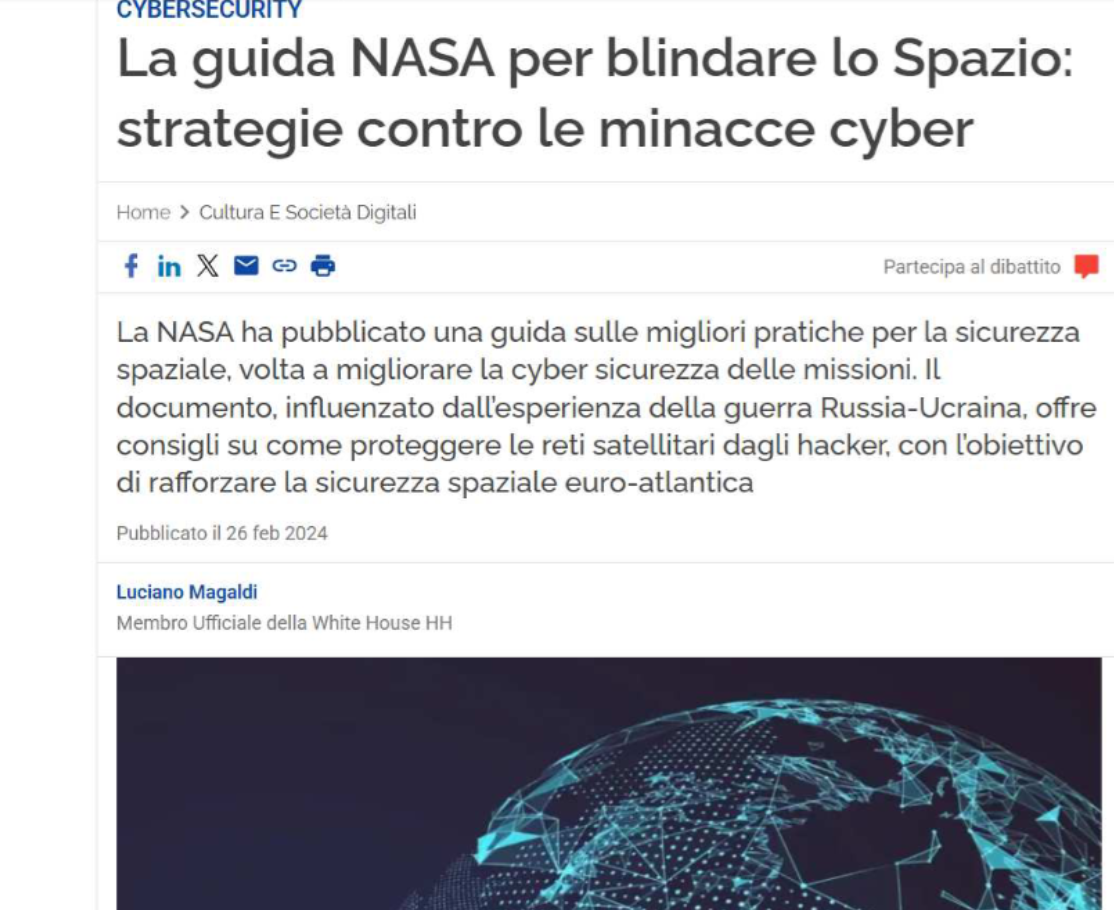
In my article for Agenda Digitale (Network 360), titled La Guida NASA per Blindare lo Spazio: Strategie Contro le Minacce Cyber, I examine how NASA’s cybersecurity blueprint articulates a multilayered defence architecture designed to protect satellites, orbital communications, and command‑and‑control systems from insidious cyber threats.
The celestial frontier is no longer insulated from terrestrial vulnerabilities. Cyber intrusion, ransomware, spoofing, and signal manipulation now pose existential risks to outer‑space infrastructures, whose disruption would reverberate across navigation, climate monitoring, defence, and global communications. The article delineates these perils with sober gravitas, emphasising the need for anticipatory governance, technological resilience, and institutional foresight.
NASA’s approach foregrounds multilayered defence—from hardened command systems and encrypted telemetry to anomaly detection and cross‑agency coordination. This architecture reflects a broader civilisational imperative: the recognition that orbital security is inseparable from global cybersecurity and that stewardship of the cosmos requires both technical sophistication and strategic vigilance.
By situating digital sovereignty and space cybersecurity as foundational pillars rather than technical adjuncts, the discourse contributes to the literature as both a cautionary admonition and a monument to foresight. The safeguarding of space—humanity’s shared digital commons—demands collective responsibility, resilient governance, and unwavering strategic resolve.
Keywords: NASA; Cybersecurity; Space Assets; Orbital Security; Digital Sovereignty; Technological Resilience.
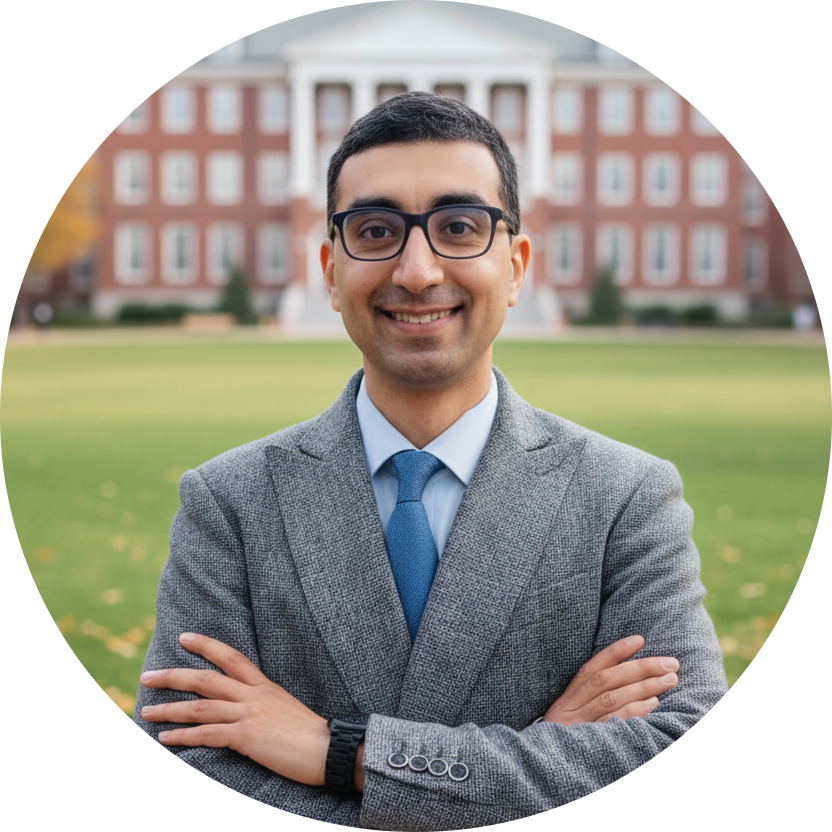
- Pluriennal high-tech practictioner at Google Ireland (Dublin), Apple EU Headquarters (Cork), and Amazon Slovakia (Bratislava).
- Alumnus of Aspire Institute, Harvard Business School.
- Current Member of Harvard Aerospace and Defense Alumni Organization (HADAO).
- Former Member of the White House Historical Association (WHHA).
- Former Member of Yale Club of New Haven (YCNH).
- International Journalist with numerous pieces/interviews featured on London Daily News, New York Post, Los Angeles Journal, The Hill, The Washington Post Opinion, Fox News USA, The Associated Press, The Daily Mirror UK, Metro UK, BBC News World Services, AS USA, Yahoo, AOL, MSN, The Scottish Daily Express, The Daily Record Scotland's Champion, L' Essentiel Luxembourg, 20Minuten.ch, NYC Up Magazine, Yale Daily News, The Stanford Daily, The Psychologist, Popular Archeology, Hollywood Beats Magazine, Opera Gazet, Corriere della Sera, Blog L' Espresso-Repubblica "Fino a Prova Contraria", Blog Nicola Porro, Agenda Digitale.
- Contributing Academic Author to the "Stanford Social Innovation Review" at Stanford University.
- Contributing Academic Author to the Faculty of Law B., University of Oxford.
- Contributing Academic Book Critic to the LSE Review of Books with Executive Education Certificate in Communication from the London School of Economics (LSE) and Political Science.
- Alumnus of the Aspire Institute, Harvard Business School.
- Pro PhD and MBA at the European Open University, Germany.
- Open Researcher and Contributor ID (ORCID):
0009-0003-9392-9213
- Web of Science ResearcherID:
OYE-6074-2025
- Google Scholar:
https://scholar.google.com/citations?user=XALdgW8AAAAJ&hl=it
- Zenodo Author Page Profile:
https://zenodo.org/search?q=metadata.creators.person_or_org.name%3A%22Magaldi%20Sardella%2C%20Luciano%22&l=list&p=1&s=10&sort=bestmatch
- Academia.edu Profile: https://cambridge.academia.edu/LucianoMagaldiSardellaPhD
- ResearchGate Profile:
https://www.researchgate.net/profile/Luciano-Magaldi-Sardella