UNIVERSITY OF OXFORD, FACULTY OF LAW, OXFORD BUSINESS LAW B. - UK EMPLOYEE OWNERSHIP TRUSTS (EOT): PAVING THE WAY FOR SUSTAINABLE BUSINESS TRANSITIONS
Published in Business & Management and Law, Politics & International Studies
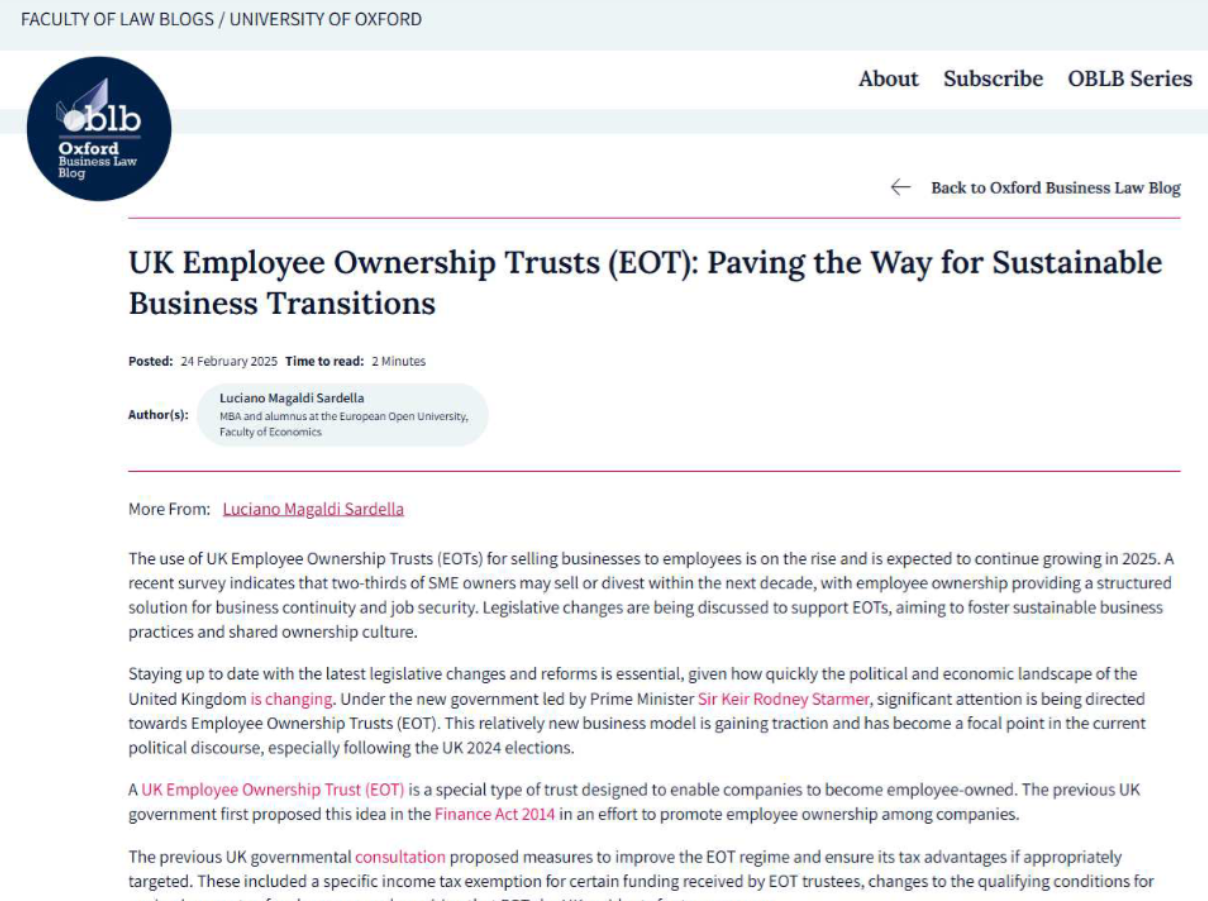
In my contribution to the Oxford Business Law Blog (University of Oxford, Faculty of Law), titled UK Employee Ownership Trusts (EOT): Paving the Way for Sustainable Business Transitions, I explore how this model offers a forward‑looking alternative to conventional ownership transfers.
EOTs operate by transferring stewardship from private proprietors to collective employee custodians, thereby safeguarding continuity, preserving employment, and cultivating a culture of shared responsibility. At a moment when surveys indicate that two‑thirds of SME owners may divest within the coming decade, the EOT framework provides a civilised mechanism for reconciling entrepreneurial legacy with equitable participation.
The discourse highlights how EOTs harmonise commercial pragmatism with the ideals of sustainability and social cohesion. Legislative refinements currently under deliberation further underscore the model’s growing relevance, positioning EOTs as a credible pathway for businesses seeking resilience, long‑term stability, and a more inclusive governance ethos.
Ultimately, the article argues that EOTs represent not merely a structural innovation but a cultural shift: a dignified, future‑oriented instrument capable of aligning business succession with broader societal aspirations.
Keywords: UK; EOTs; Business Succession; Sustainability; Employee Ownership; Social Cohesion.
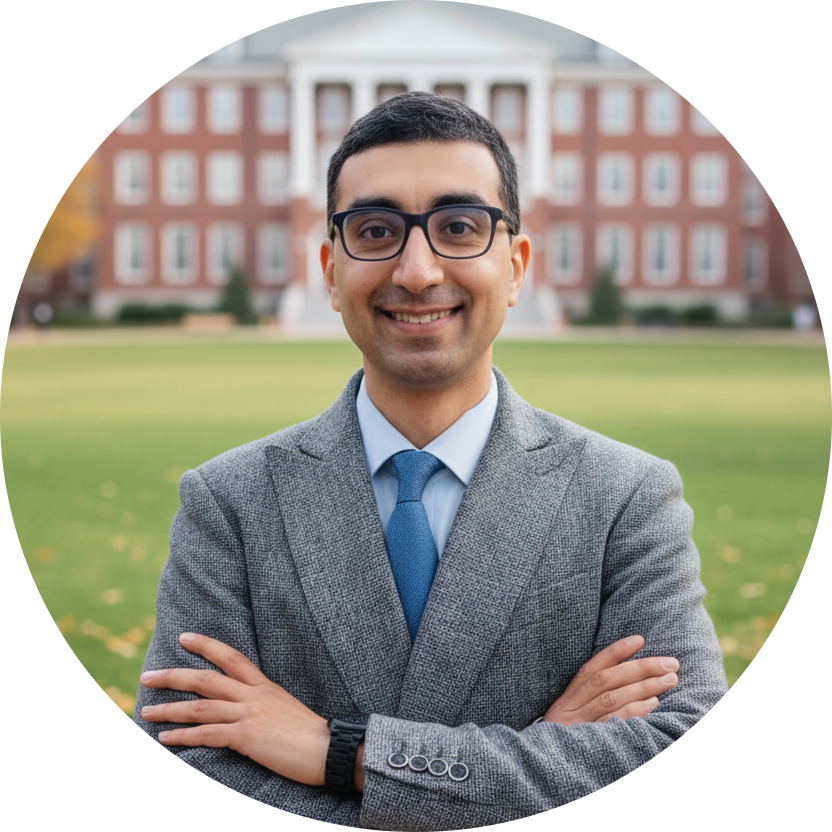
- Pluriennal high-tech practictioner at Google Ireland (Dublin), Apple EU Headquarters (Cork), and Amazon Slovakia (Bratislava).
- Alumnus of Aspire Institute, Harvard Business School.
- Current Member of Harvard Aerospace and Defense Alumni Organization (HADAO).
- Former Member of the White House Historical Association (WHHA).
- Former Member of Yale Club of New Haven (YCNH).
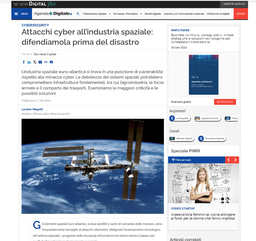
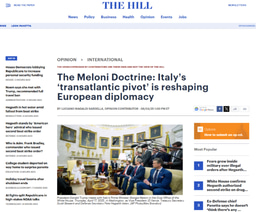
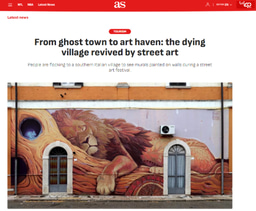
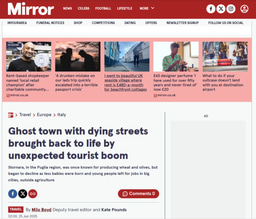
- International Journalist with numerous pieces/interviews featured on London Daily News, New York Post, Los Angeles Journal, The Hill, The Washington Post Opinion, Fox News USA, The Associated Press, The Daily Mirror UK, Metro UK, BBC News World Services, AS USA, Yahoo, AOL, MSN, The Scottish Daily Express, The Daily Record Scotland's Champion, L' Essentiel Luxembourg, 20Minuten.ch, NYC Up Magazine, Yale Daily News, The Stanford Daily, The Psychologist, Popular Archeology, Hollywood Beats Magazine, Opera Gazet, Corriere della Sera, Blog L' Espresso-Repubblica "Fino a Prova Contraria", Blog Nicola Porro, Agenda Digitale.
- Contributing Academic Author to the "Stanford Social Innovation Review" at Stanford University.
- Contributing Academic Author to the Faculty of Law B., University of Oxford.
- Contributing Academic Book Critic to the LSE Review of Books with Executive Education Certificate in Communication from the London School of Economics (LSE) and Political Science.
- Alumnus of the Aspire Institute, Harvard Business School.
- Pro PhD and MBA at the European Open University, Germany.
- Open Researcher and Contributor ID (ORCID):
0009-0003-9392-9213
- Web of Science ResearcherID:
OYE-6074-2025
- Google Scholar:
https://scholar.google.com/citations?user=XALdgW8AAAAJ&hl=it
- Zenodo Author Page Profile:
https://zenodo.org/search?q=metadata.creators.person_or_org.name%3A%22Magaldi%20Sardella%2C%20Luciano%22&l=list&p=1&s=10&sort=bestmatch
- Academia.edu Profile: https://cambridge.academia.edu/LucianoMagaldiSardellaPhD
- ResearchGate Profile:
https://www.researchgate.net/profile/Luciano-Magaldi-Sardella