AI Ethics in Real Life: Why Professional Judgement Still Matters
Published in Computational Sciences and Education

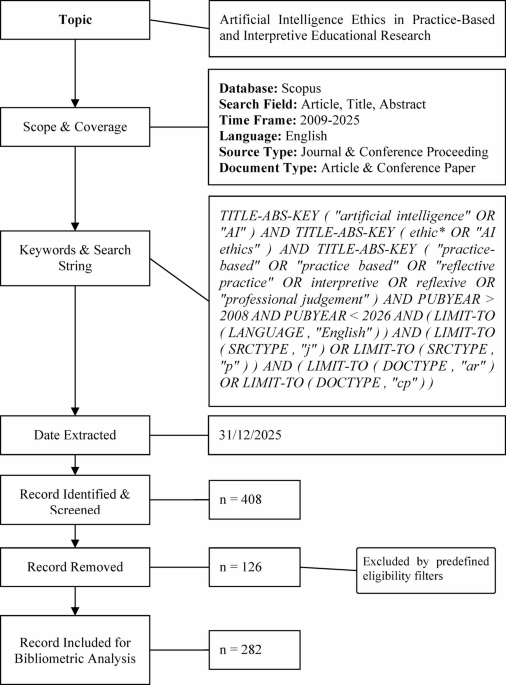

When people talk about Artificial Intelligence, the discussion often focuses on the technology itself. Is the AI accurate? Is it biased? Is it transparent? Can it be trusted?
These are important questions. But they are not enough.
In real life, AI is not used by machines alone. It is used by people. A teacher may use AI to support learning. A doctor may use AI to assist diagnosis. A manager may use AI to support decision making. In each case, the human professional still has to interpret the AI output, question it, and decide what is appropriate.
This is the main idea behind our newly published article, “From abstract ethics to situated practice: A bibliometric analysis of AI ethics and professional judgement,” published in Educational Technology Research and Development.
Our study looked at how AI ethics research has developed between 2009 and 2025. We analysed 282 research publications to understand how scholars are discussing AI ethics across different professional fields.
What we found is that AI ethics is no longer only about abstract principles, technical safeguards, or policy rules. The discussion is moving closer to real world practice. Researchers are increasingly talking about trust, human judgement, collaboration between humans and AI, professional responsibility and decision making that depends on context.
In simple terms, AI ethics is moving from this question:
“What rules should guide AI?”
to a more practical question:
“How do people use AI responsibly in real situations?”
This shift matters because ethical decisions cannot always be solved by a checklist. In professional practice, people often face uncertainty, competing values, institutional pressures and human consequences.
This is where we need to learn, relearn and unlearn.
We need to learn how AI works and what it can offer. We need to relearn the value of professional judgement in a world where machines can produce fast answers. We also need to unlearn the habit of treating AI outputs as neutral, final, or automatically better than human reasoning.
This is especially important in education, where teachers must think carefully about fairness, learning, assessment, student development, and academic integrity.
Education is therefore an important space for AI ethics. Schools and universities are not only places where AI tools are used. They are also places where deeper questions about intelligence, learning, fairness and human agency are actively discussed.
One key message from our article is that professionals should not become passive users of AI. AI can support decision making, but it should not replace human judgement. Responsible AI use depends not only on better technology, but also on reflective, critical and ethically aware professionals.
In short, AI ethics is not only about making AI systems responsible. It is also about helping people use AI responsibly.

Greetings, my name is Chamil Arkhasa Nikko bin Mazlan, and I am a Malaysian educator and scholar in the field of music education. I hold a Doctor of Philosophy (PhD) and a Master’s degree in Music Education from Sultan Idris Education University (UPSI), where I focused on the pedagogical and cultural dimensions of music learning. My academic foundation began with a Bachelor of Music in Performance and a Diploma in Music from ASWARA, Malaysia’s National Academy of Arts, Culture, and Heritage.
Let get connected!
Follow the Topic
-
Educational technology research and development
This is a scholarly journal focusing on research and development in educational technology.

Related Collections
With Collections, you can get published faster and increase your visibility.
Open Call for ETR&D Special Issue Proposals
Educational Technology Research and Development
(ETR&D) invites proposals for Special Issues that address timely, significant, and innovative topics in the field of educational technology research and development. We welcome ongoing submissions of Special Issue proposals from scholars who are prepared to serve as Guest Editors and who can bring together diverse, high-quality contributions aligned with ETR&D’s mission.
Scope and Expectations
Special Issues should:
- Focus on emerging, high-impact topics relevant to educational technology research, practice, or theory development.
- Include contributions that demonstrate methodological rigor, theoretical advancement, or practical significance.
- Be aligned with the standards of excellence and the scope of ETR&D.
Guest Editors are responsible for managing the peer-review process under the supervision of ETR&D's Editors-in-Chief and must uphold the journal’s editorial integrity and ethical policies.
READ FULL DETAILS HERE.
Publishing Model: Hybrid
Deadline: Ongoing
Human-AI Co-Regulation and Learner Agency: Rethinking Learning Processes in AI-Supported Learning Contexts
Please note: the Special Issue is currently open for abstract submission only. Please send extended abstracts by email to Guest Editors: Yun-Fang Tu (sandy0692@gmail.com) and Gwo-Jen Hwang (gjhwang.academic@mail.ntcu.edu.tw).
Focus, Scope, and Rationale
This special issue focuses on advancing understanding of how artificial intelligence (AI) reshapes learning processes, learner agency, and co-regulation in AI-supported learning environments. As generative AI, adaptive systems, and learning analytics become increasingly embedded in educational contexts, AI is no longer functioning solely as a tool for content delivery or feedback provision. Instead, AI systems are increasingly participating in the regulation, orchestration, and mediation of learning processes (Hwang et al., 2026).
This shift raises important theoretical questions for educational technology research. Existing theories of self-regulated learning (Wu et al., 2026; Xia et al., 2024), co-regulation (Wang et al., 2025), socially shared regulation (Edwards et al., 2025), and self-determination (Chiu, 2024) have largely conceptualized learning regulation, autonomy, and motivation as individual or human-social processes involving planning, monitoring, reflection, adaptation, autonomy support, competence, and relatedness. However, AI-supported learning environments introduce new forms of interaction in which intelligent systems may guide learners’ decisions, scaffold metacognition, provide adaptive feedback, mediate collaboration, and influence how learners engage with knowledge. As a result, existing theories of learning regulation, learner agency, and motivation need to be extended and reconsidered to account for AI-mediated learning processes (Zhao et al., 2027).
At the same time, the growing role of AI in learning environments creates a critical tension. AI may enhance personalization, timely feedback, adaptive support, and learners’ sense of competence, but it may also increase learner dependency, encourage cognitive offloading, reduce metacognitive engagement, weaken autonomy, or undermine learner agency (Hwang et al., 2026; Shaw & Nave, 2026). From a self-determination perspective, a key concern is whether AI-supported learning environments support or constrain learners’ autonomy, competence, and relatedness. Therefore, the central issue is not simply whether AI improves learning outcomes, but how learners and AI systems jointly regulate learning processes while preserving learners’ autonomy, intentionality, motivation, and epistemic ownership.
Within this context, this special issue centers on two interconnected constructs: human-AI co-regulation and learner agency. Human-AI co-regulation refers to the dynamic processes through which learners and AI systems jointly shape learning activities, feedback, decision-making, adaptation, motivation, and collaboration over time (Velasco et al., 2026). Learner agency refers to learners’ capacity to intentionally direct, monitor, evaluate, and regulate their learning in AI-supported environments (Coeckelbergh, 2026; Xing et al., 2026). In this context, learner agency involves not only control over learning choices, but also the ability to critically evaluate AI-generated information, maintain ownership of learning decisions, sustain motivation, and participate meaningfully in knowledge construction.
The scope of this special issue includes empirical, theoretical, methodological, and design-informed research that examines how AI reshapes learning processes, self-regulation, motivation, metacognition, collaboration, learner autonomy, and instructional design. Recent work on the TEP-AIED model further suggests that research on AI-supported learning should explicitly address transparency, ethics, and pedagogy, ensuring that AI-mediated interventions are not only technically described but also pedagogically meaningful, ethically responsible, and supportive of learner agency (Hwang et al., 2026). Particular attention will be given to process-oriented, longitudinal, multimodal, learning analytics, and mixed-methods approaches that investigate how human-AI learning interactions unfold across time and learning contexts.
By foregrounding human-AI co-regulation and learner agency, this special issue aims to advance educational technology research beyond tool-centered and outcome-centered perspectives. It seeks to contribute to future theoretical frameworks for AI-mediated learning, generate evidence on how learners and AI systems interact over time, and inform the design of human-centered AI-supported learning environments.
Overall, this special issue aims to advance educational technology research by promoting:
- Process-oriented perspectives on AI-supported learning
- Theoretical advancement in human-AI co-regulation
- Research on learner agency and metacognition
- Data-informed and multimodal approaches to learning processes
- Human-centered instructional design for AI-supported environments
Objectives
- A theoretical need to conceptualize human-AI co-regulation as an emerging dimension of learning processes in AI-supported learning environments.
- A conceptual need to rethink learner agency, autonomy, and self-regulation in educational contexts increasingly mediated by generative AI, adaptive systems, and learning analytics.
- A methodological need to move beyond static, outcome-focused, and short-term studies toward longitudinal, process-oriented, multimodal, and data-informed investigations of AI-mediated learning.
- A design-oriented need to examine how instructional designs and AI-supported learning environments can support learner agency, metacognition, collaboration, and productive human-AI co-regulation.
Overall, this special issue seeks to advance educational technology research by promoting:
- Human-centered perspectives on AI-supported learning
- Process-based understanding of learning regulation
- Theoretical development of human-AI co-regulation and learner agency
- Integration of multimodal, learning analytics, and mixed methods approaches
- Design-informed investigations of human-AI learning interactions
- Methodological innovation in studying AI-mediated learning processes
Main Themes
This special issue welcomes empirical and design-informed research that advances understanding of how learners and AI systems jointly shape learning processes in AI-supported learning environments. Submissions should address one or more of the following areas: human–AI co-regulation, learner agency, self-regulated learning, metacognition, collaboration, instructional design, and methodological innovation in the study of AI-mediated learning. We also welcome contributions that examine how contextual affordances and constraints—including national, institutional, and classroom-level conditions—shape AI-supported learning processes and learner experiences.
Authors are encouraged to report their research design, human–AI interactions, AI-supported learning contexts, and study implementation in accordance with the TEP-AIED model to promote transparency, reproducibility, and ethical integrity in AI research.
Submissions may include, but are not limited to, the following categories:
1) Human-AI co-regulation and self-regulated learning
- Conceptualizations of human-AI co-regulation in AI-supported learning environments.
- Relationships among learner agency, self-regulation, metacognition, and AI-supported learning processes.
- Studies examining how AI systems influence planning, monitoring, reflection, adaptation, and learning decision-making over time.
2) Learner agency, autonomy, and cognitive engagement
- Research examining learner control, autonomy, and agency in AI-supported environments.
- Studies investigating cognitive offloading, AI reliance, dependency, and human-AI decision-making.
- Theoretical and empirical analyses of how AI reshapes learner engagement, responsibility, and participation.
3) Human-AI interaction and collaborative learning processes
- AI-mediated collaborative learning and socially shared regulation.
- Human-AI collaborative cognition and knowledge construction.
- Studies examining discourse, interaction patterns, and collaborative learning trajectories involving AI systems.
4) Longitudinal and process-oriented studies of AI-supported learning
- Longitudinal investigations of learner agency and co-regulation across time.
- Process-oriented analyses using behavioural, interaction, engagement, and performance data.
- Studies tracking changes in learners’ strategies, adaptation, participation, and metacognitive processes in AI-supported environments.
5) Data-driven, multimodal, and mixed-methods approaches
- Studies using learning analytics, trace data, discourse analysis, and predictive modelling to investigate human-AI learning processes.
- Multimodal approaches integrating text, interaction, emotional, physiological, or sensor-based data.
- Mixed-methods studies examining the complexity of AI-mediated learning processes and learner regulation.
6) Design-informed empirical studies and instructional implications
- Empirical studies investigating how instructional and learning environment designs support productive human-AI interactions.
- Human-centred and agency-supportive design approaches for AI-supported learning.
- Research examining how AI-supported learning designs influence learner regulation, collaboration, and engagement.
Submission instructions
- Abstract Submission: Interested authors are invited to submit their extended abstracts by email to Guest Editors of the Special Issue: Yun-Fang Tu (sandy0692@gmail.com) and Gwo-Jen Hwang (gjhwang.academic@mail.ntcu.edu.tw). Please entitle the email subject as “Abstract for SI on Human-AI Co-Regulation and Learner Agency: Rethinking Learning Processes in AI-Supported Learning Environments”. The extended abstract should be about 800-1000 words, excluding the references and tables.
- Full Manuscript Submission: Authors of successful proposals will be invited to submit manuscripts. All manuscripts must be submitted through the Submission Portal site.
- The submissions to the special issue should fit within the scope of Educational technology research and development as described in the Aims and Scope of the journal. Manuscripts should be prepared in line with the Instructions for Authors.
- The review process will follow the standard procedures of Educational technology research and development, but will be managed by the Guest Editors. Each submitted manuscript will undergo a double-blind review process involving at least two reviewers.
Deadline for abstract submission
December 15, 2026
Deadline for completed manuscript submission
March 15, 2027
Important Dates
- Abstract and outline submission deadline: December 15, 2026
- Invitations to submit full manuscripts: January 15, 2027
- Full manuscript submission deadline: March 15, 2027
- First-round peer review: April–June 2027
- First-round revision: July–August 2027
- Second-round peer review: September–October 2027
- Second-round revision: November–December 2027
- Third-round peer review: January–February 2028
- Final decision: March 15, 2028
- Full Special Issue publication: April 30, 2028
References
Chiu, T. K. (2024). A classification tool to foster self-regulated learning with generative artificial intelligence by applying self-determination theory: A case of ChatGPT. Educational Technology Research and Development, 72(4), 2401-2416. https://doi.org/10.1007/s11423-024-10366-w
Coeckelbergh, M. (2026). AI and epistemic agency: How AI influences belief revision and its normative implications. Social Epistemology, 40(1), 59-71. https://doi.org/10.1080/02691728.2025.2466164
Edwards, J., Nguyen, A., Lämsä, J., Sobocinski, M., Whitehead, R., Dang, B., Roberts, A.-S., & Järvelä, S. (2025). Human‐AI collaboration: Designing artificial agents to facilitate socially shared regulation among learners. British Journal of Educational Technology, 56(2), 712-733. https://doi.org/10.1111/bjet.13534
Hwang, G. J., Xie, H., Wah, B. W., & Gašević, D. (2026). Presenting your AI in education research with rigor: The TEP-AIED model. Computers and Education: Artificial Intelligence, 100598. https://doi.org/10.1016/j.caeai.2026.100598
Shaw, S. D., & Nave, G. (2026). Thinking-Fast, Slow, and Artificial: How AI is Reshaping Human Reasoning and the Rise of Cognitive Surrender. Available at SSRN 6097646. https://doi.org/10.31234/osf.io/yk25n_v1
Tu, Y. F., Liu, G. P., Hwang, G. J., Chen, X. W., & Guo, X. G. (2026). AI self-efficacy and knowledge graph-integrated generative AI feedback in higher education. The Internet and Higher Education, 69, 101079. https://doi.org/10.1016/j.iheduc.2026.101079
Velasco, C., Motoki, K., Petit, O., Andersen, A. N., Alaei, M., & Gustafsson, A. (2026). The rise of human–computer integration in marketing: a theory synthesis. Psychology & Marketing. https://doi.org/10.1002/mar.70115
Wang, T., Long, T., Mei, A., Li, J., & Liu, Z. (2025). Fusing Six-Hat Thinking with AI: How the Green Hat and ChatGPT Co-Regulate Pre-Service Teachers' Instructional Design—Insights from Epistemic Network Analysis. Thinking Skills and Creativity, 102025. https://doi.org/10.1016/j.tsc.2025.102025
Wu, J., Gu, J., Dan, S., Yuhan, X., He, H., Zhang, P., & Yan, Z. (2026). The potential of artificial intelligence to enhance self-regulated learning: A three-level meta-analysis. Journal of Research on Technology in Education. https://doi.org/10.1080/15391523.2026.2643171
Xia, Q., Weng, X., Ouyang, F., Lin, T. J., & Chiu, T. K. (2024). A scoping review on how generative artificial intelligence transforms assessment in higher education. International Journal of Educational Technology in Higher Education, 21(1), 40. https://doi.org/10.1186/s41239-024-00468-z
Xing, W., Kim, T., Song, Y., Li, H., Li, C., & Kim, J. (2026). Unveiling interaction patterns between students and generative AI teachable agent: Focusing on students' agency and AI agents' authority. British Journal of Educational Technology. https://doi.org/10.1111/bjet.70038
Zhao, F., Hwang, G. J., & Yin, C. (2027). Learning success in the age of generative AI: A new paradigm and theoretical model for education technology. International Journal of Mobile Learning and Organisation, 21(2). https://doi.org/10.1504/IJMLO.2027.10077554
Publishing Model: Hybrid
Deadline: Mar 15, 2027
