AI in Music Education: What Technology Can and Cannot Teach
Published in Computational Sciences and Education
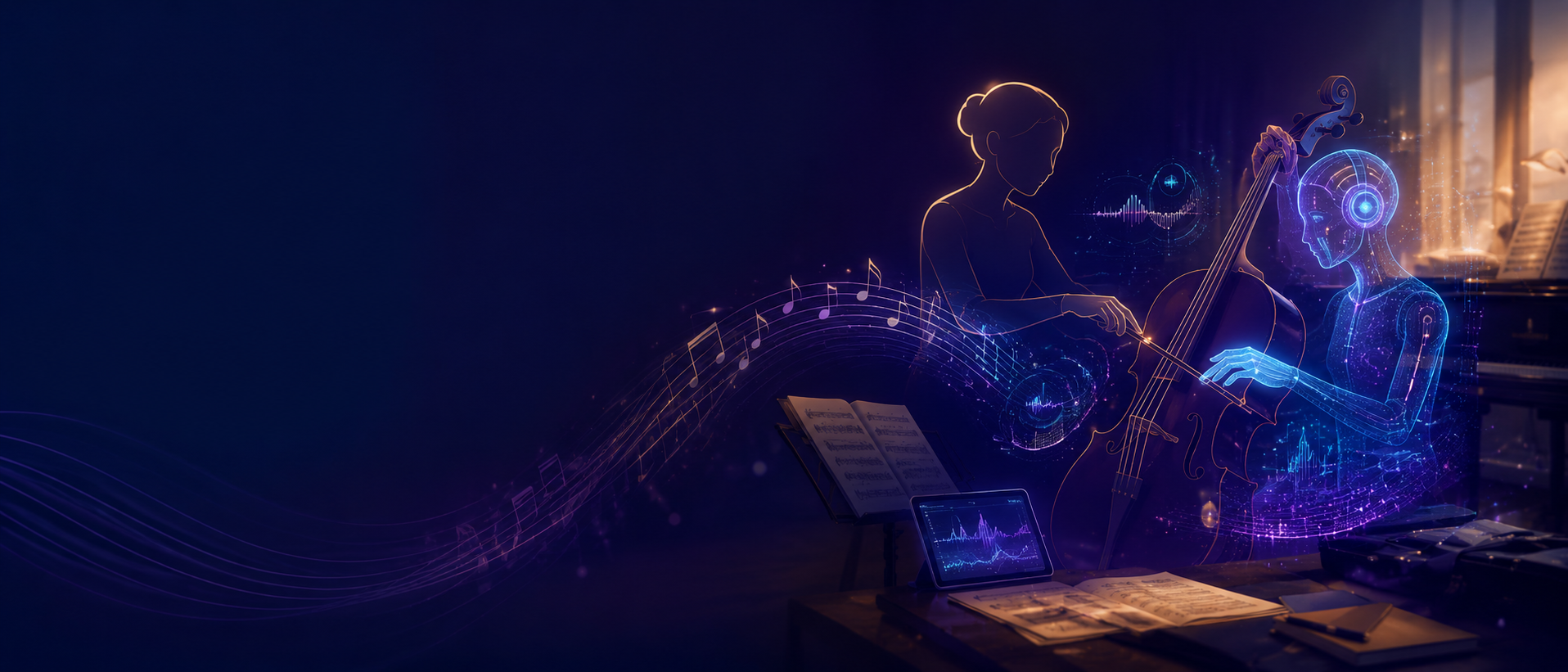


Artificial Intelligence is becoming part of music education. Today, AI tools can analyse pitch, rhythm, articulation, tone quality, and even support music composition.
This sounds exciting, and it is.
But it also raises an important question:
Can AI really teach music?
In our newly published article, “Artificial intelligence applications and pedagogical challenges in music education,” published in Discover Education, we reviewed recent research on how AI is being used in music education.
The article examines how AI supports instrumental music learning, practice feedback, composition, creativity, and assessment. Many AI tools can help students identify technical errors more quickly. For example, they may show whether a note is out of tune, whether the rhythm is inaccurate, or whether a performance needs more technical control.
This can be useful because students do not always have a teacher beside them when they practise. AI can provide immediate feedback and help learners become more independent.
However, music learning is not only about getting the correct note.
A good musician also needs expression, emotion, interpretation, style, cultural understanding, and artistic identity. These are areas where AI still has clear limitations.
Our review found that AI research in music education is still strongly focused on technical areas such as deep learning, machine learning, neural networks, music composition, and performance assessment. These technologies are powerful, but they do not automatically understand musical meaning, cultural context, or emotional nuance.
This is why music teachers remain essential.
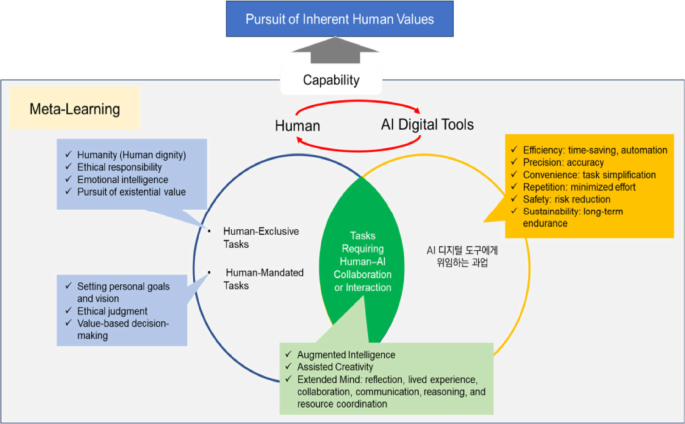
AI can support learning, but it should not replace human teaching. A teacher does more than correct mistakes. A teacher listens, interprets, encourages, questions, guides and understands the student as a developing musician.
In this sense, the future of AI in music education requires us to learn, relearn, and unlearn.
We need to learn how AI tools work and how they can support music learning.
We need to relearn that good teaching is not only about speed, efficiency, or technical accuracy. It is also about relationships, creativity, expression and meaning.
We need to unlearn the idea that technology alone can solve every educational problem. We also need to unlearn the assumption that more automation automatically leads to better learning.
The most meaningful use of AI in music education is not to make students dependent on technology. It is to help students become more reflective, independent, creative, and musically aware.
In short, AI can help students practise better, but human teachers help students become musicians, or i can say, Human Being.
Greetings, my name is Chamil Arkhasa Nikko bin Mazlan, and I am a Malaysian educator and scholar in the field of music education. I hold a Doctor of Philosophy (PhD) and a Master’s degree in Music Education from Sultan Idris Education University (UPSI), where I focused on the pedagogical and cultural dimensions of music learning. My academic foundation began with a Bachelor of Music in Performance and a Diploma in Music from ASWARA, Malaysia’s National Academy of Arts, Culture, and Heritage.
Let get connected!
Follow the Topic
-
Discover Education
An international, peer-reviewed open access journal that publishes original work in all areas of education, serving the community as a broad-scope journal for academic trends and future developments in the field.

Related Collections
With Collections, you can get published faster and increase your visibility.
Advancing Teaching & Learning: Integrating AI, Emerging Technologies, and Pedagogical Innovation
Collection "Advancing Teaching & Learning: AI, Emerging Technologies and Pedagogical Innovation" addresses a major challenge in education today. There is a lack of resources that bring advanced technologies and innovative teaching together. AI, digital tools and emerging technologies are transforming classrooms. Yet many teachers and education leaders struggle to use these tools effectively. This Collection fills that gap. It offers expert insights, practical strategies and real-world examples for modern teaching and learning.
The Collection is linked to the United Nations Sustainable Development Goal 4 on quality education. It shows how to make learning more accessible, inclusive and effective for all. AI, adaptive learning platforms and immersive technologies can personalise instruction. They can engage students and support diverse needs. At the same time, the human element of teaching remains central.
Readers will find practical guidance on curriculum design, digital literacy and evidence-based teaching methods. The approaches can be applied in classroom, blended and online learning. Beyond tools, the Collection inspires educators to rethink traditional methods. It encourages them to embrace innovation while keeping learning meaningful and student-focused.
By addressing the lack of comprehensive resources on advanced technologies, Advancing Teaching & Learning helps teachers, school leaders and instructional designers navigate the digital age. It equips them to create engaging, future-ready learning experiences. Students are prepared for a connected, digital world. Educators gain the confidence to unlock the full potential of every learner.
This Collection supports and amplifies research related to the United Nations Sustainable Development Goal 4 on quality education. It shows how to make learning more accessible, inclusive and effective for all. AI, adaptive learning platforms and immersive technologies can personalise instruction. They can engage students and support diverse needs. At the same time, the human element of teaching remains central.
Keywords: Teaching and Learning; AI in Education; Emerging Technologies; Digital Tools in Classrooms; Pedagogical Innovation; Adaptive Learning Platforms; Immersive Technologies; Quality Education (SDG 4); Classroom Innovation; Blended and Online Learning; Student Engagement; Teacher Professional Development; Future-Ready Learning; Instructional Design; Educational Technology Integration.
Publishing Model: Open Access
Deadline: Apr 15, 2027
Advancing Health Professions Education: Innovations, Strategies, and Global Perspectives
Health Professions Education (HPE) plays an important role in preparing competent, ethical, and compassionate healthcare professionals capable of responding to the complex demands of contemporary healthcare systems. In recent years, the field of HPE has witnessed a paradigm shift towards learner-centred, competency-based, and interprofessional education models that prioritize not only clinical expertise but also communication, professionalism, teamwork, and leadership skills.
This Collection invites original research, systematic or scoping reviews, case studies and brief reports and that critically examine the evolving landscape of HPE across medicine, dentistry, nursing, pharmacy, and other allied health disciplines. Key areas of interest include curriculum design and reform, innovative teaching and assessment methods, integration of digital and blended learning technologies, interprofessional education (IPE), faculty development, educational management, student support and well-being, and strategies to promote equity, diversity, and inclusivity in HPE.
We also welcome contributions that explore challenges and best practices in clinical training, rural and underserved community placements, global health education, policy development, accreditation, and institutional leadership in health education. Studies from low- and middle-income countries are strongly encouraged to enhance global representation and to promote scholarly exchange on scalable and contextually relevant innovations.
By consolidating scholarly work in this Collection, we aim to advance the discourse on high-quality, evidence-informed HPE that supports the achievement of Sustainable Development Goals (SDG 3 and SDG 4) and ultimately contributes to improved healthcare outcomes worldwide.
Publishing Model: Open Access
Deadline: Nov 30, 2026