All-fiber tribo-ferroelectric synergistic electronics with high thermal-moisture stability and comfortability
Published in Electrical & Electronic Engineering
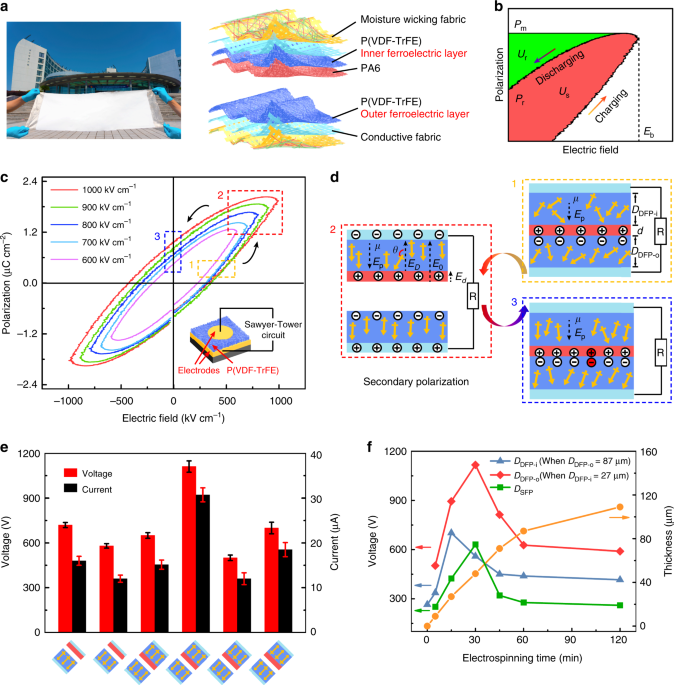

Along with the springing up vigorous emergence of wearable electronics, closely related issues of endurance and wearability have become an important bottleneck restricting its development (1). Taking clothing as the integrated platform of wearable devices, the development of textile based portable energy and sensors has attracted tremendous attention (2). Innovations in nanofibers, yarns and fabric materials enable the concept of flexible, wearable, textile-like electronics and give them the potential of energy harvesting and storage, signal sensing and monitoring.
However, due to the major issue that electronics performance decay in changeable thermal-moisture conditions, the operation environment and conditions of current electronic textiles (e-textiles) are still limited. On the other hand, most of the-state-of-art wearable devices do not meet wearing standard as a textile since they show lack of comfortability and washability. Optimally unifying high electrical and wearable properties in e-textiles is undoubtedly an urgent demand. Therefore, fundamental new insight into textile materials is believed to be essential.
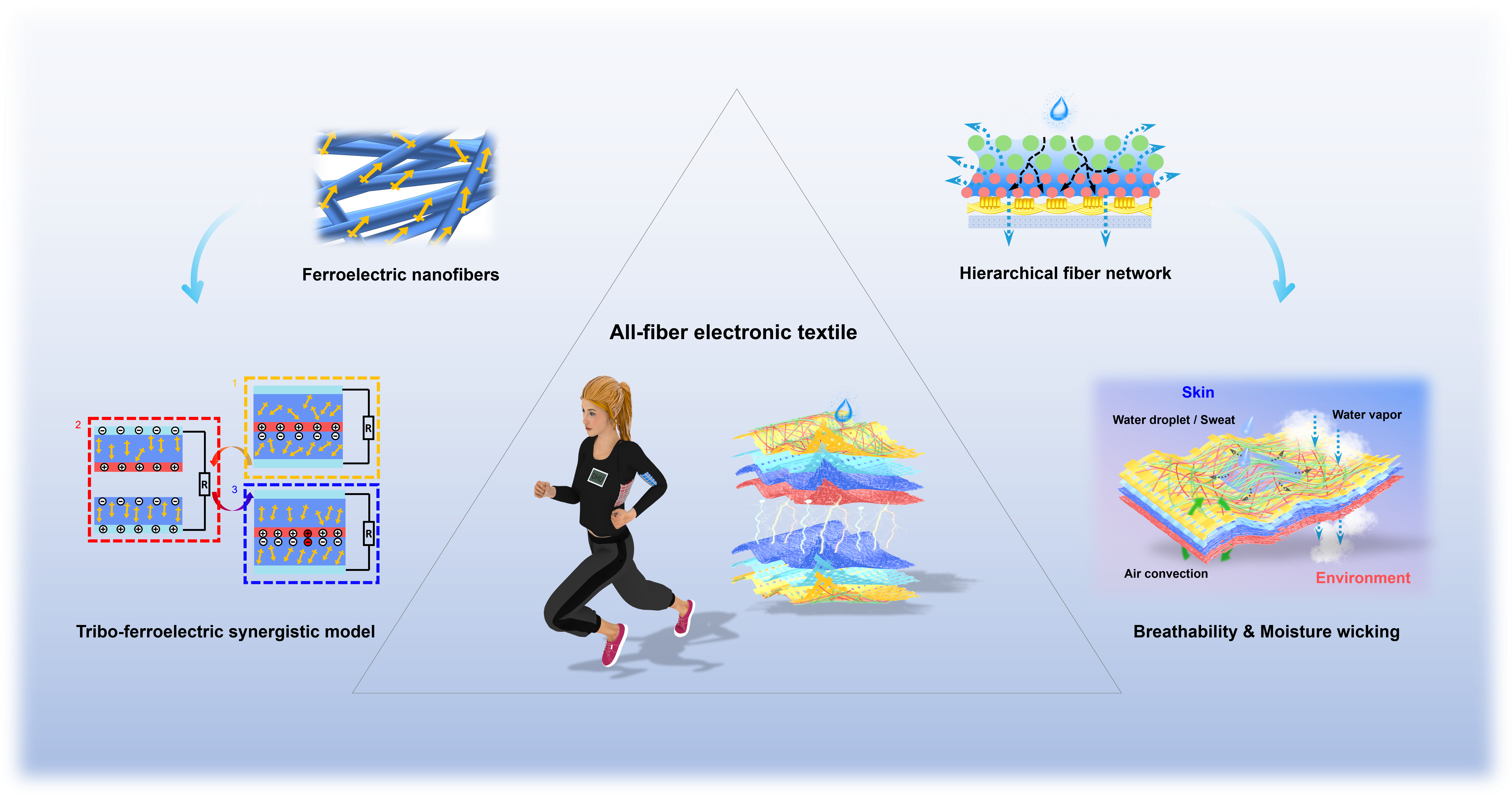
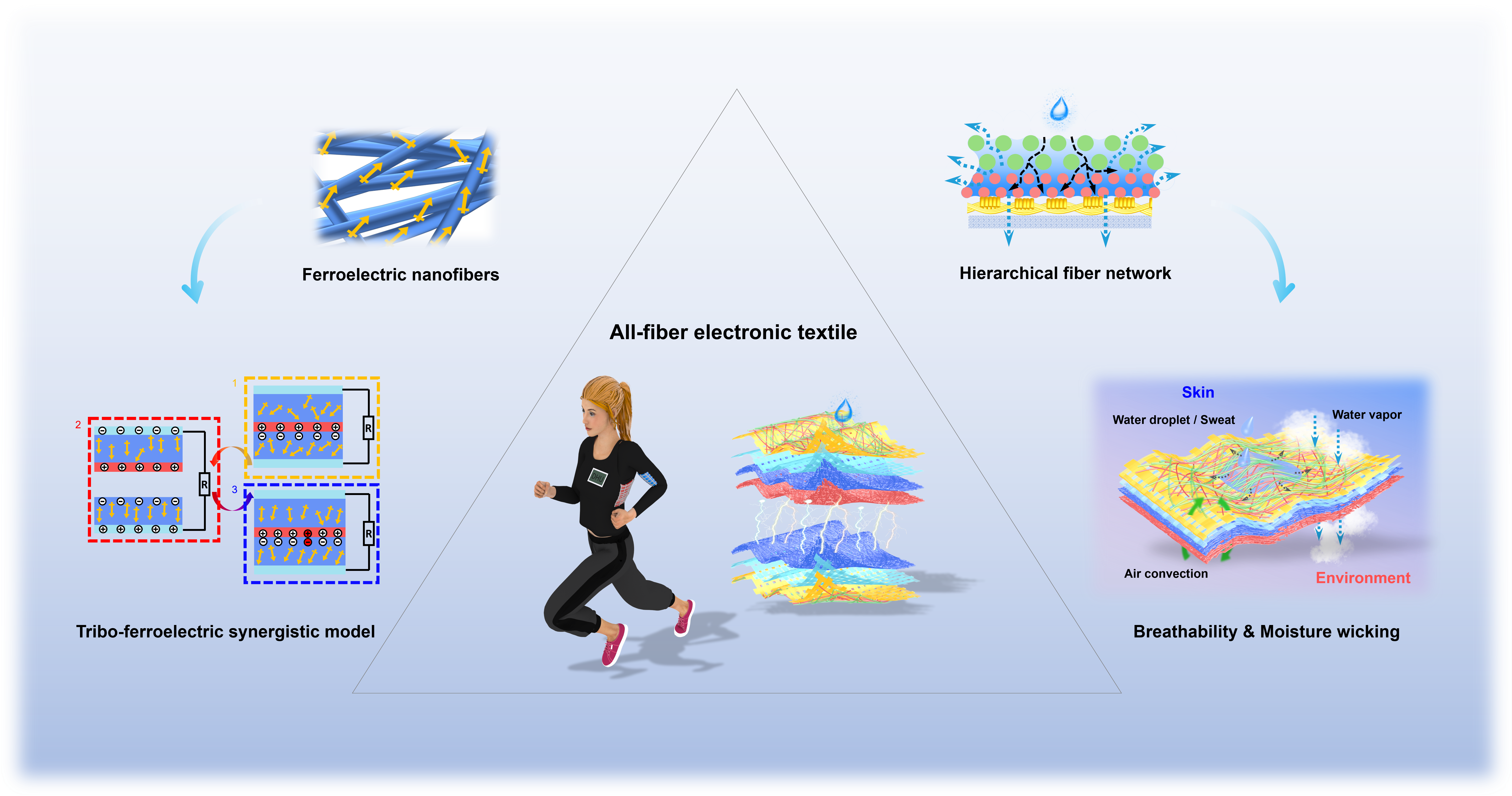
Figure 1 Design ideas of “all-fiber” electronic textiles
In this work, we set an “all-fiber” principle to design the e-textiles:
- On material: We employ only nanofiber materials in producing tribo-ferroelectric synergistic effect significantly enhances the performance of e-textiles while offers good wearability. The tribo-ferroelectric synergistic mechanism of ferroelectric tribo-polarity polymers is proposed for the first time.
- On structure: All-fiber function layers guarantee breathability and moisture permeability. Nanofiber network is constructed into hierarchical structure for realizing moisture wicking function while the performance is reliable in sweating environment.
- On characterization: Crucial factors that define wearability, including breathability, moisture permeability, moisture wicking capability, as well as thermal and evaporation resistance of commercial fiber-based textiles are considered when evaluating our e-textiles.
Finally, based on the Internet of Things and 3D printing technology, a self-charging and self-sensing wireless gesture monitoring system consisting of e-textiles are developed to demo real-life application of our e-textiles.
These results were recently published in Nature Communications:
https://www.nature.com/articles/s41467-019-13569-5
Reference
1. Zeng, W. et al. Fiber-based wearable electronics: a review of materials, fabrication, devices, and applications. Adv. Mater. 26, 5310-5336 (2014).
2. Gong, W. et al. Continuous and scalable manufacture of amphibious energy yarns and textiles. Nat. Commun. 10, 868 (2019).

Follow the Topic
-
Nature Communications
An open access, multidisciplinary journal dedicated to publishing high-quality research in all areas of the biological, health, physical, chemical and Earth sciences.

Related Collections
With Collections, you can get published faster and increase your visibility.
Women's Health
Publishing Model: Hybrid
Deadline: Ongoing
Tumor Microenvironment Crosstalk and Therapeutic Implications
Publishing Model: Hybrid
Deadline: Nov 02, 2026