An Unexpected Connection Between Niemann–Pick Type C Disease and a Plant Pathogenic Fungus
Published in Cell & Molecular Biology

A cell that knows where to grow
We study Colletotrichum orbiculare, a fungus that causes anthracnose disease in cucurbit plants, including cucumber. To infect its host, the fungus forms a specialized structure called an appressorium on the plant surface. A narrow penetration peg then emerges from the appressorium and breaches the plant’s outer barrier.
This transition requires precise spatial organization. The appressorium must reorganize its cytoskeleton-the internal framework that supports cell shape and helps coordinate cellular activities-to direct growth towards a specific site. Actin, a major component of this framework, helps organize the machinery required for penetration. Successful infection therefore depends on the cell establishing the right direction of growth at the right time.
We investigated NPC1 and NPC2, two proteins involved in maintaining intracellular sterol distribution. Sterols are essential components of cellular membranes, and their proper distribution is crucial to cellular function.
Deleting either NPC1 or NPC2 disrupted sterol distribution, impaired appressorium maturation, and abolished plant penetration. By comparison, defects in vegetative growth and other developmental stages were less pronounced. The fungus could carry out many of its normal activities, yet failed at the crucial step of entering its host.
This contrast suggested that NPC-dependent lipid homeostasis is particularly important as the appressorium organizes its cytoskeleton and establishes the polarity required for penetration.
The result that surprised us most
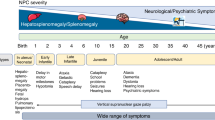
NPC1 and NPC2 also have important functions in humans. Mutations in either gene can cause Niemann–Pick type C disease, a rare inherited disorder characterized by impaired intracellular lipid trafficking. Lipids accumulate abnormally within cells, with serious consequences, particularly for the nervous system.
This connection prompted a question: could compounds associated with NPC treatment also rescue the fungal defects?
We tested miglustat, a drug used to treat NPC disease, and hydroxypropyl-β-cyclodextrin, a compound investigated as a therapeutic approach. Remarkably, treatment restored plant penetration in the NPC-deficient mutants.
For us, this was the greatest surprise. Compounds associated with a human disease restored a function essential to fungal infection. Their effects were apparent at the developmental stage where the consequences of NPC deficiency were most pronounced.
We also examined actin organization. Miglustat treatment restored polarized actin organization in mutant appressoria, linking the recovery of penetration to the cytoskeletal machinery that directs growth. This finding provided further evidence of a connection between lipid homeostasis, cell polarity, and infection-related function.
Timing was important too. Miglustat had to be supplied early in appressorium development to restore penetration. This suggested that lipid regulation influences a critical period during which the cell establishes the organization needed for host entry.
Human neurological disease and fungal infection have very different biological outcomes. Nevertheless, the response to these compounds pointed towards shared cellular processes: disturbances in lipid handling can impair specialized functions, and modifying lipid regulation can help those functions recover. The appressorium provided a clear functional characteristics. Defects that were less conspicuous during ordinary growth became evident when the fungus attempted to enter its host.
From plant pathology to a human disease
Our starting point was plant pathology. We wanted to understand how a fungal cell acquires the ability to penetrate a plant. Appressoria offer a revealing setting for this question because host entry requires a precisely coordinated reorganization of the cell. As we investigated NPC1 and NPC2, their connection with human disease became increasingly relevant. We wanted to know whether this connection extended beyond similarities in gene names and protein sequences.Introducing human NPC1 into the fungal NPC1 mutant partially restored its function. This showed that aspects of NPC1 activity are conserved across the considerable evolutionary distance between fungi and humans.
We also introduced amino acid substitutions corresponding to disease-associated human NPC variants into the fungal proteins. These substitutions impaired infection-related function, providing another connection between the fungal system and human disease. The experiments approached this connection from complementary directions: loss of gene function, partial functional rescue by a human protein, disease-associated substitutions, and pharmacological recovery.
The fungus does not reproduce the full complexity of NPC disease, including its neurological manifestations. Its value lies in making conserved cellular defects experimentally accessible. The contrast between relatively preserved vegetative growth and failed penetration also offers an opportunity to examine how lipid homeostasis supports cellular functions that require precise spatial and temporal coordination.
The questions we want to pursue next
Our next question is how NPC-dependent lipid homeostasis supports cytoskeletal organization and cell polarity. How does disturbed lipid handling alter actin organization? Why are its effects particularly pronounced during appressorium-mediated penetration, while other developmental stages are less affected?
We want to understand how lipid homeostasis contributes to cellular functions that require precise spatial and temporal coordination. Establishing a penetration site may require more finely coordinated cellular functions, making the relationship between lipid homeostasis and cytoskeletal organization more apparent.
We aim to investigate the mechanisms linking NPC dysfunction, disturbed lipid homeostasis, altered actin polarity, and impaired cellular function. We also want to establish how the compounds that restore penetration influence these processes, and why the timing of treatment matters.
Our approach will connect fungal experiments with studies in mammalian cells, Caenorhabditis elegans, and Drosophila melanogaster. Comparing these systems will help us identify conserved mechanisms and understand how they operate in different cellular and developmental contexts. In particular, we hope to explore how NPC-dependent lipid regulation supports the coordinated cytoskeletal organization required for specialized cellular functions.
What began as a question about plant infection has thus led us to a broader question: how does lipid homeostasis enable cells to organize their internal machinery for precisely directed functions? The unexpected restoration of fungal penetration by compounds associated with NPC treatment provides a compelling starting point for exploring that question.
Follow the Topic
-
Communications Biology
An open access journal from Nature Portfolio publishing high-quality research, reviews and commentary in all areas of the biological sciences, representing significant advances and bringing new biological insight to a specialized area of research.

Related Collections
With Collections, you can get published faster and increase your visibility.
Healthy Aging
Publishing Model: Open Access
Deadline: Dec 31, 2026
Cell death and inflammatory signalling
Publishing Model: Hybrid
Deadline: Jan 28, 2027