Analgesic and anti-inflammatory potential of Verbesina encelioides in rodents
Published in Chemistry and Research Data
When a Roadside Weed Becomes a Research Question: My Journey with Verbesina encelioides
Some of the most interesting research ideas don’t come from expensive equipment or high-impact journals. Sometimes, they come from plants people walk past every day.
That was the case for Verbesina encelioides, commonly known as golden crownbeard or cowpen daisy. I had seen this plant growing abundantly—almost stubbornly—in open fields and roadsides. In traditional medicine, however, it carried a very different reputation. Local communities had long used it to relieve pain and inflammation, yet scientific evidence supporting these claims was surprisingly scarce.
As a pharmacognosy researcher, that gap immediately caught my attention.
Why I Chose to Study Verbesina encelioides
Pain and inflammation are among the most common reasons people seek medical care. While modern drugs such as non-steroidal anti-inflammatory drugs (NSAIDs) are effective, they are often associated with gastrointestinal, renal, and cardiovascular side effects—especially with long-term use.
This reality constantly pushes researchers like me to look for safer alternatives. Medicinal plants are an obvious starting point, but not all traditional remedies have been rigorously tested. Verbesina encelioides was one such plant—widely used, frequently ignored by science.
I wanted to know: does this plant truly justify its reputation?
Designing the Study: From Curiosity to Experiment
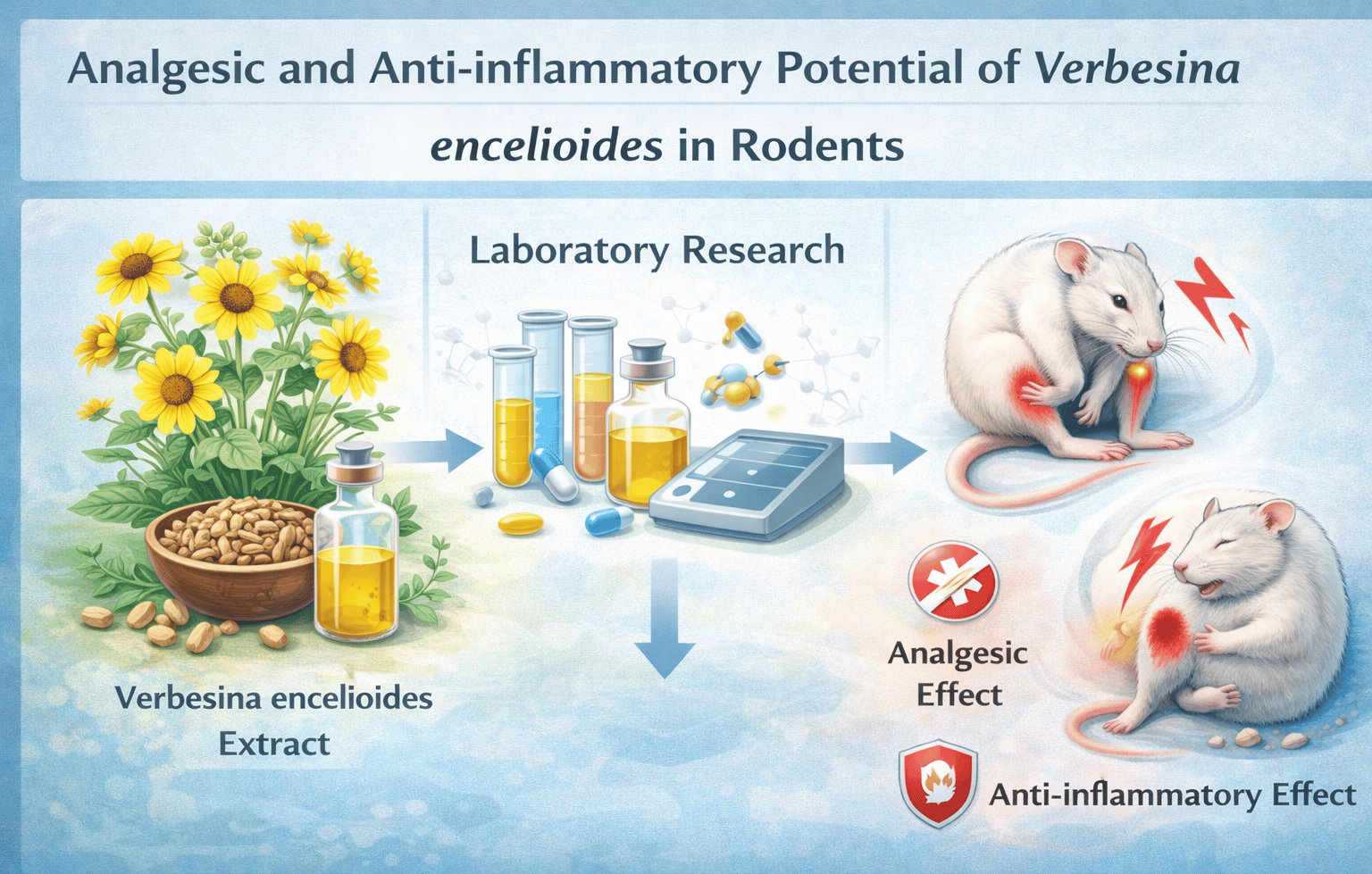
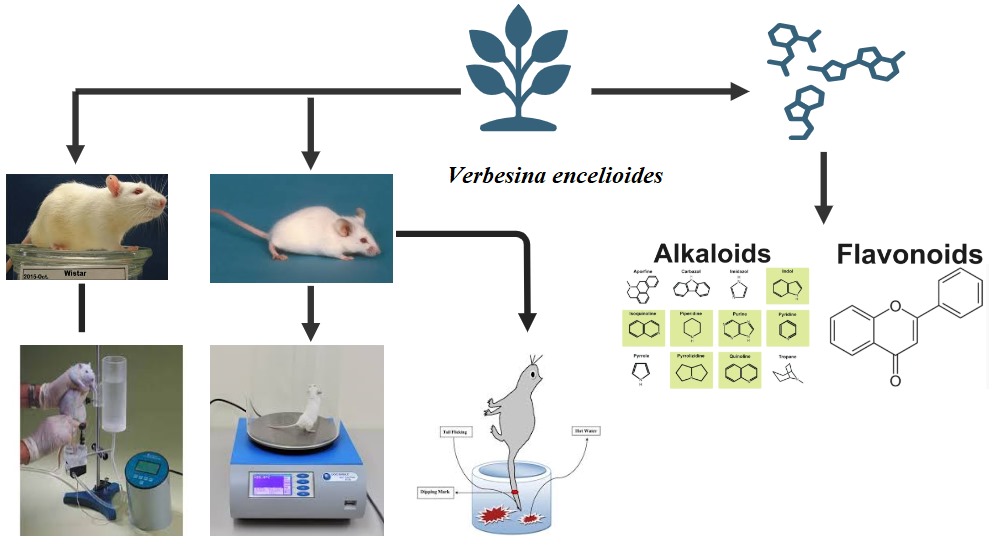
We decided to evaluate the analgesic (pain-relieving) and anti-inflammatory effects of methanolic extracts from different parts of the plant—leaves, stems, flowers, and roots. This was important because traditional medicine rarely uses a single plant part, yet scientific studies often do.
Before testing efficacy, we focused on safety. Acute toxicity studies are not glamorous, but they are essential. I still remember the sense of relief when no adverse effects were observed in mice, even at doses as high as 1000 mg/kg. That moment gave us confidence to move forward.
Watching Data Take Shape in the Lab
Pain research is challenging—not just scientifically, but emotionally. Tests like the hot plate and tail flick require precision, patience, and constant ethical awareness. Every step reminded me of the responsibility researchers carry when working with animal models.
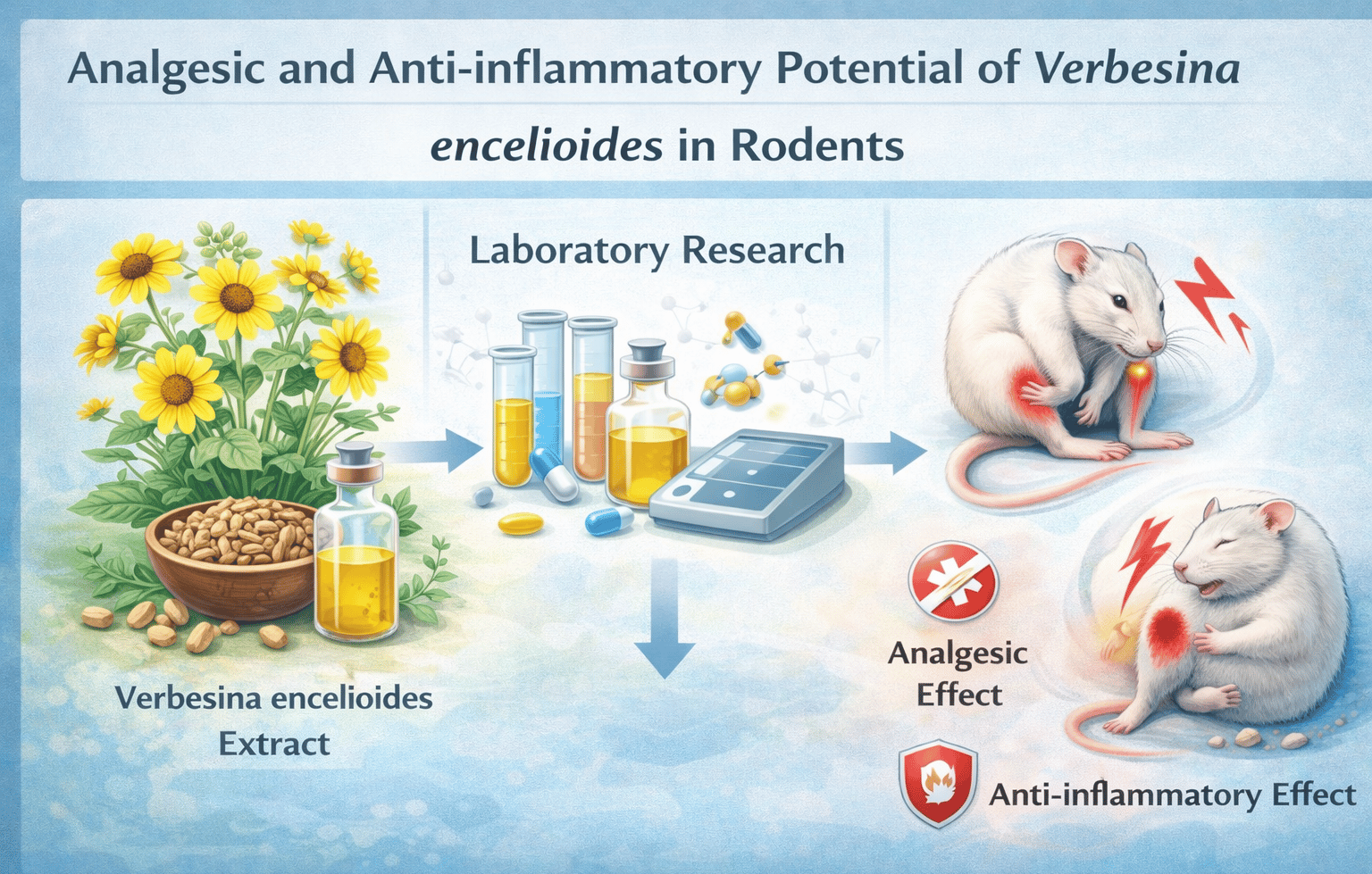
As the experiments progressed, patterns began to emerge. Reaction times increased with higher doses of Verbesina encelioides extracts, closely resembling the effects of aspirin. Seeing a plant extract perform comparably to a standard drug was one of those moments that makes long hours in the lab worthwhile.
The anti-inflammatory studies were even more intriguing. Some extracts initially caused a slight increase in paw swelling before significantly reducing inflammation later. At first, this puzzled us. But science often rewards patience—especially when working with complex plant mixtures rather than single compounds.
Learning That Plants Don’t Behave Like Synthetic Drugs
One important lesson this project taught me is that plant-based therapies rarely follow linear patterns. Unlike synthetic drugs, plant extracts contain dozens of bioactive compounds interacting simultaneously.
The delayed anti-inflammatory response we observed may reflect this complexity. Compounds such as flavonoids, phenolics, and alkaloids do not always act immediately—but their cumulative effects can be powerful.
This reinforced my belief that studying medicinal plants requires a different mindset. Instead of expecting instant results, we must learn to interpret biological responses holistically.
Beyond the Results: What This Research Meant to Me
This study wasn’t just about validating a plant—it reshaped how I think about overlooked species. Verbesina encelioides is often considered a weed. But through a scientific lens, it revealed itself as a reservoir of pharmacological potential.
For me, this project was a reminder that valuable research does not always focus on rare or exotic plants. Sometimes, the most promising candidates are the ones growing quietly in plain sight.
It also strengthened my respect for traditional knowledge. While not every ethnomedicinal claim is correct, many are grounded in generations of observation. Our role as scientists is not to dismiss these practices, but to evaluate them carefully and responsibly.
Challenges along the Way
Like all research, this project had its challenges. Variability between plant parts, interpreting mixed responses, and ensuring reproducibility demanded careful planning and repeated experiments. There were days when results didn’t align, and moments when we had to step back and reassess our assumptions.
But those challenges were also the most educational. They taught me patience, humility, and the importance of rigorous methodology—qualities no textbook can fully convey.
What Comes Next?
Our findings suggest that Verbesina encelioides has genuine potential as a natural source of analgesic and anti-inflammatory agents. However, this is just the beginning.
Future work must focus on isolating the active compounds, understanding their mechanisms of action, and evaluating long-term safety. Clinical relevance remains the ultimate goal, but it must be pursued carefully and ethically.
Personally, I hope this research encourages others to explore underutilized plants and to look at “weeds” with fresh scientific curiosity.
A Message to Early-Career Researchers
If there is one takeaway I would like to share, it is this: impactful research does not always start with complex ideas. It often begins with careful observation, curiosity, and the willingness to ask simple questions.
Studying Verbesina encelioides reminded me why I chose research in the first place—to uncover hidden value, challenge assumptions, and contribute, even in small ways, to better healthcare solutions.
Final Reflection
This project transformed a common plant into a meaningful scientific inquiry. It reinforced the idea that nature still holds many answers—we just need to look closely, ask thoughtfully, and study responsibly.
For me, Verbesina encelioides will always represent that moment when curiosity turned into evidence.

Salman Ahmed (ORCID: 0000-0003-2033-0181) holds a B.Pharm. degree from the University of Karachi, Pakistan, and a PhD and M.Phil. in Pharmacognosy from the same institution. He has gained valuable experience in the pharmaceutical industry, having worked at Helix Pharma, Pharm Evo (Pvt.) Ltd., and Searle Pakistan Ltd. Currently, he holds the position of Assistant Professor in the Department of Pharmacognosy at the Faculty of Pharmacy, University of Karachi, Pakistan.
Salman Ahmed has made significant contributions to the field with a decade-long career dedicated to teaching Pharmacognosy, also known as Natural Products Sciences. He has authored 125 research papers with an impact factor of 100 with 2297 citations, a h-index of 24, and an i10-index of 59. He has secured multiple research grants in Pharmacognosy (2021, 2018, 2016, and 2014) to study plants traditionally used for analgesic, anti-inflammatory, diuretic, and antidiarrheal purposes and their effects on digestive enzymes. Additionally, he has authored seven books and presented 16 posters at national and international conferences. Salman Ahmed's expertise is acknowledged by various esteemed journals published by Elsevier, Springer Nature, Wiley, MDPI, Hindawi, and Dove Medical Press Limited, as he serves as an invited reviewer for these publishers.
Scientific Achievements (2011–2015): He pioneered a cost-effective copper sulfate-induced chick emesis model for evaluating natural antiemetics. His research explores antiemetic, analgesic, and anti-inflammatory properties in Pakistani plants, herbs, and spices, reporting fixed oil's analgesic effects and discovering Bergenin as an antiemetic. He authored two state-of-the-art reviews on natural antiemetics, "Antiemetic effects of bioactive natural products" and "Natural antiemetics- an overview". He was awarded Nishan-e-Zafar by the University of Karachi in 2014.
Scientific Achievements (2016–2024): Dr Salman Ahmed pioneered glass slide models to grow Whewellite, Brushite, and Urate crystals for the evaluation of antiurolithiatic and anti-gout drugs, presenting key findings at international conferences such as MMDR-7, STEP-5, ISNPC-14, and ISNPF-2. His book “How to Grow Urinary Stone and Gouty Crystals on Glass Slide” provides detailed methodologies for replicating crystal growth in vitro and discusses the implications for understanding crystal morphologies, disease mechanisms and developing herbal treatment strategies.
Dr Ahmed's research highlights the antiurolithiatic potential of pentacyclic triterpenes and polyphenols. These compounds inhibit calcium oxalate crystallization, reduce oxidative stress, and modulate inflammation. They also promote nephroprotection, diuresis, and ACE inhibition, advancing natural therapeutics for kidney stone prevention.
His contributions include “Glossary of Globally Used Herbs and Animals for Urolithiasis” (2024), a comprehensive book exploring medicinal plants covering botanical families from A to Z and animal-based remedies covering their historical use, mechanism of action, and therapeutic spectrum against Whewellite, Brushite, and Urate crystals separately. His research on antiurolithiatic formulations compiles mono- and polyherbal remedies from diverse regions, including Appalachia, Canada, India, and the Middle East. His work provides critical data for future phytochemical, pharmacological, and toxicological studies, aiding in the discovery of safer, more effective treatments for kidney stones.
Additionally, he explores the anticancer potential of marine peptides against breast, ovarian, cervical, malignant melanoma, prostate, neuroblastoma, glioblastoma, leukemia and lymphoma, advancing natural therapeutics for cancer treatment.