Are We Preparing Learners for Climate Action? Reflections from Our Systematic Review
Published in Sustainability and Education

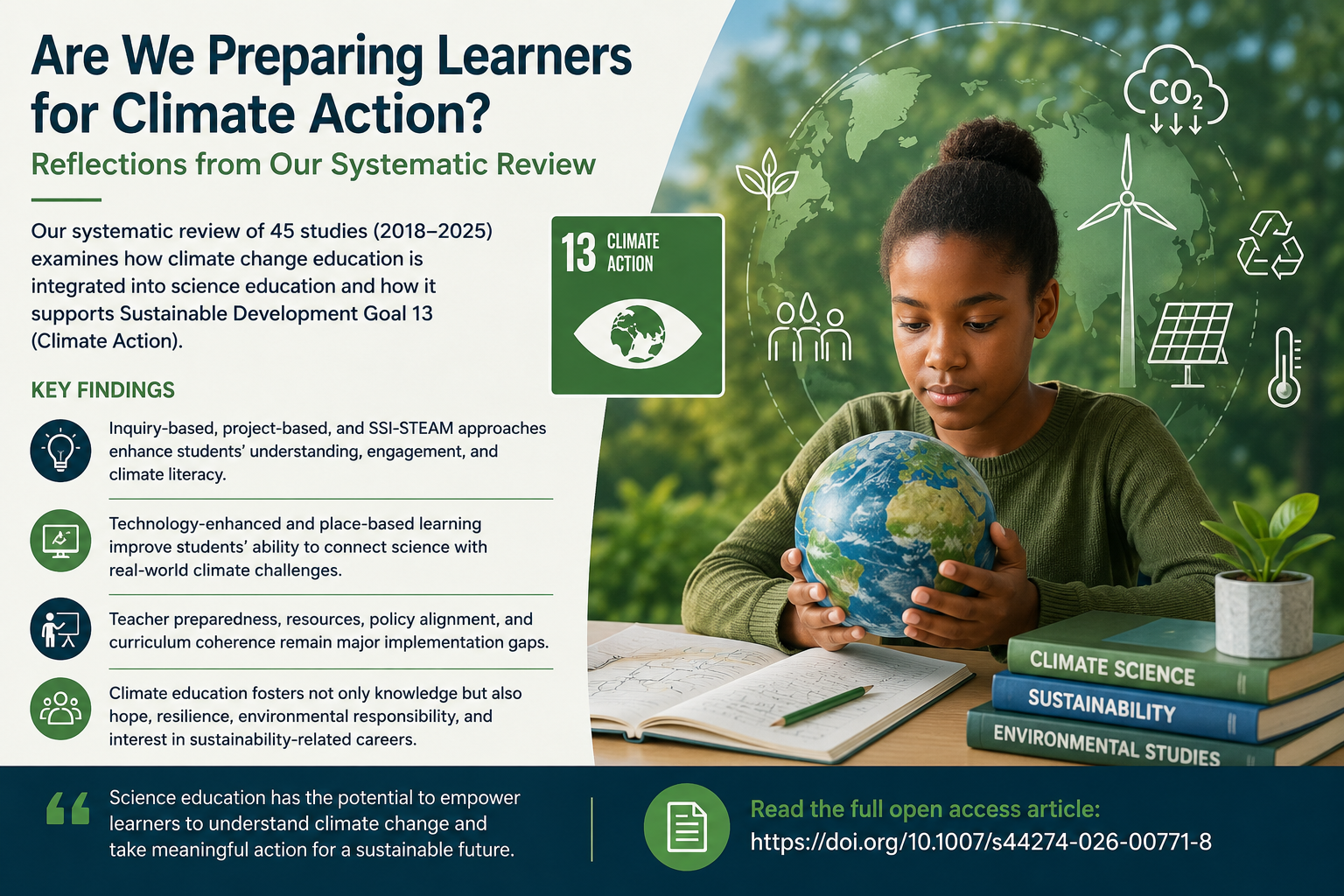


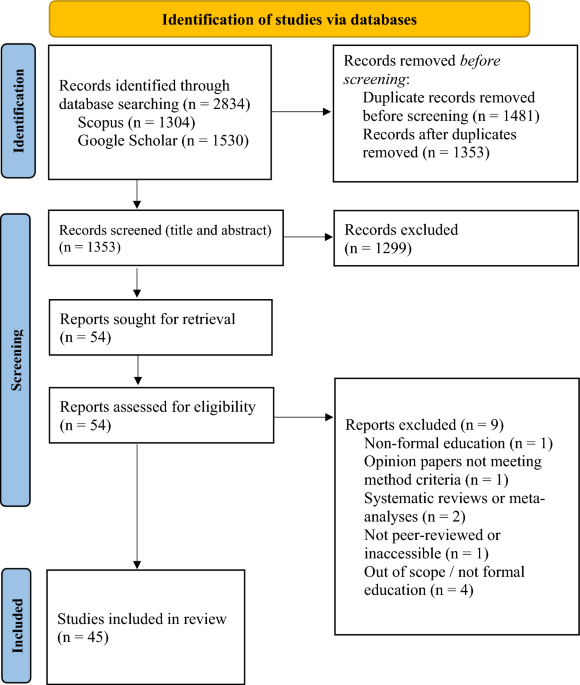

As science educators and researchers, we are often confronted with an important question: Can science education do more than teach climate science—can it inspire meaningful climate action?
This question motivated our systematic review, recently published in Discover Environment. We sought to examine how climate change education (CCE) is being integrated into science education and what evidence exists regarding its contribution to achieving Sustainable Development Goal 13 (Climate Action).
To answer this question, we systematically reviewed 45 empirical and conceptual studies published between 2018 and 2025. The studies spanned secondary and higher education contexts and explored curriculum integration, instructional practices, teacher preparedness, student outcomes, and sustainability-related competencies.
One of the most encouraging findings was the effectiveness of learner-centred pedagogies. Inquiry-based learning, project-based learning, and socio-scientific issues integrated with STEM (SSI-STEAM) consistently enhanced students' climate literacy, conceptual understanding, critical thinking, and engagement. These approaches moved climate change beyond abstract scientific concepts and connected learning to real-world environmental challenges.
We also found growing evidence supporting technology-enhanced climate education. Augmented reality, simulations, virtual learning environments, and place-based learning experiences helped students visualise complex climate systems and better understand local climate impacts. Such approaches reduced the psychological distance often associated with climate change and encouraged a stronger sense of environmental responsibility.
However, the review also revealed significant implementation challenges.
Across many educational systems, climate change education remains inconsistently integrated into science curricula. Climate-related topics are frequently treated as cross-cutting themes rather than core, assessable components of science education. Consequently, the depth and quality of students' learning experiences often depend on institutional priorities and individual teacher initiative.
Teacher preparedness emerged as another critical concern. Many educators reported limited confidence, insufficient professional development opportunities, and inadequate resources for teaching climate-related content. Curriculum overload, policy gaps, and institutional constraints further complicated implementation efforts.
Perhaps one of the most thought-provoking findings was the importance of the emotional dimension of climate education. Several studies highlighted the need to balance scientific understanding with hope, agency, and resilience. While climate change can generate anxiety and feelings of helplessness among learners, effective educational approaches can empower students to view themselves as part of the solution rather than passive observers of a global crisis.
The review also suggests that structured exposure to climate and sustainability education may influence students' future orientations toward sustainability-related careers and environmentally responsible behaviours. Although more longitudinal research is needed, the evidence points to the transformative potential of science education in shaping climate-conscious citizens and professionals.
Our findings reinforce the idea that science education has a vital role to play in addressing climate change. However, realising this potential requires more coherent curriculum frameworks, stronger policy alignment, sustained teacher professional development, and continued research into the long-term impacts of climate education.
As climate challenges become increasingly visible across the globe, the question remains highly relevant:
Are we adequately preparing learners not only to understand climate change, but also to respond to it?
We hope this review contributes to ongoing discussions among educators, researchers, policymakers, and practitioners working to strengthen climate literacy and advance climate action through education.
Article DOI: https://doi.org/10.1007/s44274-026-00771-8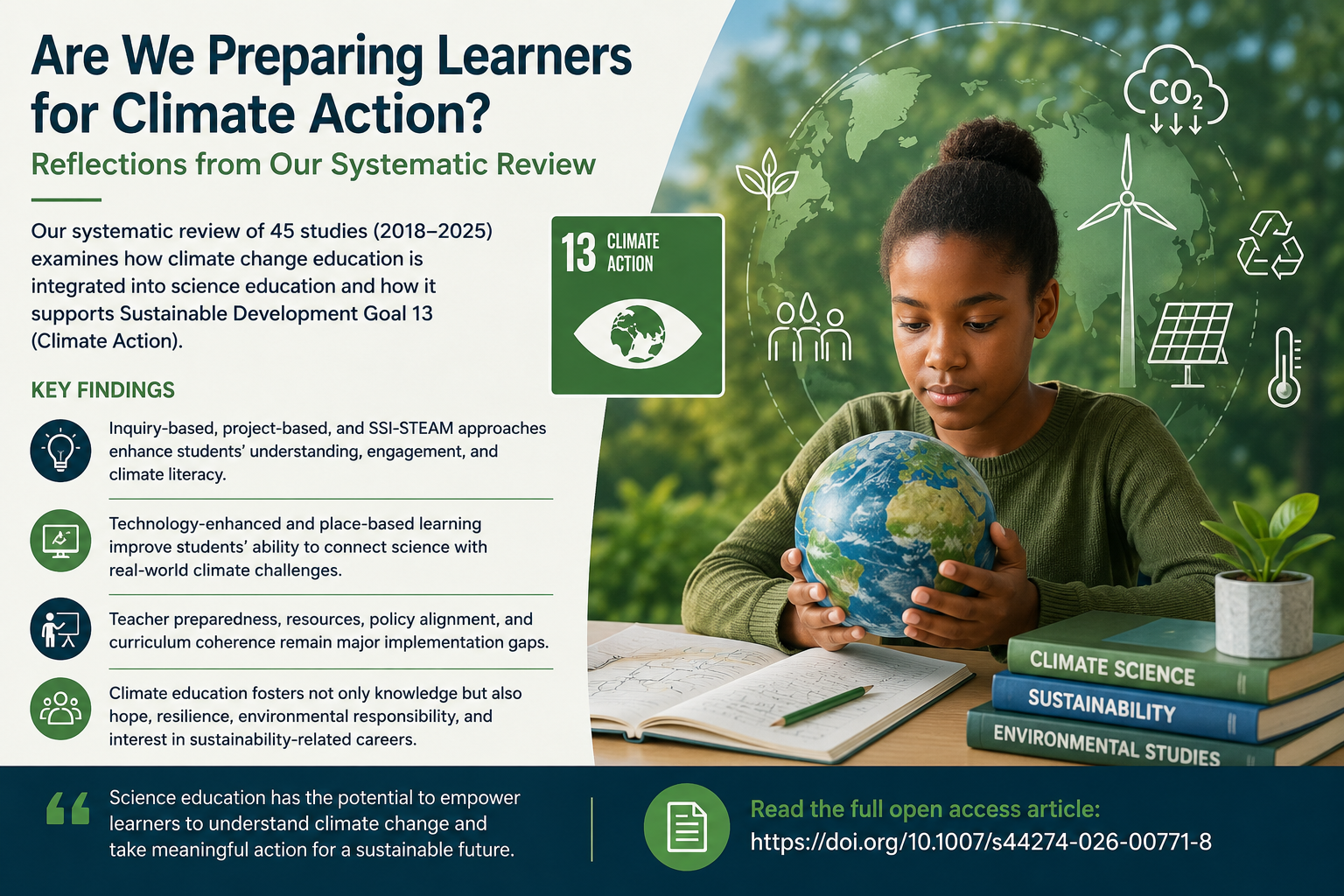
Follow the Topic
-
Discover Environment
This is a transdisciplinary, open-access journal that provides a leading platform for the rapid dissemination of knowledge and advances covering the research and innovation that is taking place across the environmental sector.

Related Collections
With Collections, you can get published faster and increase your visibility.
Monitoring environmental pollution and impact on health
The intensification of human activities and the expansion and densification of urban areas cause various damages to the environment, necessitating continuous monitoring to assess the impact and extent of potential risks to both the environment and human health, in order to ensure urban sustainability.
This collection, “Monitoring Environmental Pollution and Impact on Health,” invites contributions that utilize tools related to health impact assessment, human health risk, ecological risk, data modeling, geospatial data, and Geographic Information Systems (GIS) to analyze impacts within urban environments. We also encourage the publication of research on the dynamics of pollution and health in rural and peri-urban areas, interdisciplinary studies between environmental sciences and public health, epidemiology, and urban planning for a holistic assessment of the multifaceted impacts of pollution on human well-being. In addition, studies that contribute actionable policy recommendations for local governments, environmental agencies, or public health institutions dealing with urban pollution are welcome. Research (time series or longitudinal studies) that demonstrate public health trends related to chronic exposure to pollutants, aiming for a better understanding of long-term urban sustainability issues, are also encouraged. Studies addressing health risks for vulnerable populations (such as children, the elderly, or low-income communities) exposed to environmental pollution in densely populated areas are of particular interest. We welcome studies on participatory monitoring and the development of citizen science, empowering communities to act in collaboration with local environmental health surveillance managers. Research involving satellite pollution monitoring and remote sensing is also encouraged. Comparative studies on pollution and health across different regions, identifying critical hotspots and globally replicable mitigation strategies, are of interest. We also welcome research that investigates environmental justice and urban socio-demographic inequalities/disparities in health due to environmental pollution. Review studies and meta-analyses exploring trends, methodologies, and gaps in urban environmental health research are also welcome.
Keywords: Health impact assessment, Environmental quality monitoring (air, water, and soil), Pollution sources and emissions, Spatial analysis, Geospatial technology, Climate change, Urban sustainability, Machine learning, Ecological risk assessment, Human health risk assessment
This Collection supports and amplifies research aligned with the following Sustainable Development Goals (SDGs): SDG 11.
Publishing Model: Open Access
Deadline: Feb 28, 2027
Water Environment: Addressing Global Water Challenges
Water is an indispensable natural resource, yet it faces escalating threats from pollution, climate change, and human activity. The Water Environment: Addressing Global Water Challenges section of Discover Environment Journal is dedicated to publishing innovative research on the dynamics of water systems—tracing their journey from source to fate while examining the interplay between natural processes and anthropogenic influences. This section delves into critical domains, including chemical hydrology, watershed and basin science, glacier environments, and land-use impacts. We welcome contributions that address pressing issues such as water pollution, the transport and transformation of contaminants, hydrological modeling, and sustainable water management strategies. We place particular emphasis on the consequences of land-use changes on hydrological cycles, the stability of glacier-fed water systems, and effective approaches to safeguarding freshwater and marine ecosystems.
Key topics include:
Chemical Hydrology: Analysis of water composition, pollutant behavior, and geochemical interactions shaping water quality.
Basin and Catchment Science: Investigations into watershed hydrology, sediment transport, and hydrogeomorphological processes.
Glacier Environments: Research on cryospheric hydrology, glacier-fed rivers, and the influence of climate change on water availability.
Land-Use Systems: Examining the effects of agriculture, urbanization, deforestation, and industry on water resources.
Water Pollution & Remediation: Addressing emerging contaminants (e.g., microplastics, pharmaceuticals, PFAS), nature-based solutions, and policy frameworks for water protection.
Sustainable Water Management: Innovations in water conservation, resilience-building strategies, and alignment with Sustainable Development Goals (SDGs), particularly SDG 6 (Clean Water and Sanitation).
Methodological advancement in water research
Furthermore, to enhance the scope and impact of the section, we strongly encourage submissions that:
• Include case studies from underrepresented regions, particularly Sub-Saharan Africa and small island states, to showcase diverse hydrological challenges and locally relevant water management solutions.
• Promote the integration of traditional ecological knowledge and community-based water governance practices to enhance the cultural relevance and sustainability of proposed water stewardship strategies.
• Explore transboundary water issues, including shared aquifers and river basins, to highlight the importance of cooperation and policy in sustainable resource management.
• Emphasize the value of coupling remote sensing and GIS technologies with in-situ hydrological data for improved water quality monitoring and modeling accuracy across scales.
• Focus on emerging contaminants such as microplastics, pharmaceuticals, and PFAS in both freshwater and marine environments, reflecting current global research priorities.
• Give greater attention to groundwater-surface water interactions and their implications for long-term water availability, especially under changing climate and land-use patterns.
• Highlight the role of climate change scenarios and projections in shaping adaptive water management frameworks, particularly in glacier-fed and drought-prone regions.
• Feature interdisciplinary collaborations between hydrologists, ecologists, social scientists, and engineers to propose holistic and inclusive water resource solutions.
• Promote alignment of all submissions with SDG targets, especially SDG 6 (Clean Water and Sanitation) and SDG 13 (Climate Action), to strengthen policy relevance.
• Include policy briefs or synthesis articles that translate technical findings into actionable guidance for water managers and decision-makers.
By fostering interdisciplinary collaboration and highlighting diverse perspectives, the Water Environment: Addressing Global Water Challenges section serves as a vital platform for advancing knowledge on global water challenges and informing policy for sustainable water stewardship.
This Collection supports and amplifies research related to: SDG 6 & SDG 13
Keywords: Water Systems, Water Pollution, Climate Change, Land-Use Impacts, Sustainable Water Management, Emerging Contaminants, Hydrological Modeling, Interdisciplinary Collaboration, SDG 6 (Clean Water and Sanitation), Chemical Hydrology, Watershed Science, and Glacier Environments.
Publishing Model: Open Access
Deadline: Dec 30, 2026
