Artificial Intelligence for Inspired Action: The Technology We Need for the World We Want
Published in Computational Sciences
Algorithms reshape what we see, choose, buy, learn, believe, and ignore. Their influence is no longer confined to laboratories, platforms, or policy papers. It reaches into classrooms and boardrooms, hospitals and homes, elections and emergencies, intimate decisions and planetary dilemmas.
The central question is therefore human before it is technical: What kind of world do we want our tools to help us build?
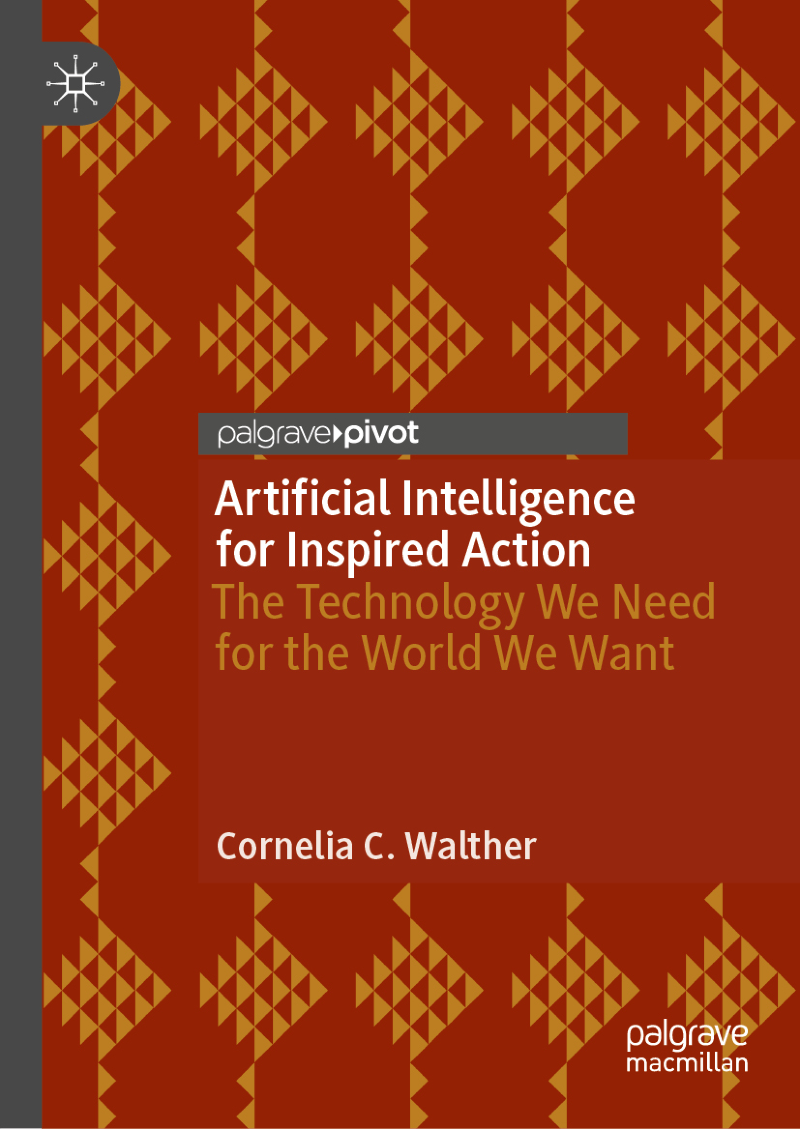
My new book, Artificial Intelligence for Inspired Action: The Technology We Need for the World We Want, published by Palgrave Macmillan, begins with this question. It explores how artificial intelligence can be guided by natural intelligence: our aspirations, emotions, thoughts, sensations, values, relationships, and responsibilities.
The book is written for changemakers across sectors who sense that the AI conversation needs a wider frame. We need technical excellence. We also need moral imagination, behavioral insight, institutional courage, and a deeper understanding of what it means to remain human in a hybrid world.
From artificial intelligence to hybrid intelligence
AI is often discussed as if it were separate from us: a tool we use, a system we regulate, a risk we manage, a force that may replace human labor or augment human capability. Each of these lenses captures part of the picture. None is sufficient alone.
The more useful frame is hybrid intelligence: the dynamic complementarity between natural and artificial intelligences. Machines can process patterns at scales no human mind can hold. People can bring purpose, judgment, care, meaning, and accountability to the use of those patterns. The future worth working toward depends on the quality of this relationship.
When technology accelerates, attention fragments. When systems become more persuasive, agency becomes more fragile. When automation grows more convenient, dependence can emerge gradually, almost invisibly. This is why the book places agency at the center of AI governance, leadership, learning, and design.
Agency is more than the ability to make choices. It is the capacity to understand why we choose, how we are influenced, and what our choices make possible for others.
Double literacy for a hybrid age
One of the book’s core propositions is double literacy.
Double literacy combines human literacy and algorithmic literacy. Human literacy means understanding ourselves and each other across the inner dimensions of life: aspirations, emotions, thoughts, and sensations. Algorithmic literacy means understanding how AI systems classify, predict, recommend, persuade, optimize, and shape behavior.
The two belong together. A person who understands algorithms without understanding human vulnerability may design systems that scale harm. A person who understands human values without understanding technological mechanisms may underestimate how influence now operates. Double literacy offers a way to keep agency alive in environments where human perception, preference, and attention are increasingly mediated by machine systems.
This matters for everyone. For educators, it changes what young people need to learn. For leaders, it changes how decisions are made under uncertainty. For policymakers, it expands the meaning of digital governance. For designers and engineers, it asks whether the systems we build strengthen or weaken the human capacity to act with awareness, appreciation, acceptance, and accountability.
ProSocial AI as a design ambition
The book builds on the idea of ProSocial AI: AI that is tailored, trained, tested, and targeted to bring out the best in and for people and planet.
This formulation matters because intent alone is not enough. AI systems inherit the assumptions, incentives, data structures, institutional pressures, and blind spots of the environments in which they are created. A system that performs well technically can still narrow human choice, deepen exclusion, exhaust attention, intensify inequity, or accelerate ecological strain.
ProSocial AI asks a different set of questions from the beginning:
Who is this system meant to serve?
Whose agency could be strengthened or weakened?
Which values are embedded in the model, interface, metrics, and deployment context?
What happens across personal, institutional, societal, and planetary dimensions?
How will we know whether the system is improving life, rather than merely increasing efficiency?
These questions do not slow innovation. They make innovation more worthy of trust.
The POZE paradigm: purpose in action
At the heart of the book is the POZE paradigm, a practical lens for connecting purpose with practice across interconnected dimensions of life. POZE invites readers to look at the human being as more than a user, consumer, patient, worker, voter, or data point. Each person is a living system of aspirations, emotions, thoughts, and sensations, embedded in communities, countries, and the planet.
This perspective changes how we think about AI. It shifts attention from isolated outputs to ripple effects. A recommendation system influences attention. Attention shapes emotion. Emotion affects thought. Thought informs action. Action influences relationships, institutions, markets, and ecosystems.
Once we see these interconnections, AI ethics becomes more than compliance. It becomes a practice of systemic care.
Why this book now
The AI debate has produced many important conversations about safety, productivity, regulation, bias, and competitiveness. These conversations remain essential. Yet they often leave one question underdeveloped: What capacities must people cultivate to shape AI conscientiously?
We must not outsource meaning to machines. We cannot automate integrity. We should not ambition to prompt our way into an ultra-efficient future without developing the human qualities needed to guide technological power.
This book is a wake-up call and a guide. It is written for those who want to move from concern to contribution, from abstraction to action, from technological fascination to a form of responsibility that is human, and humane.
Its message is simple: the future of AI will be shaped by the quality of the intelligence we bring to it.
Artificial intelligence can accelerate extraction or expand inclusion. It can deepen dependence or strengthen agency. It can flatten human difference or help people understand themselves and each other more fully. It can serve narrow optimization or inspired action.
The choice will not be made once. It is being made every day, in design meetings, classrooms, funding decisions, governance frameworks, leadership habits, public debates, and private moments of use.
The technology we need for the world we want begins with the human capacities we choose to cultivate now.
Artificial Intelligence for Inspired Action: The Technology We Need for the World We Want is available from Springer Nature.

Dr. Cornelia C. Walther is a humanitarian leader with 20+ years at the UN, driving social change. She pioneers research on hybrid intelligence and ProSocial AI through the global POZE alliance to build ‘Agency amid AI for All.’ Cornelia is a professor at Sunway University in Malaysia and works with the United Nations in Morocco on national blueprints for ProSocial AI. She is a contributor on Forbes, Psychology Today and CIGI online; as well as a senior fellow at the Wharton School, the Harvard Learning and Innovation Lab, the Center for International Governance Innovation and an advisor at the European Policy Center. Her new book is looking at AI4IA - Artificial Intelligence for Inspired Action.