Designing an Effective Educational Toy
Published in Sustainability and Education




In an era where educational tools are paramount for child development, our research project titled "Designing an Effective Educational Toy: Incorporating Design-Thinking in the Design Classroom" seeks to bridge the gap between creativity and education. Published in Discover Education, this study explores the development of a 3D letter-building toy by graphic design students at Wenzhou-Kean University. The aim was to enhance children's educational experiences through effective design principles. This post will delve into the inspiration behind our research, the methodologies we employed, the challenges we faced, and the implications for future educational tools.
The Inspiration Behind the Research
The genesis of our project stemmed from a desire to integrate design thinking into educational practices. As educators, we observed the transformative potential of play in learning, particularly through the teachings of Lev Vygotsky, whose sociocultural theory emphasises the importance of interaction and cultural tools in cognitive development. Inspired by this framework, our team—comprising graphic design lecturers and students—set out to create a toy that not only captivates children's interest but also fosters essential skills such as literacy and fine motor development.
Research Methodology
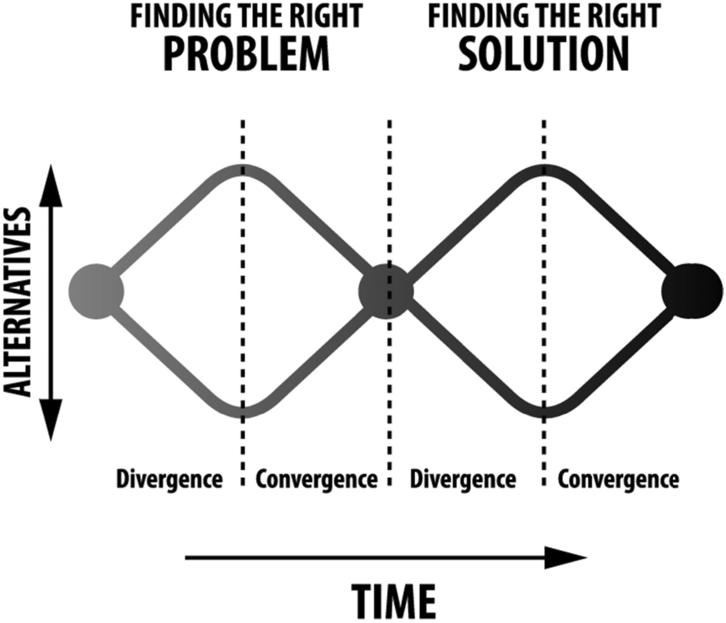
To guide our research, we employed the Double Diamond Model of Design, which consists of four stages: observation, ideation, prototyping, and testing. This structured approach allowed us to systematically address user needs while fostering creativity.
-
Observation: Initially, students observed kindergarten children interacting with existing toys. This phase provided valuable insights into the types of engagement that promote learning.
-
Ideation: Based on observations, students brainstormed ideas for the toy, focusing on features that would enhance children's learning experiences. This included discussions on safety, usability, and educational value.
-
Prototyping: Students created several prototypes of the 3D letter-building toy, utilising materials like translucent coloured acrylic for visual appeal and durability. The iterative design process encouraged continuous refinement based on feedback.
-
Testing: The final prototypes were tested with kindergarten children, allowing us to gather feedback on usability, engagement, and educational impact.
Challenges and Successes
Throughout the research, we encountered challenges such as aligning design aesthetics with educational functionality. For instance, ensuring the toy was safe while also being visually appealing required careful consideration of materials and shapes. The iterative design process proved invaluable in overcoming these hurdles, as feedback from both children and educators informed our modifications.
One notable success was the enthusiastic response from children during the testing phase. They engaged deeply with the toy, demonstrating not only enjoyment but also an increased interest in letter recognition and construction. This reinforced our belief in the power of play as a learning tool.
Implications for Future Research
Our findings underscore the critical role that effective design plays in educational outcomes. The 3D letter-building set exemplifies how integrating design thinking can lead to toys that not only meet safety and educational standards but also engage children in meaningful ways. Future research could explore the incorporation of technology into educational toys, such as interactive elements that further enhance the learning experience.
Personal Anecdotes and Untold Stories
Reflecting on the project, one of my most memorable moments was witnessing the children's creativity as they manipulated the toy. Their spontaneous laughter and collaborative play highlighted the joy of learning through interaction. This experience reaffirmed my commitment to fostering environments where creativity and education coexist.
Conclusion
The research project on the 3D letter-building set illustrates how design thinking can revolutionise educational toy production. By prioritising the needs of children and educators through an iterative design process, we created a product that promotes cognitive and motor development. As we move forward, it is essential to continue exploring innovative design methodologies that can enhance early childhood education.
We invite readers to engage with our research and explore the full article here. Your feedback and insights will be invaluable as we strive to improve educational tools for future generations.

Biography
Natalie Amy Margaret Houston hails from Durban, South Africa. She began her academic journey at Natal Technikon, where she earned a Diploma in Marketing and Sales Management in 1989. Following her graduation, she was awarded an 18-month scholarship by the German Government, which allowed her to gain invaluable practical experience while working with Volkswagen and Audi in their Marketing and Strategic Planning departments.
After this enriching experience in Germany, Natalie returned to pursue her passion for design. She studied Graphic Design at the University of Applied Sciences in Düsseldorf, completing her Bachelor's Degree in 2004. Natalie then lectured for nine years at the Durban University of Technology in the Faculty of Arts, within the Department of Graphic Design. In 2013, she transitioned to the University of Dammam in Saudi Arabia, where she continued her role as a Graphic Design lecturer.
Currently, Natalie holds a Master’s Degree in Graphic Design and is a registered PhD student in the Department of Social Sciences at the University of KwaZulu-Natal. Known for her goal-oriented approach, she is both organized and driven in her endeavors.
My Teaching Philosophy
My teaching philosophy is fundamentally student-centered, driven by a deep commitment to inspiring learners to reach their highest potential. I liken my teaching style to constructing a house, emphasizing the importance of building a solid foundation. By intertwining technical knowledge with a comprehensive understanding of the design process, I equip my students to become critical thinkers and adept problem solvers.
My goals are to:
- Empower learners to navigate projects from conception to completion.
- Foster a sense of ownership in the industry, enabling students to become leaders and innovators.
Follow the Topic
-
Discover Education
An international, peer-reviewed open access journal that publishes original work in all areas of education, serving the community as a broad-scope journal for academic trends and future developments in the field.

Related Collections
With Collections, you can get published faster and increase your visibility.
Advancing Teaching & Learning: Integrating AI, Emerging Technologies, and Pedagogical Innovation
Collection "Advancing Teaching & Learning: AI, Emerging Technologies and Pedagogical Innovation" addresses a major challenge in education today. There is a lack of resources that bring advanced technologies and innovative teaching together. AI, digital tools and emerging technologies are transforming classrooms. Yet many teachers and education leaders struggle to use these tools effectively. This Collection fills that gap. It offers expert insights, practical strategies and real-world examples for modern teaching and learning.
The Collection is linked to the United Nations Sustainable Development Goal 4 on quality education. It shows how to make learning more accessible, inclusive and effective for all. AI, adaptive learning platforms and immersive technologies can personalise instruction. They can engage students and support diverse needs. At the same time, the human element of teaching remains central.
Readers will find practical guidance on curriculum design, digital literacy and evidence-based teaching methods. The approaches can be applied in classroom, blended and online learning. Beyond tools, the Collection inspires educators to rethink traditional methods. It encourages them to embrace innovation while keeping learning meaningful and student-focused.
By addressing the lack of comprehensive resources on advanced technologies, Advancing Teaching & Learning helps teachers, school leaders and instructional designers navigate the digital age. It equips them to create engaging, future-ready learning experiences. Students are prepared for a connected, digital world. Educators gain the confidence to unlock the full potential of every learner.
This Collection supports and amplifies research related to the United Nations Sustainable Development Goal 4 on quality education. It shows how to make learning more accessible, inclusive and effective for all. AI, adaptive learning platforms and immersive technologies can personalise instruction. They can engage students and support diverse needs. At the same time, the human element of teaching remains central.
Keywords: Teaching and Learning; AI in Education; Emerging Technologies; Digital Tools in Classrooms; Pedagogical Innovation; Adaptive Learning Platforms; Immersive Technologies; Quality Education (SDG 4); Classroom Innovation; Blended and Online Learning; Student Engagement; Teacher Professional Development; Future-Ready Learning; Instructional Design; Educational Technology Integration.
Publishing Model: Open Access
Deadline: Apr 15, 2027
Advancing Health Professions Education: Innovations, Strategies, and Global Perspectives
Health Professions Education (HPE) plays an important role in preparing competent, ethical, and compassionate healthcare professionals capable of responding to the complex demands of contemporary healthcare systems. In recent years, the field of HPE has witnessed a paradigm shift towards learner-centred, competency-based, and interprofessional education models that prioritize not only clinical expertise but also communication, professionalism, teamwork, and leadership skills.
This Collection invites original research, systematic or scoping reviews, case studies and brief reports and that critically examine the evolving landscape of HPE across medicine, dentistry, nursing, pharmacy, and other allied health disciplines. Key areas of interest include curriculum design and reform, innovative teaching and assessment methods, integration of digital and blended learning technologies, interprofessional education (IPE), faculty development, educational management, student support and well-being, and strategies to promote equity, diversity, and inclusivity in HPE.
We also welcome contributions that explore challenges and best practices in clinical training, rural and underserved community placements, global health education, policy development, accreditation, and institutional leadership in health education. Studies from low- and middle-income countries are strongly encouraged to enhance global representation and to promote scholarly exchange on scalable and contextually relevant innovations.
By consolidating scholarly work in this Collection, we aim to advance the discourse on high-quality, evidence-informed HPE that supports the achievement of Sustainable Development Goals (SDG 3 and SDG 4) and ultimately contributes to improved healthcare outcomes worldwide.
Publishing Model: Open Access
Deadline: Nov 30, 2026