Behind the Systematic Literature Review of STEM Students’ Learning Privileges
Published in Social Sciences and Education



A Moment of Discomfort as the Starting Point
This question, simple as it sounds, became the seed of my research. And like most research journeys, the story behind it is far less straightforward than the polished abstract that eventually gets published.
The idea first emerged not from theory per se, but from a personal discomfort.
While working with STEM learners, primarily during the height of the COVID-19pandemic, I noticed something subtle but troubling. Some students thrived even with minimal effort, while others struggled despite being equally capable. Some barely get by with the available resources that they have, while there are students who need to exert extra effort just to make it through the school day. I argued that the difference wasn’t intelligence, discipline, or interest in their respective field. It was something harder to define—something embedded in their environment.
I began asking students casual questions: “Where do you usually study?”, “What do you do when you’re stuck on a problem?”, “Who helps you when things get difficult?”
Their answers revealed subtle advantages such as reliable Wi-Fi, a supportive peer group, a teacher who regularly checks in, a school that provides free digital materials, or even simply a quiet desk at home. None of these is dramatic or newsworthy on its own, but taken together, they form a myriad of opportunities that many Filipino students lack.
Those subtle advantages became the foundation of my inquiry into learning privileges.
A Meticulous and Tedious Review Process
To explore this idea, I decided to take a step back and examine what the existing literature said—not just about challenges and inequalities, but about the factors that support learning.
This meant reviewing studies across three time periods, each affected by major shifts in STEM education, specifically among Filipino Senior High School (SHS) students:
- Pre-pandemic (2016–early 2020)
- Pandemic (late 2020–early 2023)
- Post-pandemic (mid-2023 onward)
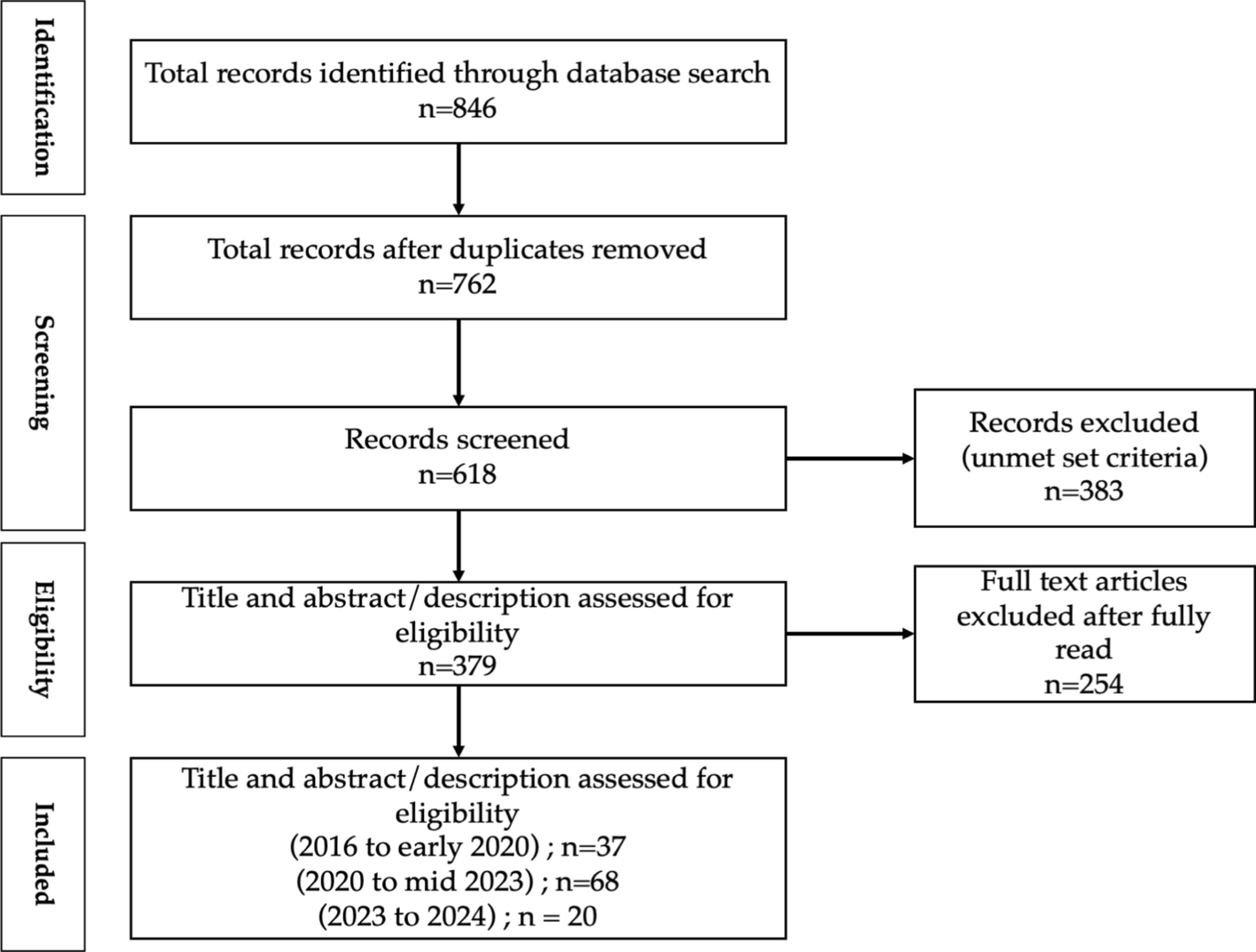
As this was my first opportunity with this method, using the PRISMA method required a lot of meticulous effort to ensure that the necessary articles were included and attributed. I sifted through hundreds of articles, removed duplicates, traced citations, and categorized studies. Only after this long and most of the time, tedious process did a pattern begin to emerge.
Across all periods, the same sets of advantages kept appearing, sometimes explicitly named, often hidden in the background of the researchers’ narratives.
Interconnectedness of the Aspects of Learning Privileges
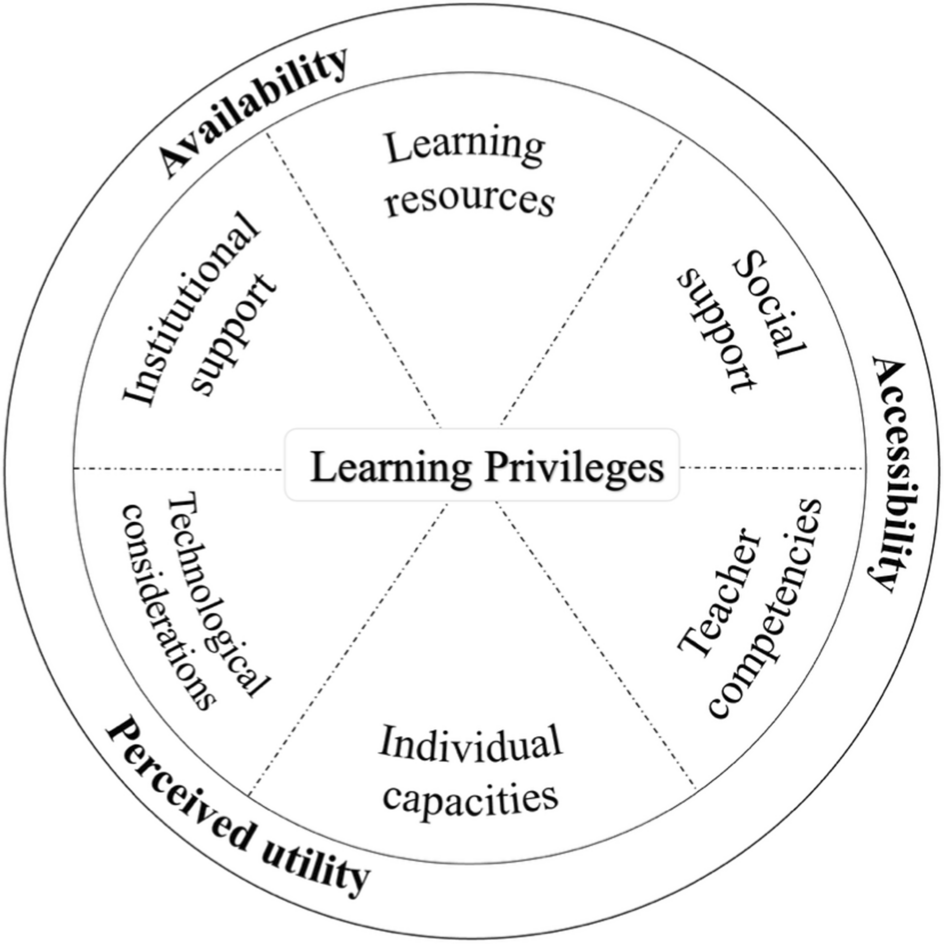
The thematic analysis revealed nine aspects that influence STEM students’ learning privileges. To make sense of them, I grouped them into:
Three overarching aspects:
- Availability – Are resources and opportunities actually present?
- Accessibility – Can students use them easily and consistently?
- Perceived utility – Do students believe these resources are meaningful or helpful?
These may sound abstract, but they frame everything else. Even the best device or tutoring session loses its power if students feel it’s not useful—or if it’s technically available but not truly accessible.
Six primary aspects:
- Learning resources
- Social support
- Teaching competencies
- Individual capacity
- Technological considerations
- Institutional support
The highlight here was not individuality, but their interconnectedness. Each aspect influences the others in ways that were often overlooked in policy discussions. Later down the data analysis process, it became clear that learning privilege is not a single advantage, but rather systemic, a combination of factors that reinforce each other.
A student with a strong support system but weak teacher competence will experience learning differently from a student who has excellent teachers but limited technology access. Privilege arises not from one factor alone, but from how these factors align as they go through their learning experiences.
Seeing the Bigger Picture
Once the themes formed, I constructed a model that brought them together. It was like finally seeing a shape in a blurry image.
In this model, the three overarching aspects (availability, accessibility, perceived utility) act as forces that shape how each primary aspect operates. While the six primary aspects interact constantly, creating either a reinforcing cycle of advantages or a compounding cycle of disadvantages.
This means that learning privilege cannot be tackled by isolated solutions.
Providing students with tablets is not enough if connectivity is unstable. Teacher development programs fall short if students don’t perceive them as helpful. Institutional support means little when students lack the individual capacity to maximize what’s offered.
Privilege isn’t just a list of separate advantages; it emerges from how these advantages interact and support one another.
Why This Matters?
The Philippine education landscape is full of resourcefulness and resilience, but it is also full of disparities. While reviewing the literature, I often thought of my own students and the everyday realities they face.
- A Wi-Fi signal that fluctuates after 6 PM.
- A school laboratory shared by 700 students.
- Parents who want to help their child but they themselves cannot read the lessons.
- A teacher who buys their own classroom materials because the budget fell short again.
These small realities are not captured in national statistics, yet they shape learning privilege in powerful ways. The assumption is that they shape students’ confidence, identity, and future choices.
More importantly, one unexpected finding was that students themselves often struggle to recognize their own advantages. When everything feels “normal,” it becomes invisible.
But making privilege visible is essential for two reasons:
- It helps students practice empathy. When they understand what they have, and what others may lack, they become more compassionate peers and more socially responsible scientists.
- It helps educators design better interventions. If we know which factors align to create privilege, then we can intentionally align factors for students who need support the most.
So Where Do We Go From Here?
This research does not claim to solve educational inequality. Instead, it offers a lens—a way of seeing learning privilege as an interconnected system rather than a checklist.
It invites educators, researchers, and policymakers to ask new questions:
- How can we further understand the intricate effect of these aspects as interconnected components?
- How do we create environments where advantages multiply rather than cancel each other out?
-
How can teachers become allies in helping students understand their own realities and those of others?
At its core, this paper reminds us that privilege is not about who “deserves” more. It is about recognizing the conditions that allow someone to learn with confidence, ease, and dignity. And once we see these conditions more clearly, we have the opportunity and “responsibility” to build them for more students.

Follow the Topic
-
Discover Education
An international, peer-reviewed open access journal that publishes original work in all areas of education, serving the community as a broad-scope journal for academic trends and future developments in the field.

Related Collections
With Collections, you can get published faster and increase your visibility.
Advancing Teaching & Learning: Integrating AI, Emerging Technologies, and Pedagogical Innovation
Collection "Advancing Teaching & Learning: AI, Emerging Technologies and Pedagogical Innovation" addresses a major challenge in education today. There is a lack of resources that bring advanced technologies and innovative teaching together. AI, digital tools and emerging technologies are transforming classrooms. Yet many teachers and education leaders struggle to use these tools effectively. This Collection fills that gap. It offers expert insights, practical strategies and real-world examples for modern teaching and learning.
The Collection is linked to the United Nations Sustainable Development Goal 4 on quality education. It shows how to make learning more accessible, inclusive and effective for all. AI, adaptive learning platforms and immersive technologies can personalise instruction. They can engage students and support diverse needs. At the same time, the human element of teaching remains central.
Readers will find practical guidance on curriculum design, digital literacy and evidence-based teaching methods. The approaches can be applied in classroom, blended and online learning. Beyond tools, the Collection inspires educators to rethink traditional methods. It encourages them to embrace innovation while keeping learning meaningful and student-focused.
By addressing the lack of comprehensive resources on advanced technologies, Advancing Teaching & Learning helps teachers, school leaders and instructional designers navigate the digital age. It equips them to create engaging, future-ready learning experiences. Students are prepared for a connected, digital world. Educators gain the confidence to unlock the full potential of every learner.
This Collection supports and amplifies research related to the United Nations Sustainable Development Goal 4 on quality education. It shows how to make learning more accessible, inclusive and effective for all. AI, adaptive learning platforms and immersive technologies can personalise instruction. They can engage students and support diverse needs. At the same time, the human element of teaching remains central.
Keywords: Teaching and Learning; AI in Education; Emerging Technologies; Digital Tools in Classrooms; Pedagogical Innovation; Adaptive Learning Platforms; Immersive Technologies; Quality Education (SDG 4); Classroom Innovation; Blended and Online Learning; Student Engagement; Teacher Professional Development; Future-Ready Learning; Instructional Design; Educational Technology Integration.
Publishing Model: Open Access
Deadline: Apr 15, 2027
Advancing Health Professions Education: Innovations, Strategies, and Global Perspectives
Health Professions Education (HPE) plays an important role in preparing competent, ethical, and compassionate healthcare professionals capable of responding to the complex demands of contemporary healthcare systems. In recent years, the field of HPE has witnessed a paradigm shift towards learner-centred, competency-based, and interprofessional education models that prioritize not only clinical expertise but also communication, professionalism, teamwork, and leadership skills.
This Collection invites original research, systematic or scoping reviews, case studies and brief reports and that critically examine the evolving landscape of HPE across medicine, dentistry, nursing, pharmacy, and other allied health disciplines. Key areas of interest include curriculum design and reform, innovative teaching and assessment methods, integration of digital and blended learning technologies, interprofessional education (IPE), faculty development, educational management, student support and well-being, and strategies to promote equity, diversity, and inclusivity in HPE.
We also welcome contributions that explore challenges and best practices in clinical training, rural and underserved community placements, global health education, policy development, accreditation, and institutional leadership in health education. Studies from low- and middle-income countries are strongly encouraged to enhance global representation and to promote scholarly exchange on scalable and contextually relevant innovations.
By consolidating scholarly work in this Collection, we aim to advance the discourse on high-quality, evidence-informed HPE that supports the achievement of Sustainable Development Goals (SDG 3 and SDG 4) and ultimately contributes to improved healthcare outcomes worldwide.
Publishing Model: Open Access
Deadline: Nov 30, 2026